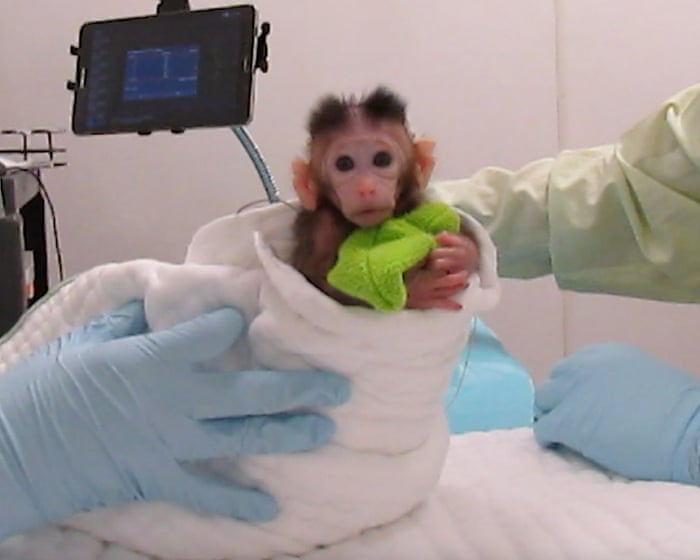
Peta releases video showing experiments on infant monkeys at University of Washington
Summary
Peta released footage of infant monkeys in experiments at the University of Washington’s National Primate Research Center. The project studied the effects of prenatal exposure to domoic acid, ran from 2014 to 2020, and received more than $4.2 million in NIH funding. The university said it has no current infant studies, though protocols for such studies remain active.Key Facts
- Researchers gave daily doses of domoic acid to 32 pregnant macaques.
- After birth, 28 infants were separated from their mothers, bottle-fed, and kept in incubators before being housed individually at three weeks old.
- The experiments included neurological tests on infant monkeys as young as two days old.
- The project investigated whether prenatal exposure to domoic acid, a toxin produced by marine algae, affected brain development.
- The project ran for six years, ending in 2020, and received more than $4.2 million in NIH funding.
- Peta says the monkeys were killed after the experiments ended.
- The university said its veterinary and animal-care staff have expertise in primate care, including nursery rearing.
- The NIH said laws, regulations, and policies govern the care and use of animals in NIH-supported research.
Read the Full Article
This is a fact-based summary from The Actual News. Click below to read the complete story directly from the original source.