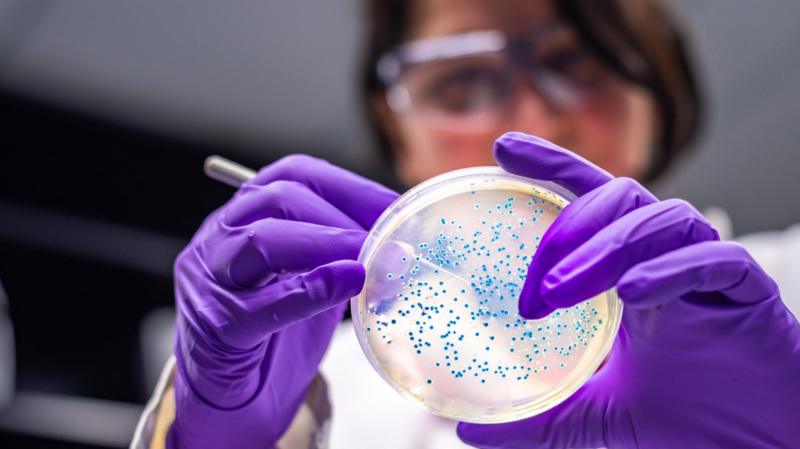
The bacteria turning waste plastic into painkillers
Summary
Researchers have engineered E. coli bacteria to turn waste plastic into paracetamol, a common painkiller. This innovation uses genetically modified bacteria to transform waste molecules into valuable products. The method highlights E. coli's role as a crucial tool in biotechnology for creating various products.Key Facts
- Scientists genetically altered E. coli to convert plastic waste into paracetamol.
- E. coli is commonly used in labs because it is easy to modify and grows fast.
- The bacterium is also used industrially to make products like insulin.
- Theodor Escherich first isolated E. coli in 1885, leading to its use in scientific research.
- E. coli can undergo a process called 'bacterial sex,' where it shares genes to gain new traits.
- In 1978, E. coli was used to create synthetic human insulin, a major scientific breakthrough.
- The entire genome of E. coli was sequenced in 1997, aiding further research and development in genetic engineering.
Read the Full Article
This is a fact-based summary from The Actual News. Click below to read the complete story directly from the original source.