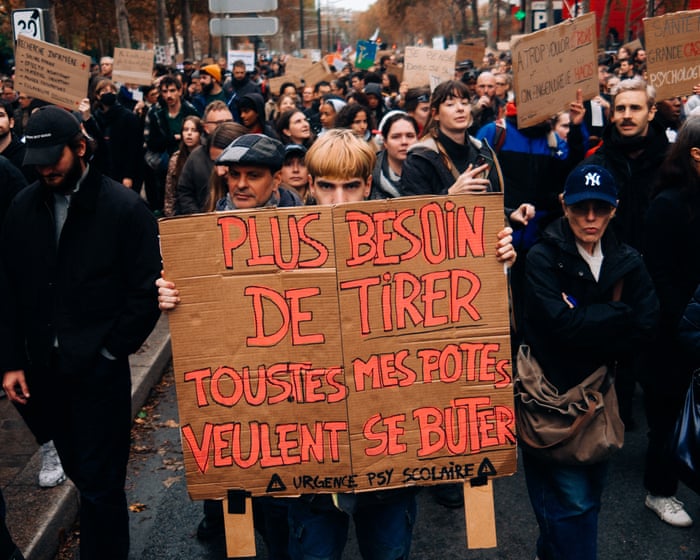
‘Solidarity among young people’: four lessons the US can learn from the youth protests in France
Summary
French students have led nationwide protests over poor school conditions, rising living costs and cuts to social services, with workers and other groups joining them. After demonstrations and a government response that included protest bans and arrests, the government announced loans and education changes, but student organizers said they would continue their campaign; the article highlights how unions and community support can strengthen protests.Key Facts
- The student movement began at a single campus in a Paris suburb and spread to high school and university students nationwide.
- Public sector workers, climate activists, labor unions and other members of the public joined the protests.
- Hundreds of thousands of people demonstrated on 17 October and again on 24 October, according to the article.
- The 17 October gatherings were largely peaceful before looting and vandalism occurred.
- Authorities used aggressive policing, protest bans, curfews, tear gas and arrests during the response to the movement.
- The government announced $4.45 billion in loans for renovating rundown buildings, along with more university spaces, teachers and administrative changes.
- Student organizers called the government measures inadequate and scheduled further actions for 31 October and a national strike for 5 November.
- The article contrasts France’s union networks and labor protections with the greater risks U.S. workers face when striking, and cites the 2018 teachers’ strikes as an example of effective organizing.
Read the Full Article
This is a fact-based summary from The Actual News. Click below to read the complete story directly from the original source.