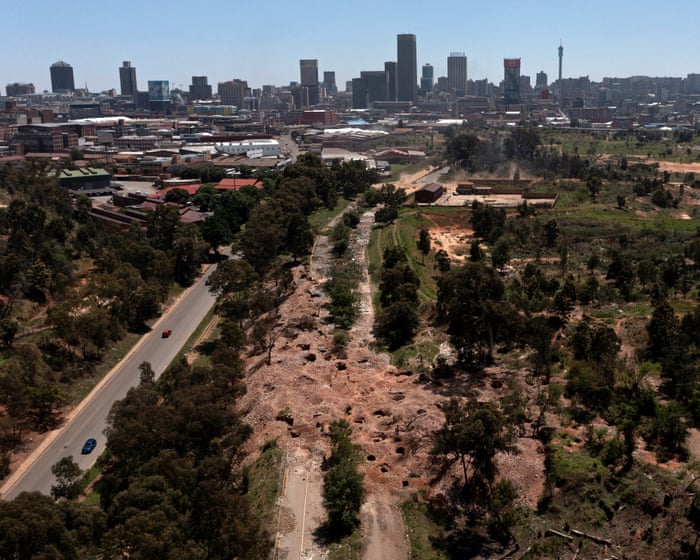
Sinkholes, scarred land and scapegoats: the scourge of illegal gold mining in Johannesburg
Summary
Illegal gold mining has spread around abandoned mine shafts west of Johannesburg, where miners have taken water from a local animal charity and left nearby communities facing environmental and safety concerns. The activity is driven by gold prices, poverty and unemployment, while experts say enforcement and efforts to secure old mines have not stopped it.Key Facts
- Cora Bailey, founder of the animal charity Claw in Roodepoort, said miners used water from the charity’s tanks for gold processing, leaving the organisation with only about two buckets of water at one point.
- Police said on 19 October that they had arrested 71 suspected illegal miners across South Africa during the previous week.
- Researchers estimate that illegal miners number in the tens of thousands; a 2019 estimate put illegal gold exports at about $1 billion, or a tenth of South Africa’s gold production.
- In 2025, 93 bodies were recovered from a mine shaft in Stilfontein after police blocked food and water deliveries underground.
- South Africa’s mining minister said in 2025 that the country had 6,100 derelict and ownerless mines and 1,170 unsafe mine openings.
- Mining companies are legally required to seal disused shafts and rehabilitate the surrounding land.
- Experts say most illegal miners come from neighbouring countries, mainly Lesotho, Mozambique and Zimbabwe.
Read the Full Article
This is a fact-based summary from The Actual News. Click below to read the complete story directly from the original source.