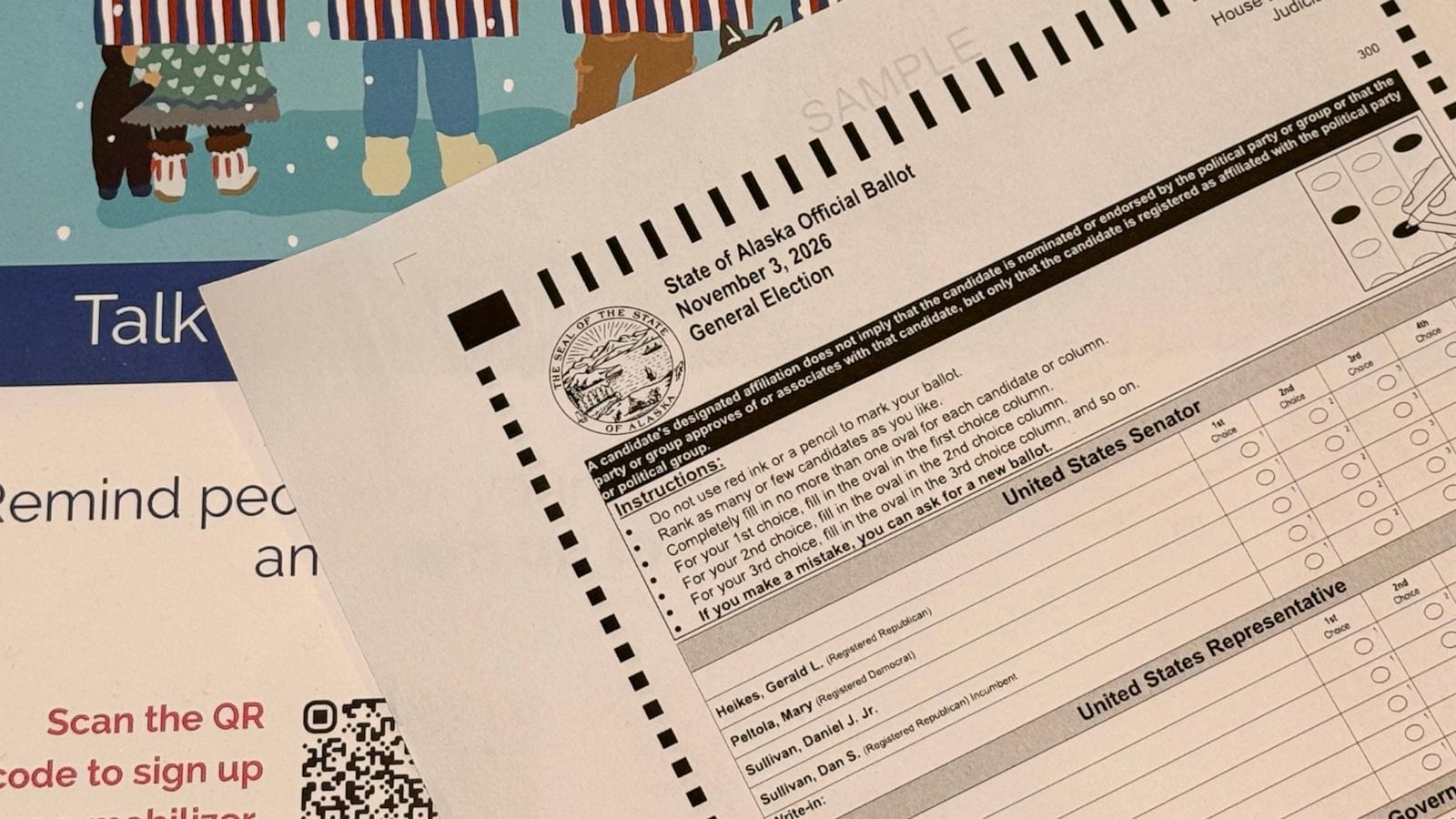
Ranked choice voting explained as voters in 2 states rank congressional picks
Summary
Maine and Alaska will use ranked choice voting in congressional and state races on Nov. 3, 2026. Voters rank candidates by preference; if no one wins a majority of first-choice votes, the candidate with the fewest votes is eliminated and ballots transfer to voters’ next choices until a candidate has a majority.Key Facts
- Voters can rank candidates in order or choose to rank only one.
- A candidate who receives more than 50% of first-choice votes wins without a runoff.
- In later rounds, ballots for eliminated candidates transfer to the next-ranked candidate, if one is listed.
- A ballot that ranks only an eliminated candidate remains valid, but its vote does not transfer.
- Maine has used ranked choice voting since 2018, and Alaska has used it for four years.
- Alaska voters will decide on Nov. 3 whether to repeal the system.
- The article says 19 states have banned ranked choice voting.
Read the Full Article
This is a fact-based summary from The Actual News. Click below to read the complete story directly from the original source.