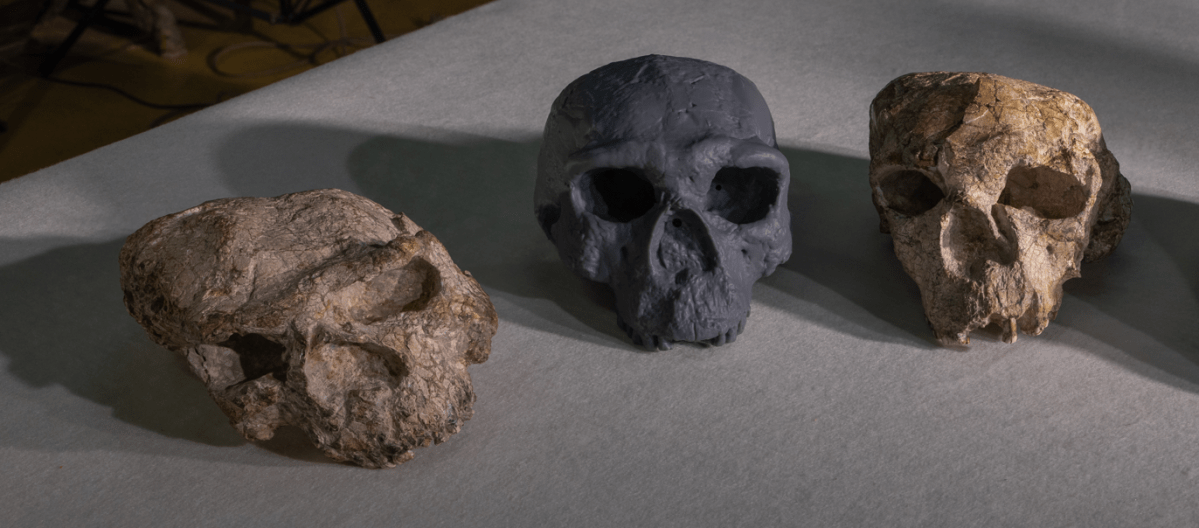
Discovery of Million-Year-Old Skull 'Totally Changes' Human Evolution Story
Summary
A fossil skull about 1 million years old, found in China, is now believed to belong to the Homo longi group, linked with the Denisovans. This finding suggests that the origins of modern humans might be older and more complex than previously thought, potentially emerging over 1 million years ago. The research indicates that human evolution involves several branches that diverged more than a million years ago.Key Facts
- A fossil skull found in Hubei Province, China, is around 1 million years old.
- It was initially thought to belong to Homo erectus but is now considered part of the Homo longi group.
- Homo longi, also known as ‘Dragon Man,’ is closely related to Denisovans, an ancient human species.
- The study pushes back the emergence of Homo sapiens by about 400,000 years.
- The research used advanced scanning and reconstruction techniques to analyze the skull.
- Findings were published in Science, led by Fudan University and the Chinese Academy of Sciences.
- Researchers suggest many human species, including Homo sapiens and Neanderthals, might have existed alongside each other more than a million years ago.
Read the Full Article
This is a fact-based summary from The Actual News. Click below to read the complete story directly from the original source.