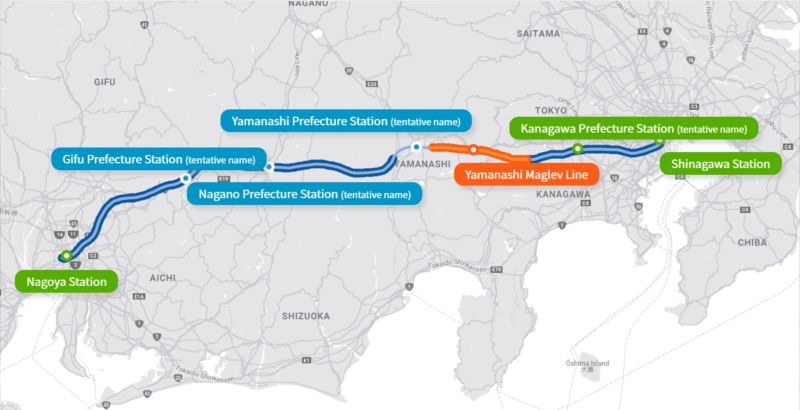
Map Shows Route Proposed For World’s Fastest Train
Summary
Japan is building a new train line, called the Chuo Shinkansen Maglev, which aims to be the fastest in the world, connecting Tokyo to Nagoya, and possibly extending to Osaka. These trains use magnetic technology to travel faster than regular trains without touching the tracks. The project is important for technology advancement, but it also faces challenges due to high costs and complex technology.Key Facts
- Japan is constructing the Chuo Shinkansen Maglev train line from Tokyo to Nagoya.
- The train is expected to reach speeds of up to 314 miles per hour, making it the fastest in the world.
- Maglev trains use magnets to lift off the track, allowing them to move without friction.
- The project is managed by the Central Japan Railway Company.
- The maglev technology, developed in the 1970s, involves complex and expensive systems.
- Experts have differing opinions on maglev's future, with concerns about high costs and energy use.
- There is ongoing interest in high-speed rail globally, with China and the U.S. developing new lines.
Read the Full Article
This is a fact-based summary from The Actual News. Click below to read the complete story directly from the original source.