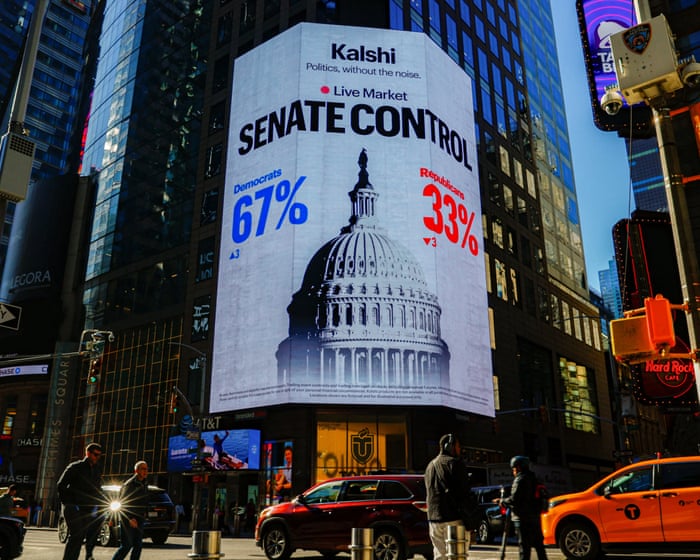
Prediction market bettors are the new political pundits. Why are we listening to them? | Judith Levine
Summary
The article argues that prediction-market prices can appear to reflect public opinion, but much of their accuracy and profit may come from a small group of skilled traders rather than the crowd. It warns that news coverage of these markets can shape expectations about elections, even though most users lose money and market odds do not tell voters whom to support.Key Facts
- Prediction markets let users bet on whether events, including elections, will happen.
- A working paper by researchers at London Business School and Yale University found that about 3% of Polymarket accounts were persistently skilled, while most accounts performed no better than chance.
- The researchers said most trading volume came from the broader crowd, which contributed relatively little information to market prices.
- A Wall Street Journal analysis of 1.6 million Polymarket accounts found that casual traders lost money while a small group of sophisticated traders made profits.
- The Journal analysis attributed three-quarters of profits to 0.1% of accounts; about 2,000 accounts reportedly earned nearly $500 million combined.
- The article says professional traders use public news, poll data, costly data feeds, algorithms, and rapid trading to gain an advantage.
- Pew Research data cited in the article says the median Polymarket user made 46 trades across 10 active trading days in 2026.
- The article says prediction-market coverage can influence expectations about election outcomes without helping voters decide whom to support.
Read the Full Article
This is a fact-based summary from The Actual News. Click below to read the complete story directly from the original source.