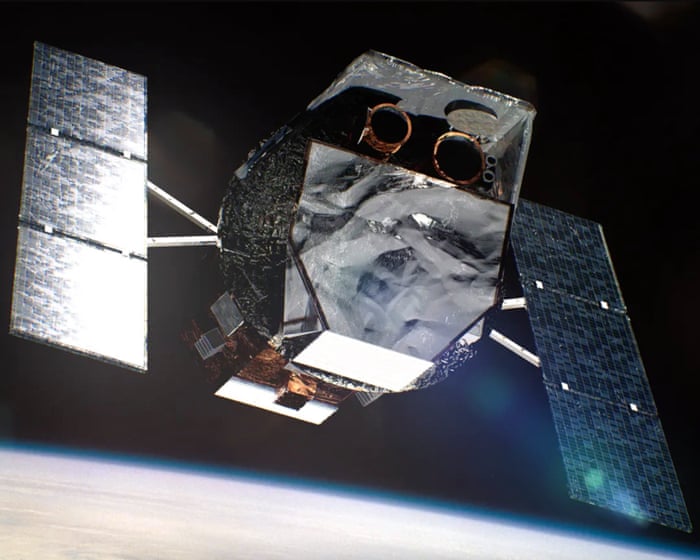
Nasa telescope launched in 2004 to plunge back to Earth after failed rescue mission
Summary
NASA’s Neil Gehrels Swift Observatory is expected to re-enter Earth’s atmosphere around 3:30 a.m. EST on November 4, 2026, and most of the spacecraft is expected to burn up. The observatory can no longer steer or observe; NASA and the U.S. Space Force are monitoring its uncontrolled descent and estimate the risk of harm to anyone on Earth at about 1 in 2,100.Key Facts
- Swift launched in 2004 with a planned operating life of two years.
- The 3,200-pound observatory has detected and tracked more than 2,000 gamma-ray bursts.
- NASA says some spacecraft components may survive re-entry, with possible debris limited to a band between 20.6 degrees north and south latitude.
- NASA tried to raise Swift’s orbit last year with help from a private space contractor, but the attempt failed after the spacecraft did not rendezvous.
- Swift was estimated to be orbiting about 171 miles above Earth last month.
- NASA commanded the observatory to end operations in preparation for re-entry.
- In July, Swift observed a star being torn apart by a wandering supermassive black hole.
Read the Full Article
This is a fact-based summary from The Actual News. Click below to read the complete story directly from the original source.