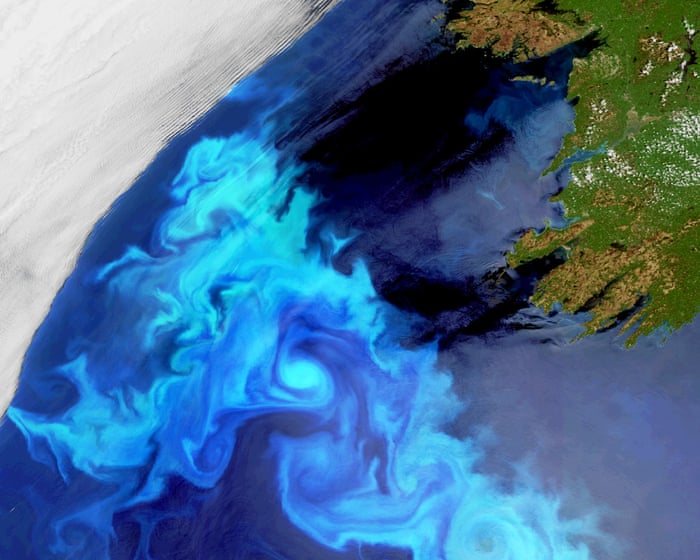
Warming UK seas could ‘fundamentally reshape marine ecosystems’ – report
Summary
A four-year study projects that warming seas around the UK and the north-east Atlantic could change marine biodiversity unevenly by 2050. Fish and seabed invertebrate diversity may rise while important plankton groups decline, potentially disrupting food webs and affecting ocean health and food security.Key Facts
- The study was led by the UK government agency Cefas and published in Science Advances.
- Researchers examined marine ecosystems in UK waters and the wider north-east Atlantic, including waters near Ireland and France.
- Under a scenario of 3°C of global warming by 2100, the study projects fish and seabed invertebrate diversity could increase by about 12% by mid-century.
- The study projects phytoplankton diversity could fall by about 3% and zooplankton diversity by about 7% by 2050.
- The researchers say declines in plankton alongside gains in some higher-level groups could disrupt predator-prey relationships and marine food webs.
- The study identifies seas around the British Isles, particularly the southern North Sea, as marine climate hotspots that have warmed rapidly over the past 50 years.
- The research has been submitted to the UK government's review of marine protected areas, which is considering fishery management measures.
Read the Full Article
This is a fact-based summary from The Actual News. Click below to read the complete story directly from the original source.


