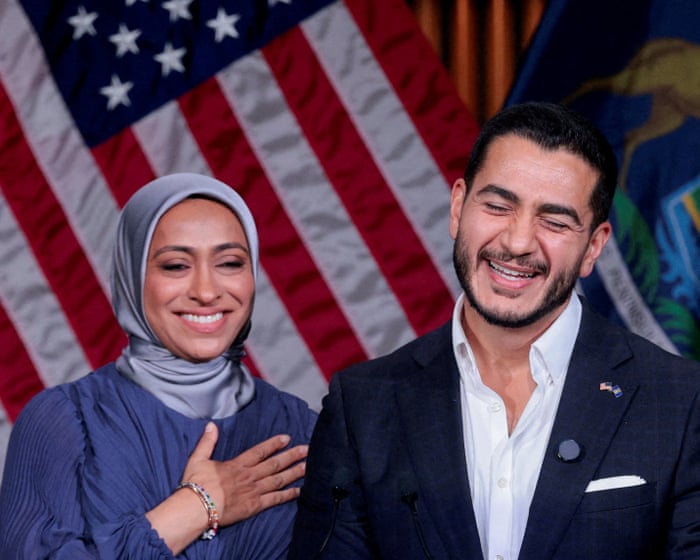
Abdul El-Sayed’s victory has laid bare a truth about America's view on Israel | Peter Beinart
Summary
Peter Beinart argues that Abdul El-Sayed’s reported Michigan Senate race victory reflects a divide between wealthy donors and voters over U.S. policy toward Israel, rather than a simple left-right split. He says the result offers Democrats a chance to build a populist message opposing U.S. support for Israel and that Republicans face a similar tension between donor support and voter opposition to the war.Key Facts
- The article says El-Sayed’s opponents, Haley Stevens and Mike Rogers, benefited from large contributions from pro-Israel donors and other corporate interests.
- Beinart says polling showed El-Sayed winning voters who cared about Israel by a larger margin than his overall margin.
- The author argues that media coverage overstated the political risk of criticizing Israel and links this to ownership by pro-Israel billionaires at CBS and CNN.
- The article describes student protests for Palestinian rights and university boards’ rejection of divestment proposals as another example of an elite-versus-grassroots divide.
- Beinart says support for Israel among American Jews is stronger among older, wealthier and more institutionally connected people than among younger people.
- The article argues that Joe Biden’s support for Israel hurt Kamala Harris with some voters, while Donald Trump’s anti-war message helped him attract new voters in 2024.
- Beinart says JD Vance is positioning himself for a 2028 Republican debate by linking the Iran war and support for Israel to Republican losses in the midterms.
Read the Full Article
This is a fact-based summary from The Actual News. Click below to read the complete story directly from the original source.