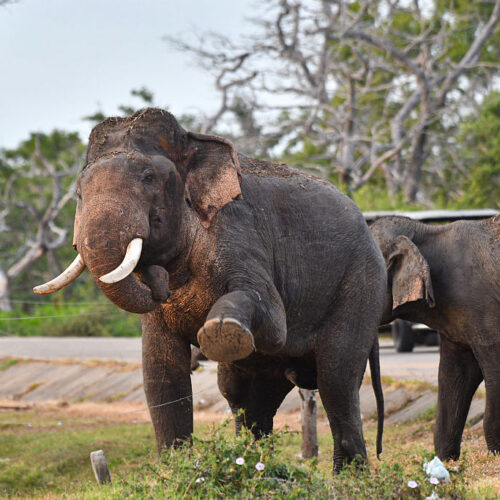
In elephants, the resilience of communities has its limits
Summary
A 12-year study of female Asian elephants in Sri Lanka found that their social communities fractured as deaths and departures began to outnumber newcomers. Researchers tracked 443 adult and subadult females in Udawalawe National Park from 2007 to 2018 and found that about 69 percent of the females observed at the start were gone by 2018.Key Facts
- Researchers studied wild Asian elephants in Udawalawe National Park in southern Sri Lanka.
- The team identified 443 adult and subadult females between 2007 and 2018, using distinctive ear marks to recognize individuals.
- Researchers measured social ties by how often two elephants were seen together and used an algorithm to identify clusters of closely connected elephants.
- The elephants’ social communities remained relatively stable in the first years of the study, then began to fracture.
- Around 2012, the number of elephants that died or left began to exceed the number of newcomers.
- By 2018, about 69 percent of the females observed at the start of the study were no longer present.
- Invasive plants such as lantana reduced grassland forage in parts of the park, according to the researchers.
Read the Full Article
This is a fact-based summary from The Actual News. Click below to read the complete story directly from the original source.


