U.S. drivers are just absorbing high gasoline prices
Summary
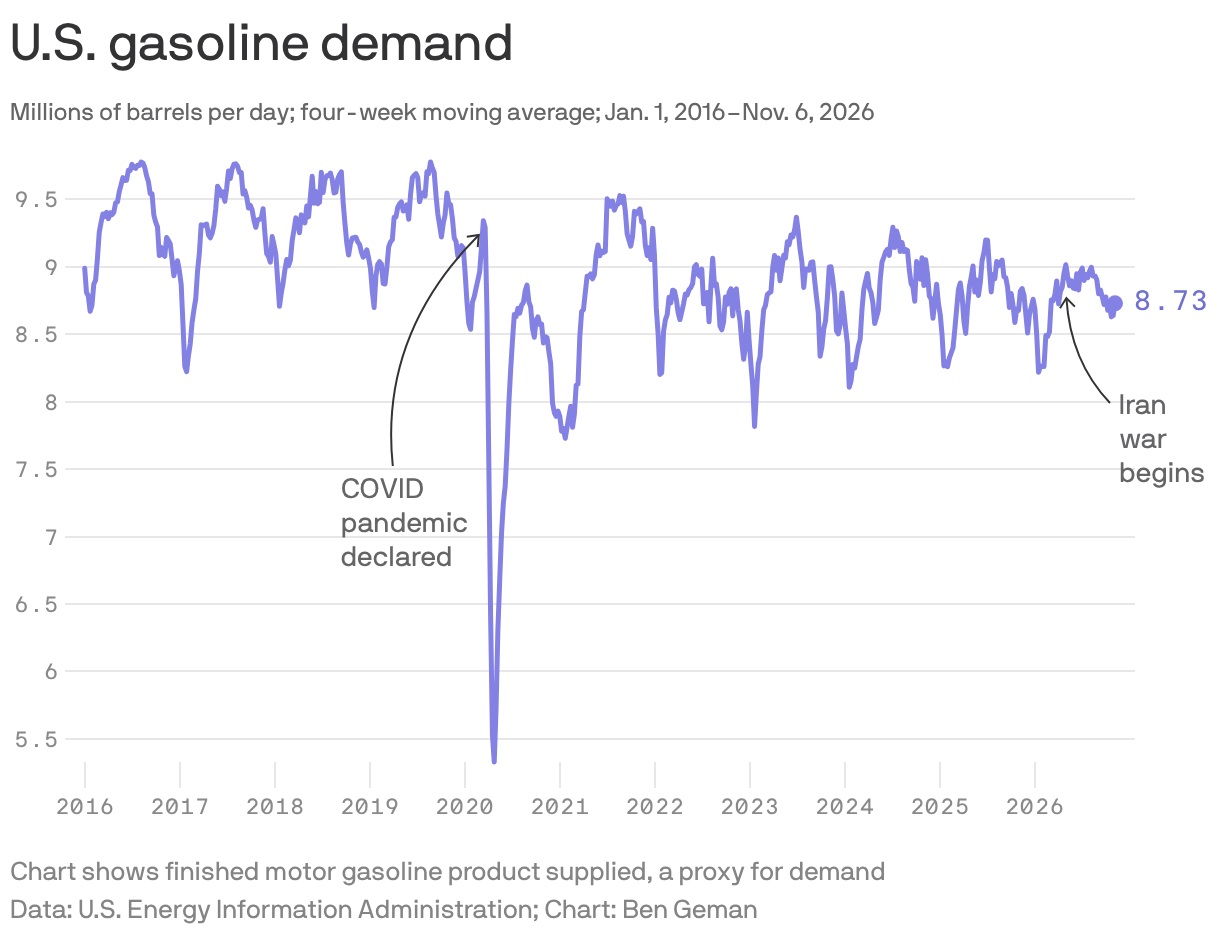
U.S. gasoline demand from early March through early November remained similar to the same period last year, even as prices rose 31% after the Iran war began. Estimates show households paid substantially more for gasoline, while transportation data through August showed no drop in miles traveled this year.Key Facts
- Americans paid an estimated $88 billion more for gasoline this year than they would have under a no-war baseline, according to Brown University's Climate Solutions Lab.
- U.S. households paid between $300 and $730 more for gasoline from March through August than during the same period last year, according to the Energy Policy Research Foundation.
- Federal data show gasoline demand from early March through early November was similar to the same period last year.
- Gasoline prices were 31% higher after the war began than during the comparable period a year earlier.
- A Washington Post-ABC News survey in April found 44% of respondents said they had cut back on driving.
- A June Gallup survey found 57% of respondents said high gasoline prices were causing them to drive less.
- The Energy Information Administration measures gasoline product supplied as a proxy for demand; it tracks fuel leaving refineries and bulk terminals.
- Transportation Department data through August showed no drop in miles traveled this year.
Read the Full Article
This is a fact-based summary from The Actual News. Click below to read the complete story directly from the original source.