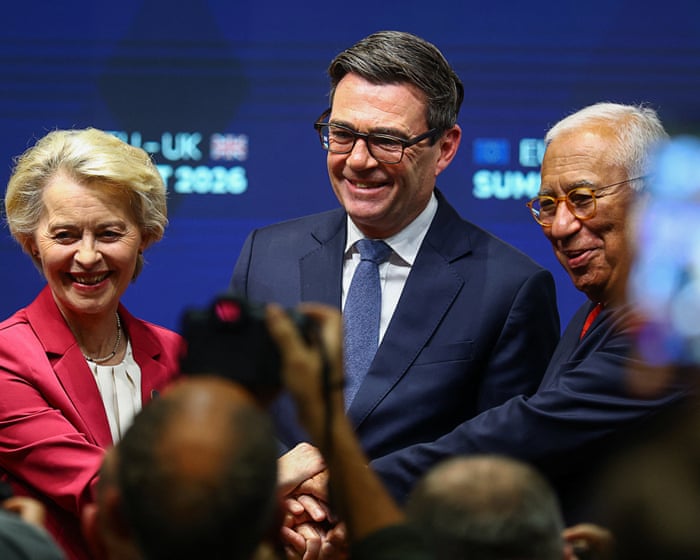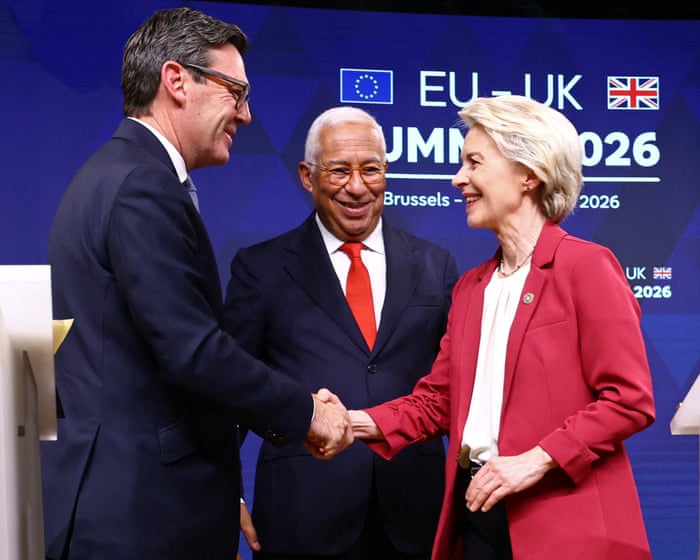
What exactly is in the deal between the UK and the EU?
Summary
The UK and EU agreed on food and drink trade, emissions trading, and a youth exchange programme. They also set out plans for further cooperation on electricity, migration and law enforcement, while leaving tuition fees unresolved.Key Facts
- The food and drink deal is intended to ease checks on most animal and plant products traded between the UK and EU, with a planned start date of 1 March 2028.
- The UK and EU plan to link their emissions trading schemes in 2028, reducing levies on certain polluting goods and electricity.
- A proposed youth exchange programme would allow up to 100,000 people from each side per year to live, work, travel and study across the Channel for up to three years, by 2030 at the latest.
- The EU wants young Europeans studying at British universities to pay domestic tuition rates, while the UK government has resisted the change; the sides agreed to continue discussions for six months.
- For the food and emissions deals, the UK will align with relevant EU laws and may attend some related meetings as an observer, without voting rights.
- The UK and EU aim to agree on UK participation in the EU’s internal electricity market in 2027; access would require a UK contribution to the EU budget, but its size has not been set.
- The UK agreed to work with the EU’s Channel action plan through law-enforcement intelligence sharing, closer cooperation with agencies including Europol and Frontex, and improved maritime surveillance.
Read the Full Article
This is a fact-based summary from The Actual News. Click below to read the complete story directly from the original source.