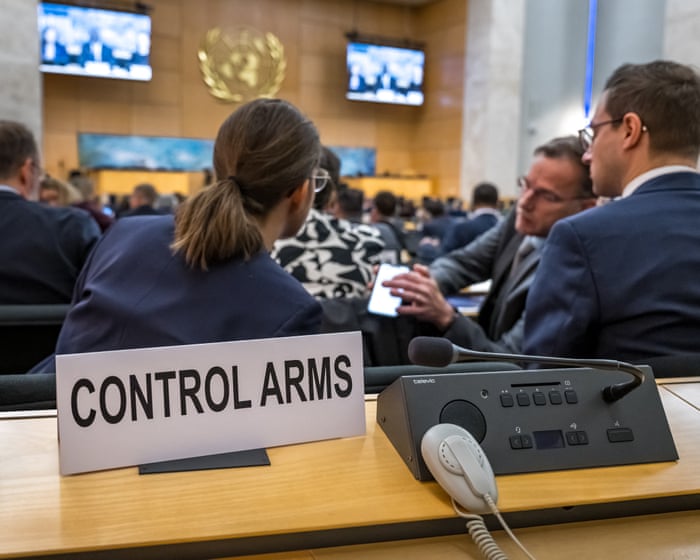
International talks on controlling use of autonomous weapons collapse
Summary
A UN conference in Geneva failed to agree on a mandate for negotiating a legally binding treaty on autonomous weapons after Russia objected. The states instead adopted a weaker mandate to develop an instrument by consensus, which may not create legal obligations.Key Facts
- The negotiations took place at the Review Conference on the Convention on Certain Conventional Weapons.
- More than 100 states supported creating new international rules for autonomous weapons.
- The United States and several other military powers resisted a binding treaty and favored nonbinding measures or argued that existing international humanitarian law was sufficient.
- China and Iran expressed support or willingness to consider a new protocol, alongside European and NATO states, including Ukraine.
- The convention has 128 parties and requires unanimous agreement to adopt decisions.
- The conference’s consensus process has not produced new weapons laws in the past 30 years.
- The final mandate asks states to develop an instrument by consensus, but may not impose legal obligations.
Read the Full Article
This is a fact-based summary from The Actual News. Click below to read the complete story directly from the original source.