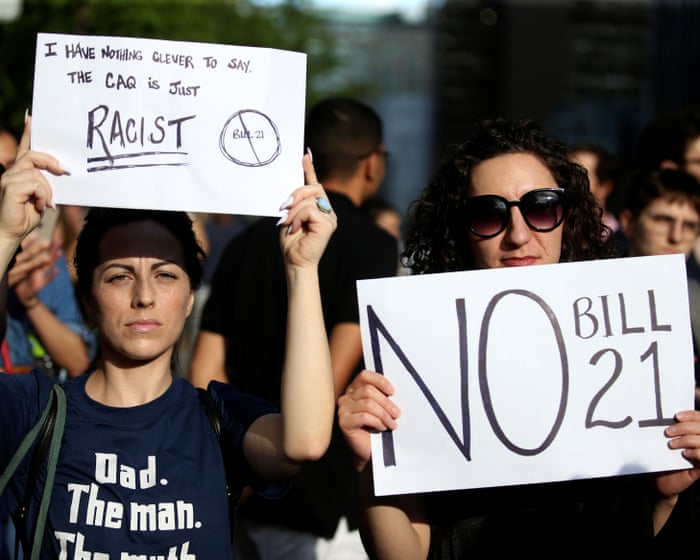
Canada’s top court upholds Quebec law barring public sector workers from wearing religious symbols
Also reported by Al Jazeera, Newsweek, BBC US
Summary
Canada’s Supreme Court upheld most of Quebec’s Bill 21, which bars many public-sector workers from wearing conspicuous religious symbols on the job. In a 6-1 ruling, the court found that Quebec could use the Constitution’s notwithstanding clause to shield most of the law from challenges based on Charter rights, but it found that a provision restricting elected lawmakers who wear face coverings infringed democratic rights.Key Facts
- Quebec passed Bill 21 in 2019.
- The law bars public-sector workers, including teachers, police, judges and lawyers, from wearing religious symbols while working.
- The Supreme Court ruled 6-1 in favor of upholding most of the law.
- Quebec invoked the notwithstanding clause to protect Bill 21 from many Charter-based court challenges.
- The court rejected most arguments that the law violated Charter provisions not covered by the notwithstanding clause, including protections for gender equality and the education rights of Quebec’s English-speaking minority.
- The court found that a part of the law infringed democratic rights by preventing elected members of Quebec’s National Assembly who wear religious face coverings from participating in legislative proceedings.
- Quebec’s Court of Appeal had upheld Bill 21 in February 2024.
Read the Full Article
This is a fact-based summary from The Actual News. Click below to read the complete story directly from the original source.


