Summary
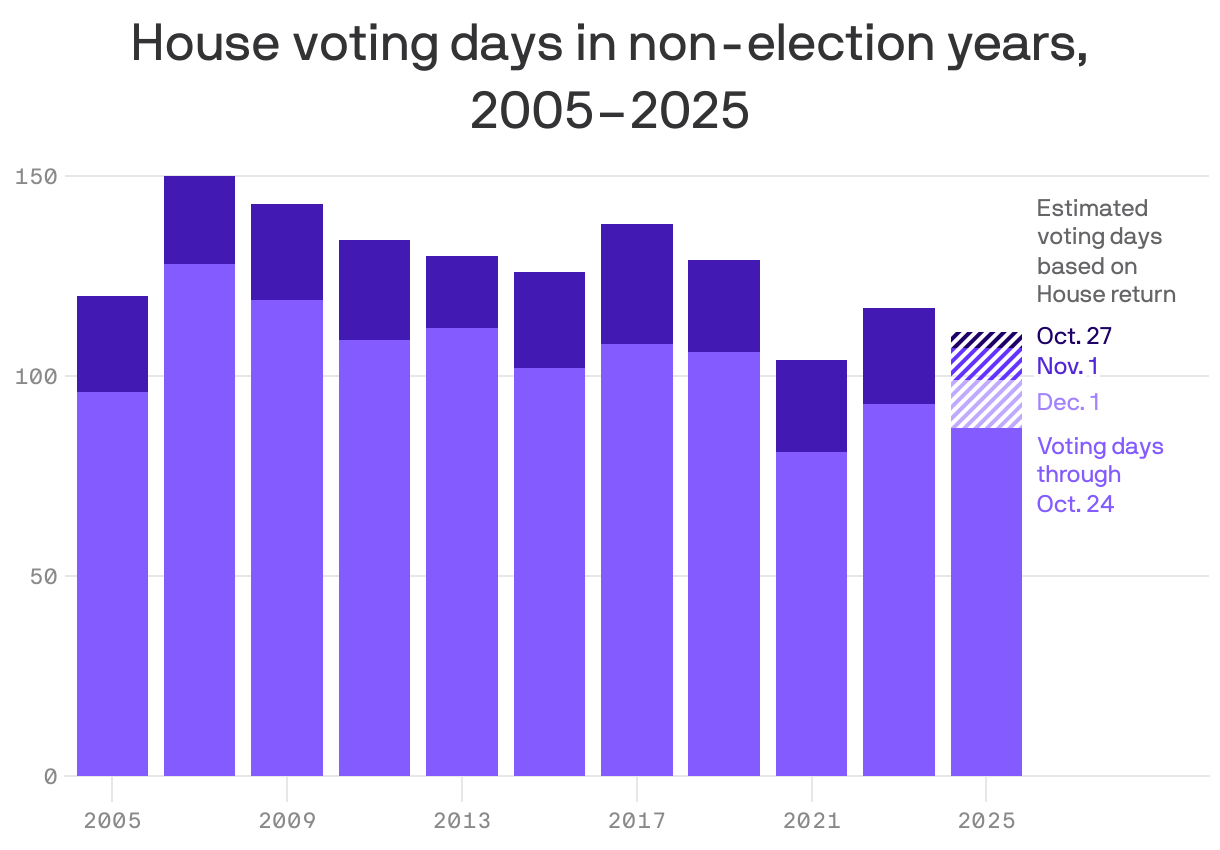
In 2025, the U.S. House of Representatives has met and voted on only 87 days, which is less than most non-election years in the past two decades. House Speaker Mike Johnson has been keeping lawmakers away from Washington, D.C. when tensions rise or when policy decisions are delayed. Some Republicans support this approach, saying they use the time for work in their districts, while others express frustration at not being able to legislate in Washington.
Key Facts
- The House of Representatives had only 87 voting days in 2025 so far, fewer than usual for off-election years.
- The only non-election year with fewer voting days in the last two decades was 2021, due to the COVID-19 pandemic.
- House Speaker Mike Johnson has been using distance as a strategy during times of tension or stalled policies.
- If the House doesn't return until December, it will end with 99 voting days, the lowest in 20 years.
- Some Republicans claim district work periods involve community service and local engagement, not vacations.
- Criticism exists regarding being "sidelined" from working in Washington, including missed legislative opportunities.
- Johnson argues the House completed its work by passing necessary funding measures.