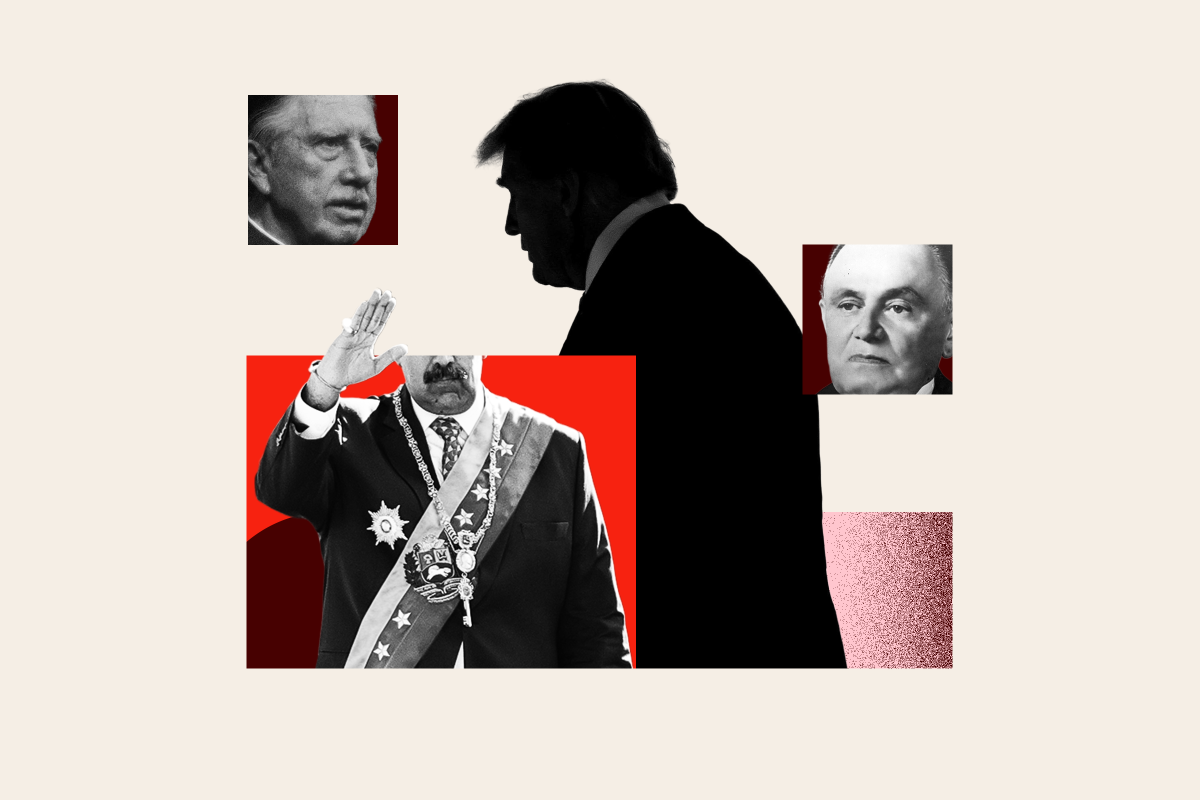
South America Regime Change: How Past US Efforts Played Out
Summary
President Donald Trump has increased threats toward Venezuela, involving actions against drug traffickers, as part of a new era of U.S. intervention in South America. The U.S. has a long history of involvement in South American politics, including backing coups and political interference, which remains a controversial topic. The recent actions by the U.S. are seen as a continuation of this historical influence.Key Facts
- President Trump has escalated threats against Venezuela and targeted suspected drug traffickers at sea.
- The U.S. has a history of political involvement in South America, including supporting coups and political interference.
- The Monroe Doctrine, established in 1823 by President James Monroe, aimed to limit European influence in the Americas.
- The U.S. played a key role in Panama's independence in 1903 and constructed the Panama Canal, maintaining control until 1999.
- Military interventions in Nicaragua, Haiti, and the Dominican Republic during the early 20th century aimed to ensure U.S. dominance around the Panama Canal.
- The U.S. handed over control of the Panama Canal to Panama in 1999, following a treaty to maintain its neutrality.
- President Trump has expressed interest in regaining control of the Panama Canal.
- Stephen G. Rabe, an emeritus professor, believes past U.S. interventions in South America lacked positive outcomes.
Read the Full Article
This is a fact-based summary from The Actual News. Click below to read the complete story directly from the original source.