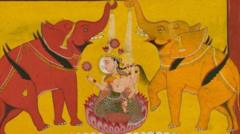
Serpents to saints: The fascinating journey of India's spiritual art
Summary
A new exhibition at the British Museum in London showcases 189 pieces of spiritual art from India, ranging from 2000-year-old sculptures to manuscripts. Titled "Ancient India: Living Traditions," it highlights the changes in religious iconography in Hinduism, Buddhism, and Jainism from symbolic to more human forms between 200BC and AD600. The exhibit is divided into sections that explore nature spirits, the transformation of religious art in the three religions, and their spread beyond India.Key Facts
- The exhibition is called "Ancient India: Living Traditions" and is held at the British Museum in London.
- It includes 189 objects that reveal India's spiritual art evolution over centuries.
- Art from Hinduism, Buddhism, and Jainism is featured, showing a shift from symbolic to human forms.
- The exhibition covers the period between 200BC and AD600.
- A notable piece is a two-sided panel showing the Buddha's transformation from symbolic to human representation.
- Jain art in the exhibition highlights the 24 tirthankaras, or enlightened teachers, with early examples on pink sandstone.
- The exhibition is organized into sections, showing the progression and spread of these religions and their art.
Read the Full Article
This is a fact-based summary from The Actual News. Click below to read the complete story directly from the original source.

