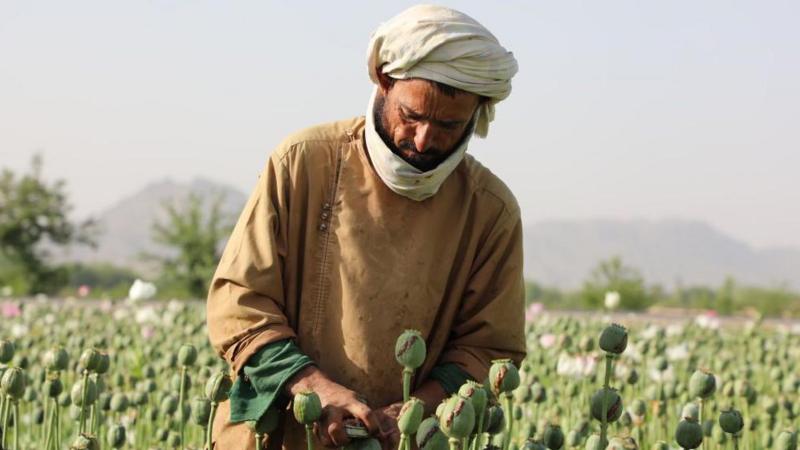
Afghan opium crop plummets after Taliban ban, UN survey finds
Summary
The United Nations reports that Afghanistan's opium production has significantly decreased following a ban by the Taliban in 2022. Land used for opium cultivation dropped by 20%, while opium production itself fell by 32%. Despite the ban, challenges like economic hardship and the rise of synthetic drugs persist.Key Facts
- Afghanistan was responsible for over 80% of the world's opium supply before the 2022 Taliban ban.
- Since the ban, the area growing opium poppy has reduced by 20%, and opium production is down by 32%.
- In 2023, the opium poppy was mostly grown in the north-east, with Badakhshan province being a major area.
- By 2025, four provinces (Balkh, Farah, Laghman, Uruzgan) were declared opium poppy-free.
- Some farmers continue small-scale opium cultivation despite the ban, risking punishment.
- Many farmers are struggling to find profitable alternatives to opium cultivation.
- Synthetic drug trafficking, like methamphetamine, has increased, with seizures 50% higher in late 2024 versus the previous year.
- The ban has caused some violent clashes between farmers and the Taliban, particularly in the north-east.
Read the Full Article
This is a fact-based summary from The Actual News. Click below to read the complete story directly from the original source.