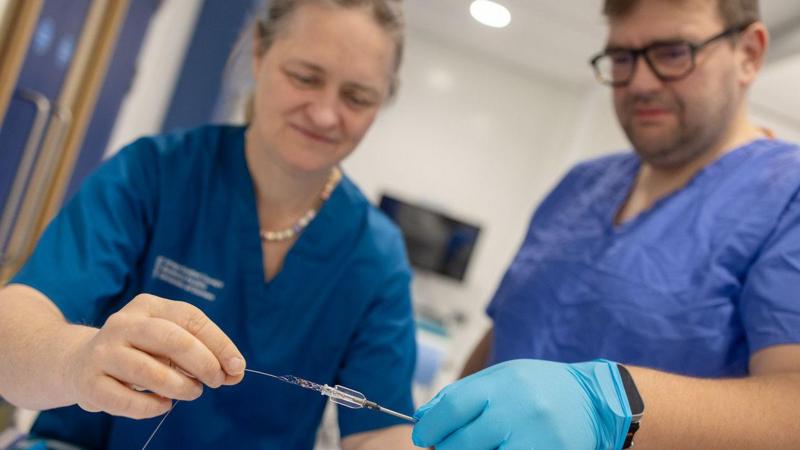
Dundee and US surgeons achieve world-first stroke surgery using robot
Summary
Surgeons from Scotland and the United States have used a robot to complete a world-first stroke surgery. The procedure was done remotely on human bodies donated to science, showing that doctors can perform complex procedures from different locations. This technological advancement might improve stroke care by providing faster access to specialist treatment.Key Facts
- Surgeons from Dundee, Scotland, and the U.S. completed a stroke surgery using a robot for the first time on human cadavers.
- Prof Iris Grunwald performed surgery from Ninewells Hospital in Dundee, while the cadaver was elsewhere in the city.
- Ricardo Hanel in Florida carried out a similar procedure on a body in Dundee, over 4,000 miles away.
- The surgery might allow quicker specialist access, potentially improving stroke recovery rates.
- The University of Dundee is a key global training center for stroke treatment and the only UK site where doctors can practice on human-realistic cadavers.
- The technology used is from a Lithuanian company, Sentante, and connects the surgeon's tools remotely to operate in real-time.
- The team intends to start clinical trials to further test this technology next year.
- Ischaemic strokes are caused by clots blocking blood flow to the brain, and thrombectomy is the procedure for removing the clots.
Read the Full Article
This is a fact-based summary from The Actual News. Click below to read the complete story directly from the original source.