Summary
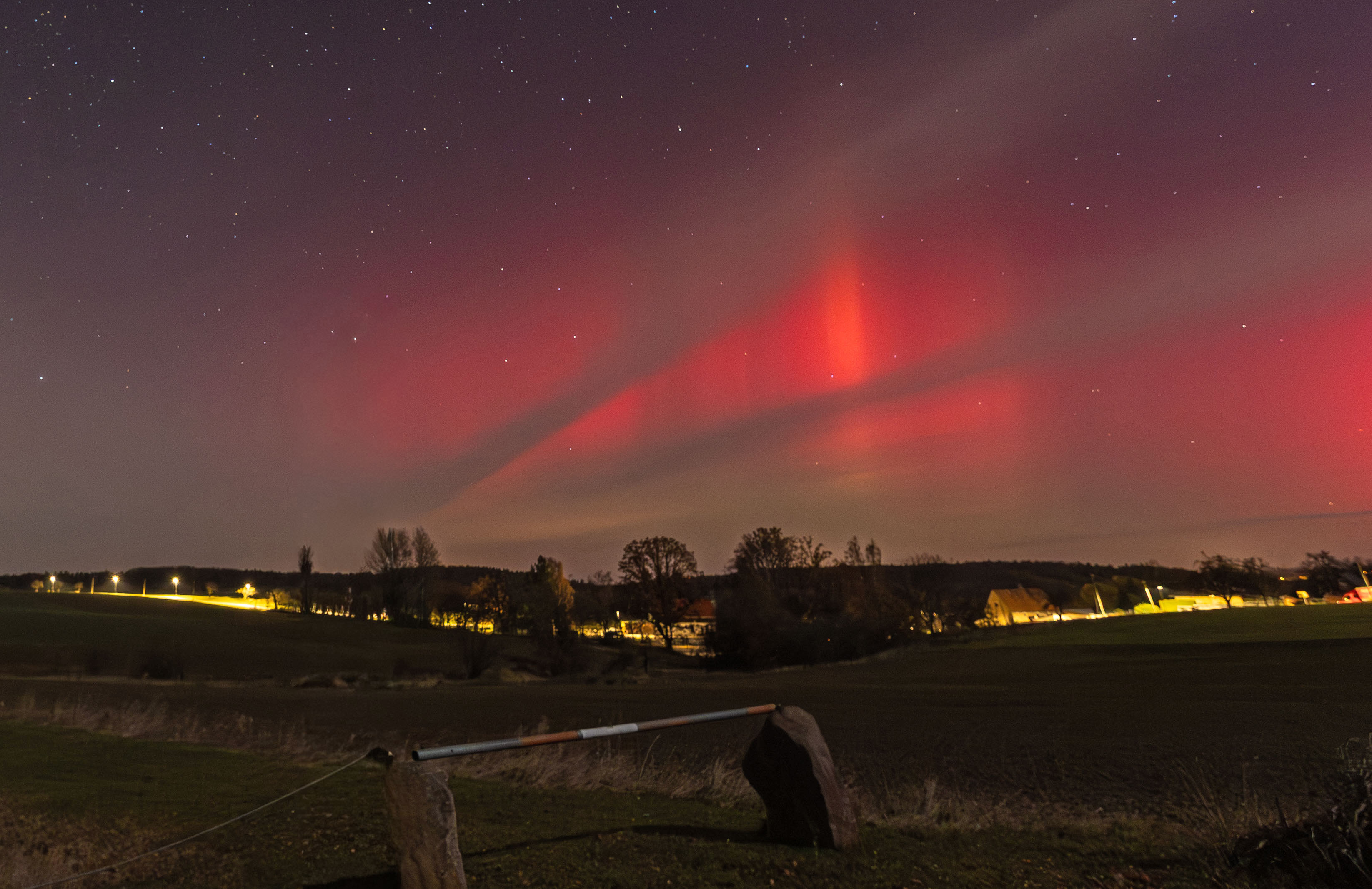
The aurora borealis, also known as the northern lights, will be visible in parts of the U.S., Canada, and the U.K. due to a strong geomagnetic storm caused by solar eruptions. The NOAA has issued a G4 geomagnetic storm watch, which means there is a severe level of space weather activity. The auroras may also affect power grids, satellites, and GPS systems.
Key Facts
- A geomagnetic storm watch at the G4 level has been issued by NOAA, indicating a severe storm.
- The storm follows a series of solar eruptions called coronal mass ejections (CMEs).
- The most intense CME is expected to increase aurora activity midday on Wednesday.
- Clear skies in parts of the U.S. will aid visibility of the northern lights, especially in Minnesota, Wisconsin, and the Dakotas.
- The aurora might disrupt power grids, satellites, and GPS systems.
- Peak visibility in Canada and northern Britain is expected around midnight.
- Aurora forecasts can range from immediate to months ahead, using satellite data from space.
- A G4 storm is just below the most extreme level on the G-scale, capable of causing widespread effects.