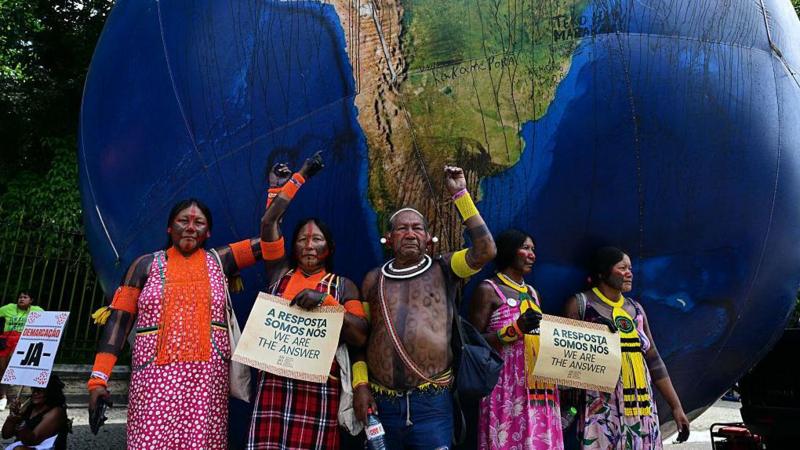
Brazil creates new Indigenous territories after COP30 protests
Summary
Brazil has created 10 new Indigenous territories following protests at the COP30 climate summit in Belém. These territories will have protected cultural and environmental rights under Brazilian law. The move follows previous actions by President Lula's government to recognize Indigenous lands.Key Facts
- Brazil designated 10 new Indigenous territories after protests at COP30 climate summit.
- These areas include parts of the Amazon and are legally protected under Brazilian law.
- President Lula's government recognized Indigenous possession of 11 territories last year.
- Protests at COP30 included signs reading "demarcation now" and "our forests are not for sale."
- Indigenous reserves restrict mining, logging, and commercial farming to prevent deforestation.
- A study suggests the new territories could reduce deforestation by 20% and cut carbon emissions by 26% by 2030.
- The new protected areas are home to various Indigenous groups, including the Mura and Guarani-Mbya.
- Indigenous lands currently make up about 13.8% of Brazil's territory, equivalent to the size of Colombia.
Read the Full Article
This is a fact-based summary from The Actual News. Click below to read the complete story directly from the original source.