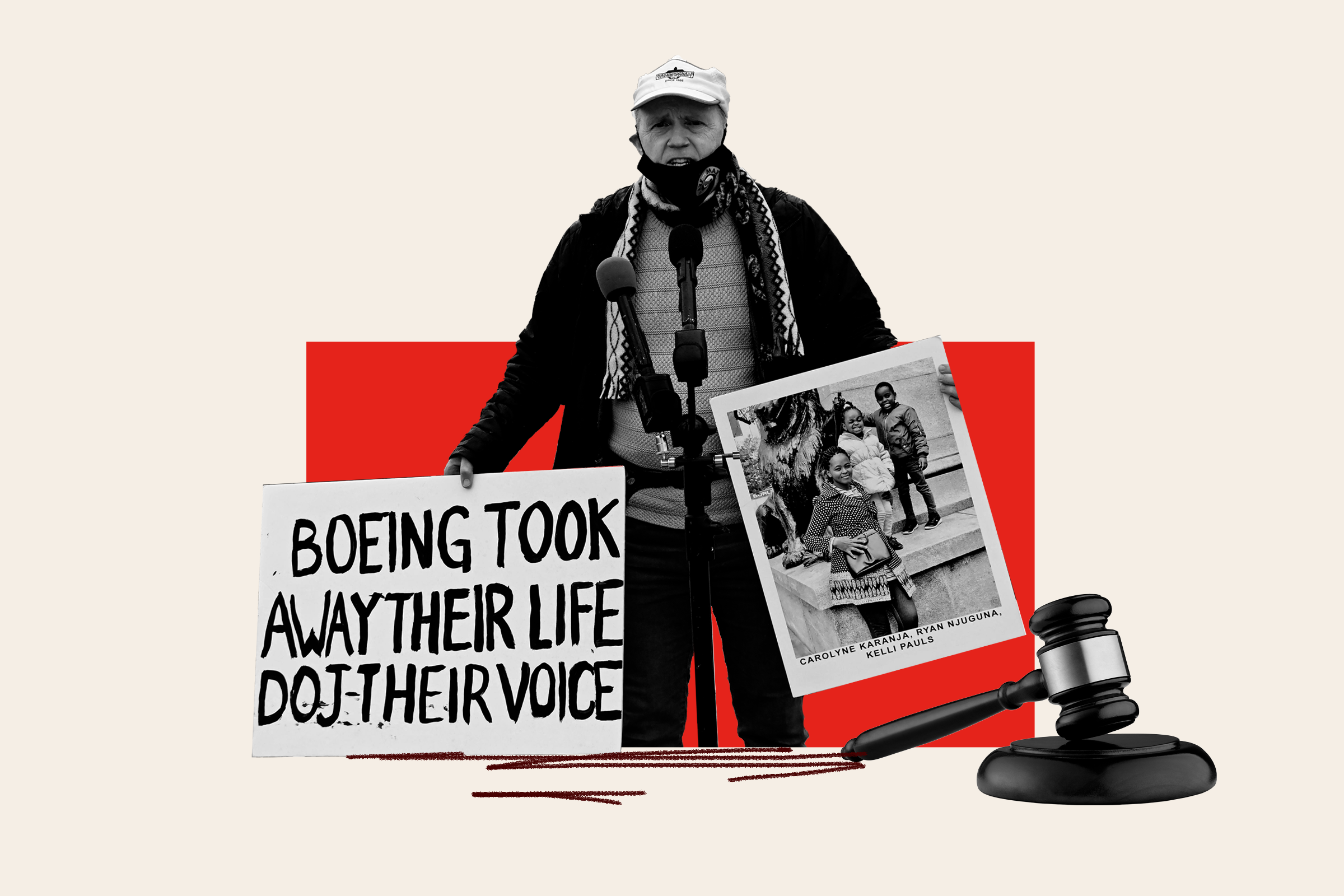
Boeing’s Immunity Deal on Plane Crash Faces Rare Legal Challenge
Summary
Families of the victims from the two Boeing 737 Max 8 crashes have asked a U.S. appeals court to reconsider a decision that dropped Boeing's criminal charges. They want to challenge the current agreement, which allowed Boeing to avoid further prosecution. The legal action could affect how companies are held accountable for safety issues in the future.Key Facts
- The legal action is a petition for a writ of mandamus, which means asking a court to review a lower court's decision.
- 346 people died in the two Boeing 737 Max 8 crashes, which happened due to a faulty flight control system called MCAS.
- Boeing's criminal charge of conspiracy to defraud the United States was dismissed through a non-prosecution agreement with the Department of Justice (DOJ).
- The families' legal challenge targets this DOJ decision, arguing it fails to hold Boeing accountable.
- The case could influence how victims' rights are treated and how aviation safety law enforcement is carried out in the future.
- Internal communications at Boeing revealed test pilots knew about the MCAS issues as early as 2016, before the crashes.
- The Boeing 737 Max fleet was grounded globally after the crashes, and changes were made to the faulty system before the aircraft returned to service in November 2020.
Read the Full Article
This is a fact-based summary from The Actual News. Click below to read the complete story directly from the original source.