Ozone layer on track for full recovery after UN treaty "success story"
Summary
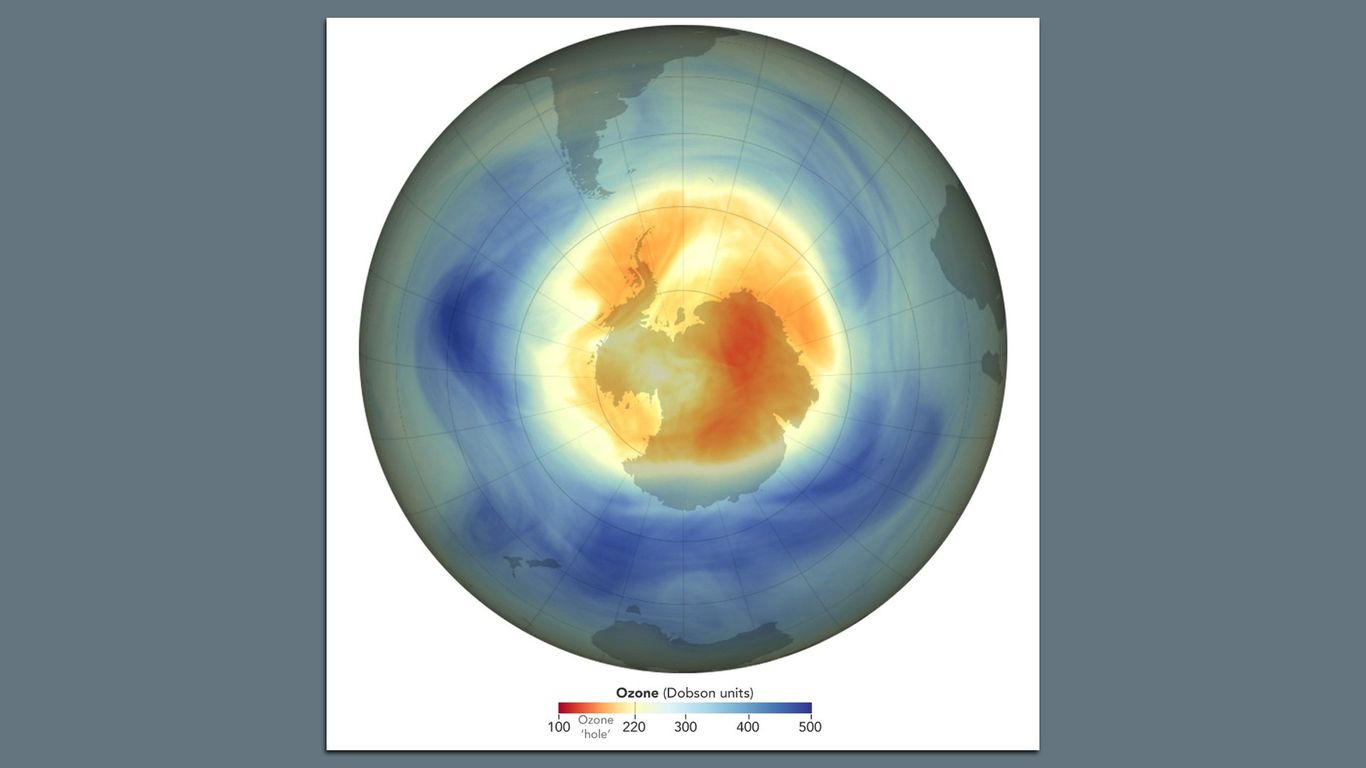
The ozone layer over Antarctica is on track for a full recovery, thanks to international efforts to reduce ozone-depleting chemicals like CFCs. A recent report by NOAA and NASA shows that the size of the ozone hole has been decreasing since the adoption of the Montreal Protocol, an agreement signed in 1987. The recovery is expected to continue, reaching levels similar to those before significant depletion by the late 2060s.Key Facts
- The ozone layer protects Earth from harmful ultraviolet radiation from the sun.
- The 2025 ozone hole over Antarctica was the fifth smallest since 1992.
- The Montreal Protocol, signed in 1987, aims to phase out substances that deplete the ozone layer.
- The size of the ozone-depleting substances has declined by about a third since peaking in the year 2000.
- A weaker-than-normal polar vortex in August contributed to a smaller ozone hole this year.
- The hole was largest on September 9, measuring 8.83 million square miles, about 30% smaller than previous records.
- The ozone layer is projected to recover to pre-depletion levels by the late 2060s.
- Paul Newman from NASA noted the success of reducing chlorine levels, which has helped shrink the hole.
Read the Full Article
This is a fact-based summary from The Actual News. Click below to read the complete story directly from the original source.