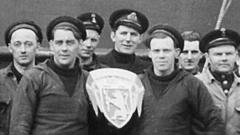
How the 'Shetland Bus' helped Norway resist Nazi Germany
Summary
During World War Two, an undercover mission named the 'Shetland Bus' was employed to aid the resistance in Nazi-occupied Norway. Small fishing boats carried cargo, special agents, and fleeing refugees from Scotland's most northerly islands to the coast of Norway. To mark the 80th Anniversary of Victory in Europe (VE) Day, six historic ships from the operation will replicate their journey from Bergen, Norway, back to Shetland.Key Facts
- The 'Shetland Bus' was a secret operation during World War Two that supported the Norway's resistance against Nazi occupation.
- Small fishing boats were used to transport cargo, special agents, and refugees from Scotland to Norway's coast.
- The boats would travel in winter, under the cover of darkness to avoid detection by German patrols.
- Between 1940 and 1945, the 'Shetland Bus' made 200 trips across the North Sea.
- The mission succeeded in transporting hundreds of resistance agents, tonnes of weapons, supplies and over 300 Norwegian refugees.
- To commemorate the 80th Anniversary of Victory in Europe (VE) Day, six boats from the original mission will replicate their journey from Bergen, Norway, to Shetland.
- Norway was invaded by Nazi Germany on 8 April 1940, forcing the Norwegian government and thousands of citizens to seek refuge in the UK.
- The 'Shetland Bus' operations were, at times, treacherous due to heavy North Sea conditions and the risk of being discovered by German aircraft or patrol boats.
Read the Full Article
This is a fact-based summary from The Actual News. Click below to read the complete story directly from the original source.