Summary
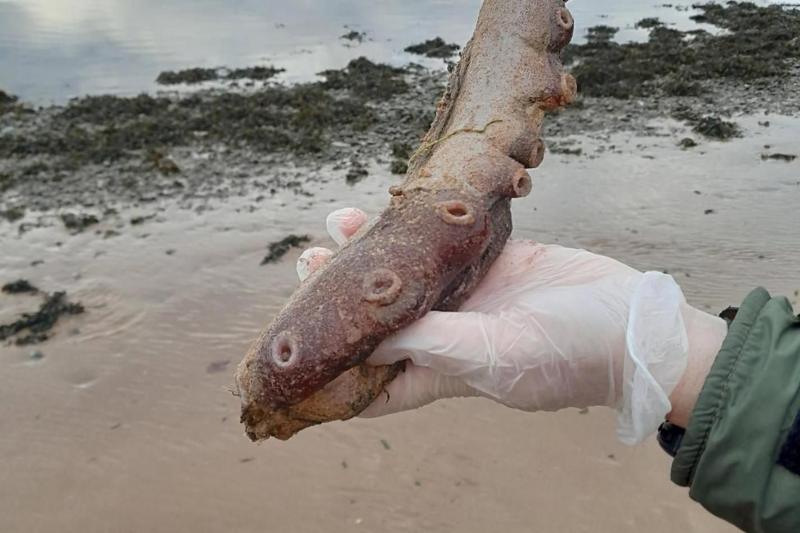
Remains of a seven-arm octopus were found on a beach in Aberdeenshire, Scotland. Experts identified it as a rarely seen deep-sea creature known as Haliphron atlanticus, leaving them puzzled about how it washed ashore. This species typically lives deep under the sea, and its appearance provides a unique chance for scientific study.
Key Facts
- Remains of a seven-arm octopus were discovered in Forvie National Nature Reserve, Scotland.
- The octopus is a deep-sea species called Haliphron atlanticus.
- Local walkers found the tentacles on the beach and notified reserve staff.
- This octopus is one of the largest species, with females growing up to 13 feet (4 meters).
- The appearance on the beach is rare because these octopuses usually live hundreds of meters below the sea surface.
- Marine biologists are studying the remains to learn more about the species.
- The North Sea, where the octopus was found, is generally shallower than its usual deep-sea habitat.
- Speculation arose about how it got there, with theories including it being carried by deep water currents or brought up by fishermen.