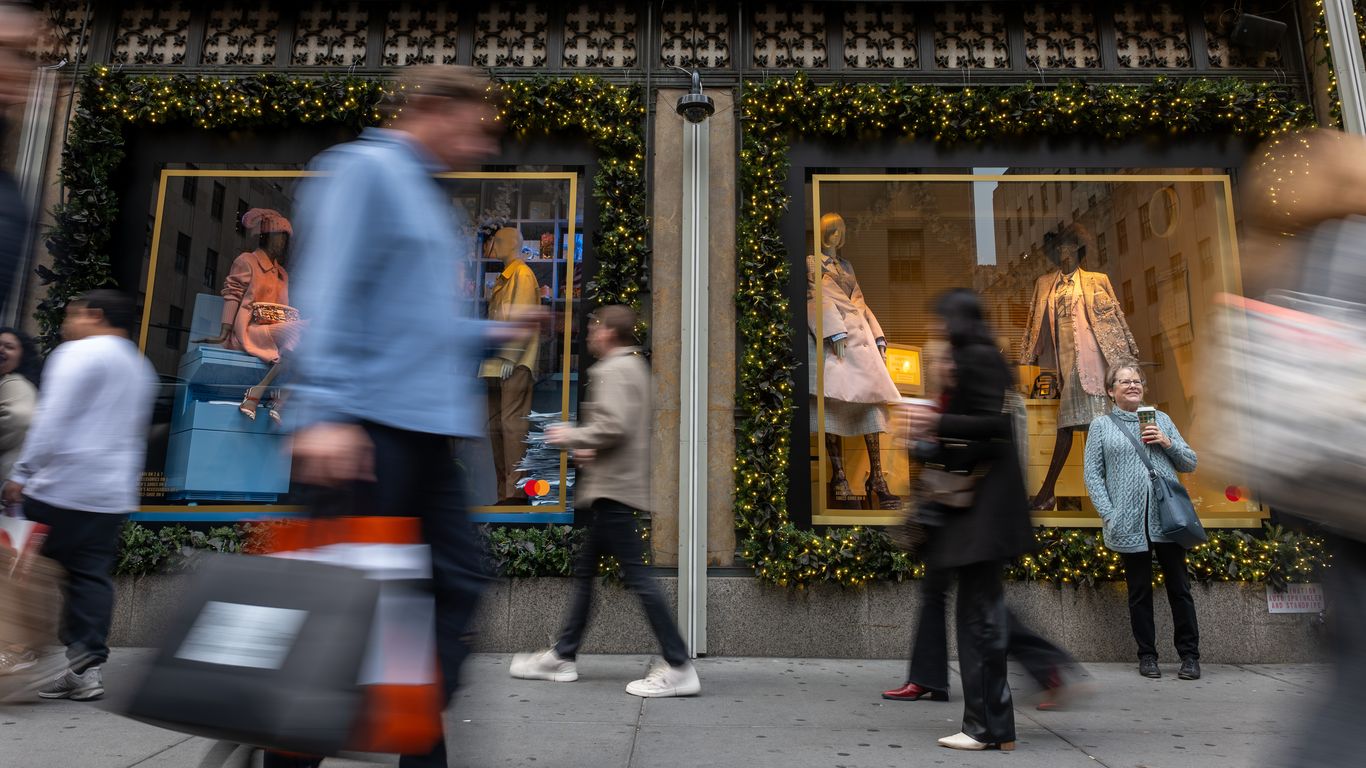
Early holiday shopping reflects the economy: Fine, with potential cracks
Summary
Early holiday shopping numbers in the U.S. appeared strong, but there are concerns about underlying weaknesses in the economy. Retail sales increased, but spending was more focused on necessities instead of non-essential items. Analysts are observing how economic factors may affect consumer behavior for the rest of the holiday season.Key Facts
- Black Friday sales, not counting cars, rose 4.1% this year, according to data from Mastercard SpendingPulse.
- Cyber Monday sales increased by about 7%, setting a new record, based on Adobe Analytics information.
- The National Retail Federation predicts the first $1 trillion holiday shopping season.
- Spending growth for holiday items was up 2.6% for the week ending November 29, according to Bank of America.
- Lower- and middle-income consumers are reported to be focusing on buying necessities due to stretched budgets.
- Walmart's CFO noted a significant gap in wage growth across different income groups, the largest in a decade.
- Retailers see strong sales in items priced under $100, as reported by Placer.ai.
- Macy's raised its full-year outlook, but there are still uncertainties about consumer spending among aspirational clients.
Read the Full Article
This is a fact-based summary from The Actual News. Click below to read the complete story directly from the original source.