Summary
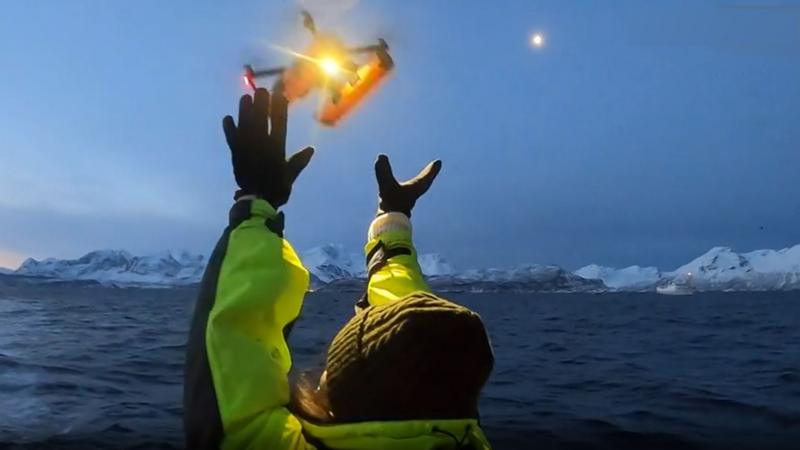
Drones have been used by scientists to collect breath samples from whales in the Arctic. These samples revealed the presence of a highly infectious virus called cetacean morbillivirus, which can cause mass deaths among marine mammals. This new drone method helps monitor whale health without harming them.
Key Facts
- Scientists used drones to collect breath samples from whales such as humpback, fin, and sperm whales in the Arctic.
- The drones flew through the whales' exhaled droplets, called "blows," to collect samples on sterile petri dishes.
- Researchers detected cetacean morbillivirus, a virus known to cause mass strandings of whales and dolphins.
- This virus can easily spread between dolphins, whales, and porpoises, causing severe disease and death.
- The study confirms the virus's presence above the Arctic Circle for the first time.
- Monitoring with drones allows researchers to check whale health without causing stress or harm to the animals.
- The research was conducted by teams from King's College London, The Royal (Dick) School of Veterinary Studies, and Nord University.
- The findings were published in BMC Veterinary Research and aim to help with early detection of threats to ocean life.