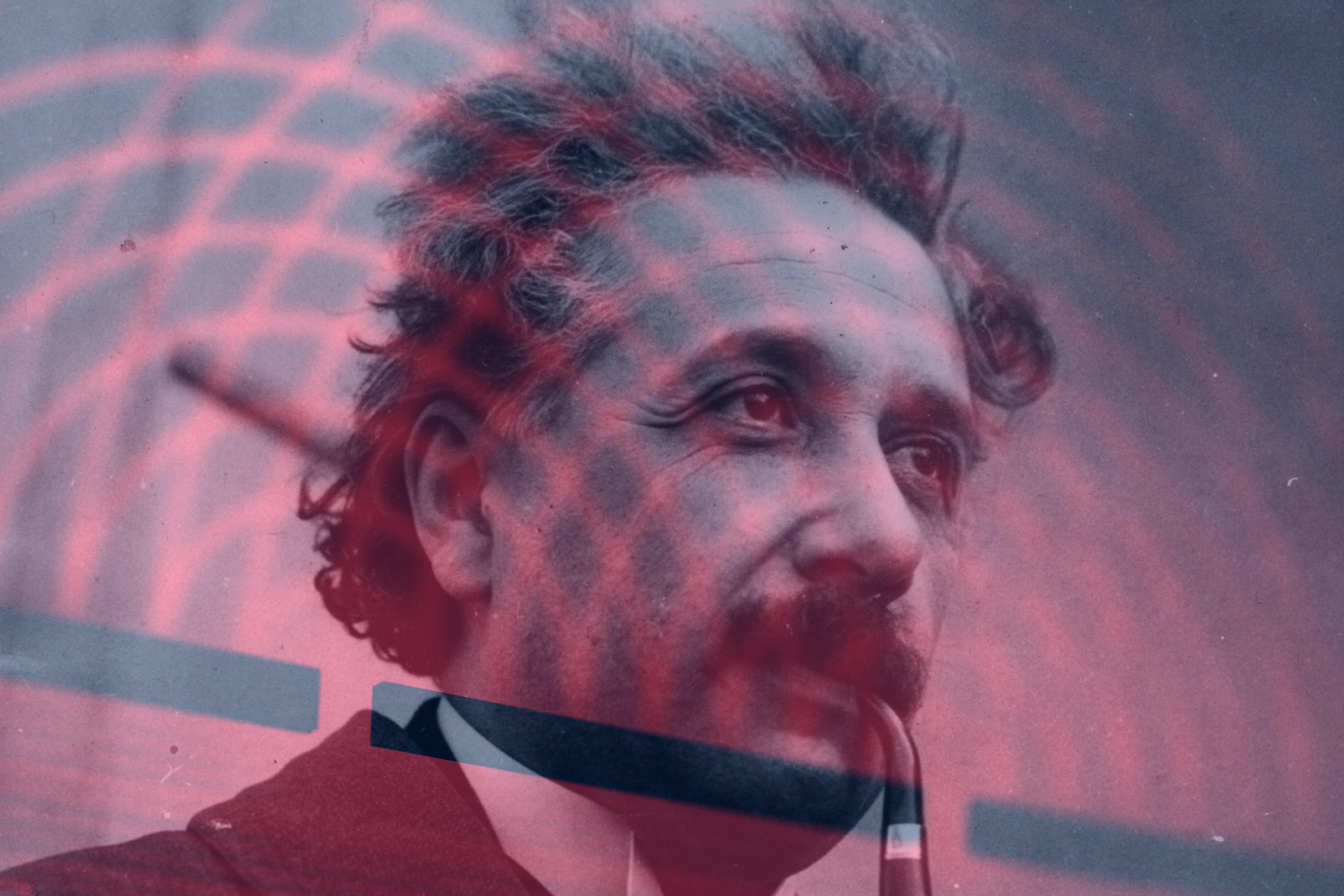
Einstein Wrong in Bohr Debate, New Experiment Proves 98 Years Later
Summary
Scientists in China recently conducted an experiment that supports Niels Bohr's ideas about quantum mechanics, disproving Albert Einstein's opposing viewpoint. This experiment focused on "complementarity," a principle stating that certain particle properties cannot be measured at the same time.Key Facts
- The experiment addressed a nearly 100-year-old scientific debate between Albert Einstein and Niels Bohr.
- Bohr's principle of complementarity suggests that paired properties of particles, like position and momentum, cannot be measured simultaneously.
- Einstein, although an important figure in quantum mechanics, disagreed with the idea of inherent randomness in the universe.
- Einstein initially challenged Bohr's ideas using a thought experiment involving the behavior of light in the double-slit experiment.
- The modern experiment used rubidium atoms and adjusted their momentum to test the complementarity principle.
- The findings confirmed Bohr's hypothesis and showed that measuring one property of a particle affects the precision of measuring another.
- The experiment demonstrated the principle using quantum entanglement, a concept where particles become linked and the state of one affects the other.
Read the Full Article
This is a fact-based summary from The Actual News. Click below to read the complete story directly from the original source.