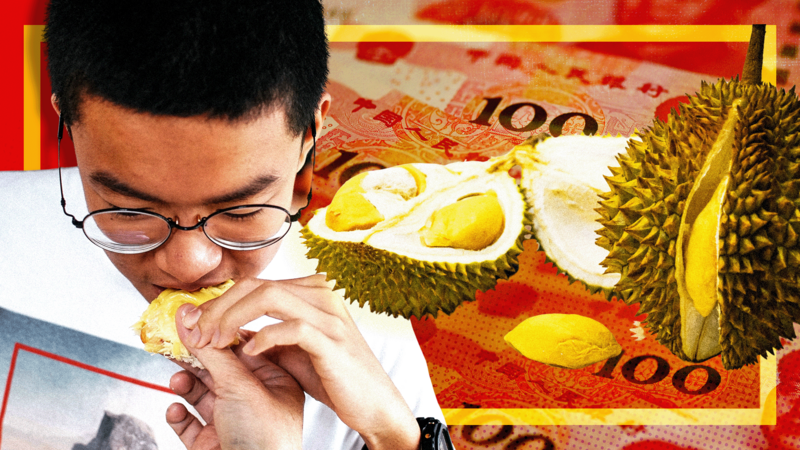
'Hermès of durian': The luxury fruit cashing in on China's billion-dollar appetite
Summary
China's increasing demand for durians, particularly the Musang King variety from Malaysia, has significantly impacted South East Asia's farming communities. In 2024, China imported a record $7 billion worth of durians, making up over 90% of the world's durian exports. This growing interest has led to changes in agricultural practices in regions like Raub, Malaysia, where farmers are replacing oil palms with durian trees.Key Facts
- China imported a record $7 billion worth of durians in 2024, a three-fold increase from 2020.
- More than 90% of the world's durian exports now go to China.
- Raub, Malaysia, has become known for the Musang King durian, which is highly valued in China.
- Farmers in Raub are switching from oil palm trees to durian trees due to high demand.
- The Musang King durian is sometimes called the "Hermès of durians" due to its premium status and high price.
- The durian's strong smell is controversial, causing bans on public transport and even grounded planes.
- Thailand and Vietnam are the largest suppliers of durians to China, but Malaysia’s market share is growing fast.
- The average price of a durian can vary widely based on quality and season, from less than $2 in South East Asia to up to $100 for premium varieties like the Musang King.
Read the Full Article
This is a fact-based summary from The Actual News. Click below to read the complete story directly from the original source.