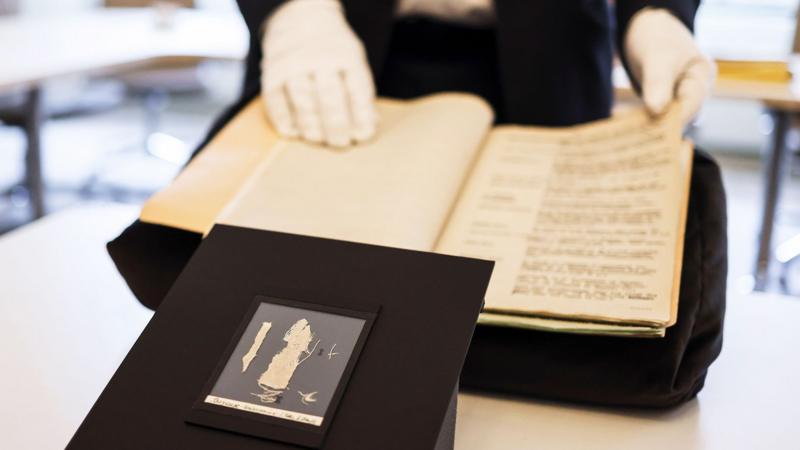
Germany returns stolen fragments of Bayeux Tapestry to France
Summary
Germany returned two small pieces of the Bayeux Tapestry to France. These pieces were taken by a German scientist during the Nazi occupation of France in 1941. The fragments were discovered in a German archive and handed back to the mayor of Bayeux.Key Facts
- Germany returned two pieces of the Bayeux Tapestry to France.
- These pieces were stolen by a German scientist named Karl Schlabow in 1941.
- The pieces were found in the Schleswig-Holstein state archives in Germany.
- The Bayeux Tapestry is a 70-meter-long embroidery telling the story of the Norman conquest of England in 1066.
- The head of the archive identified the fragments and returned them to Bayeux's mayor.
- The Bayeux Tapestry is due to be displayed at the British Museum in London in September.
- A petition of more than 77,000 signatures opposes moving the tapestry due to its fragility.
- The UK government insures the tapestry for £800 million during its display in London.
Read the Full Article
This is a fact-based summary from The Actual News. Click below to read the complete story directly from the original source.
