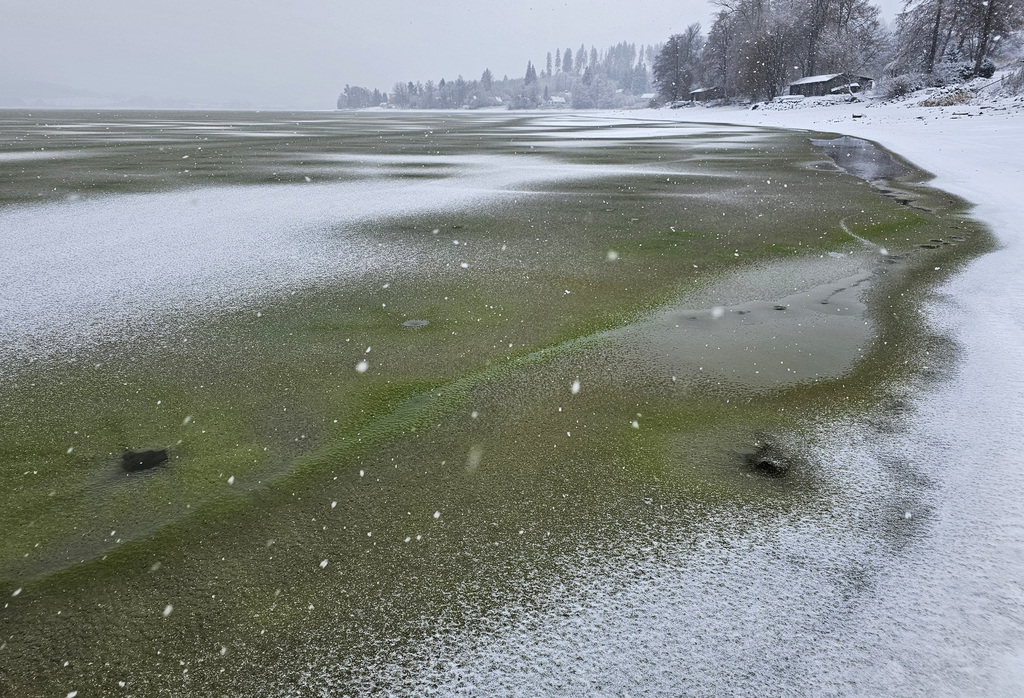
Scientists Capture Rare 'Green Ice' Covering Lake
Summary
Scientists in the Czech Republic discovered large areas of "green ice" on Lake Lipno. This rare phenomenon is caused by a type of algae called cyanobacteria, which is thriving due to excess nutrients and climate changes. Researchers believe this could happen more often in the future as environmental conditions continue to change.Key Facts
- "Green ice" was found on Lake Lipno in the Czech Republic.
- The ice turned green because of cyanobacteria, also known as blue-green algae.
- Scientists say such events are rare and not well-documented globally.
- The algae thrive in water with too many nutrients, especially phosphorus, often from human activities.
- Normally, cyanobacteria disappear by September, but at Lake Lipno, they can last into December and January.
- Calm weather, weak winds, and lots of sunshine helped the algae stay near the surface longer last year.
- Researchers connect this event to changes from climate warming and nutrient pollution.
Read the Full Article
This is a fact-based summary from The Actual News. Click below to read the complete story directly from the original source.