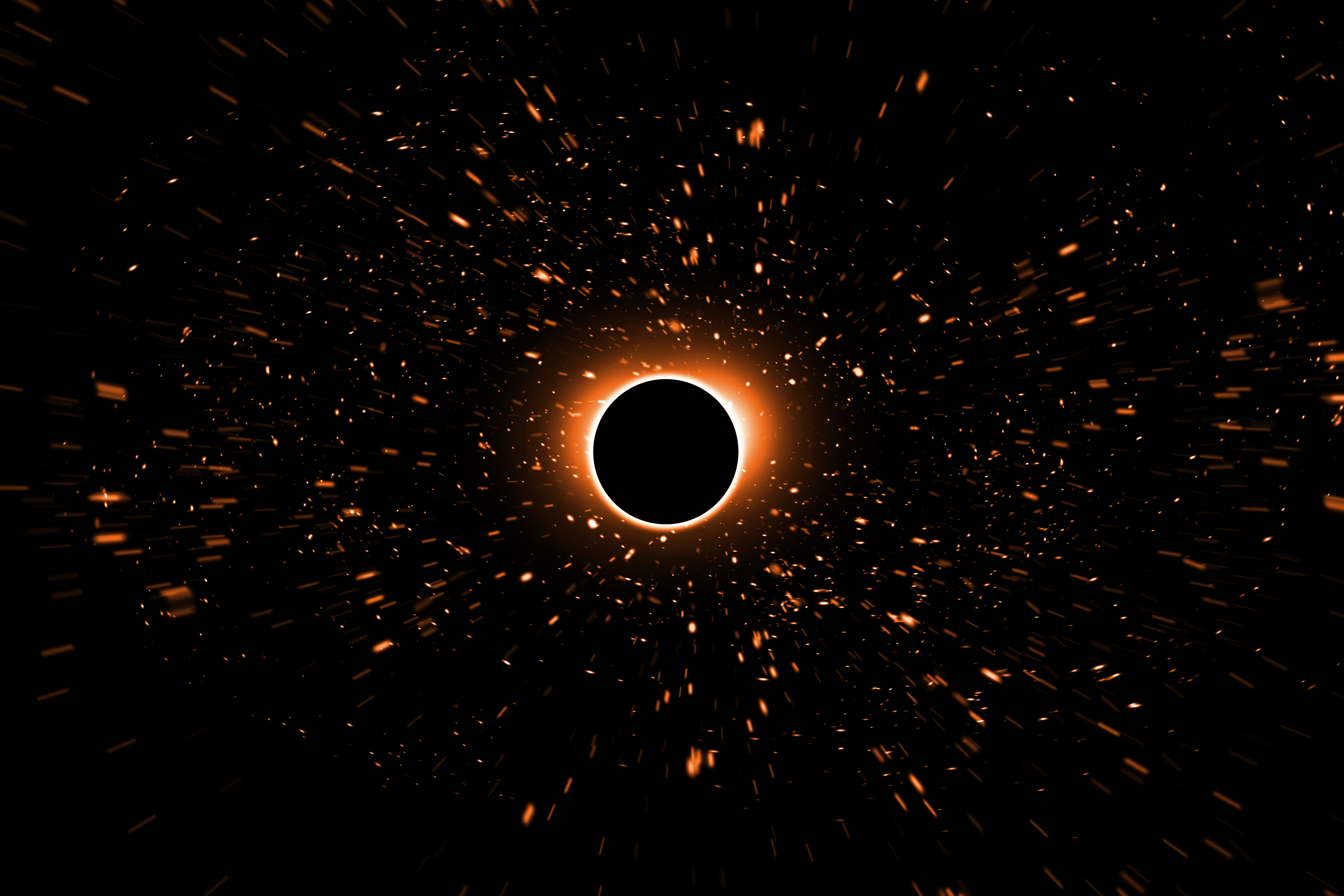
Exploding Black Hole Could Crack Mystery of Dark Matter
Summary
An explosion of a rare type of black hole might explain a high-energy neutrino detected in 2023 and possibly shed light on dark matter. Physicists suggest that these black holes, called quasi-extremal primordial black holes, could be responsible for this phenomenon. The idea is that these black holes lose mass over time and explode, releasing detectable energy.Key Facts
- A high-energy neutrino was detected on Earth in 2023.
- This neutrino had 100,000 times more energy than particles made by the Large Hadron Collider.
- Researchers believe this might come from an exploding black hole called a quasi-extremal primordial black hole.
- Primordial black holes are thought to have formed soon after the Big Bang.
- They lose mass and eventually explode, a process linked to something called Hawking radiation.
- Existing instruments like the Cubic Kilometre Neutrino Telescope can detect these explosions.
- The concept of a "dark charge" is introduced, which might explain inconsistencies in data and link to dark matter.
- The study could help verify new particles beyond the known Standard Model of physics.
Read the Full Article
This is a fact-based summary from The Actual News. Click below to read the complete story directly from the original source.