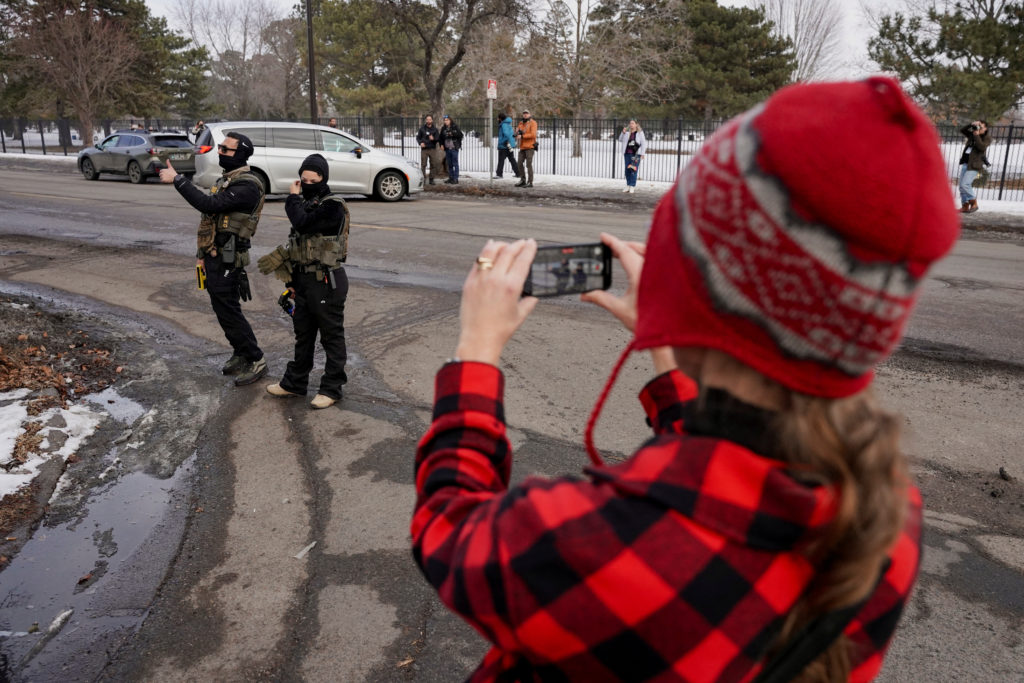
Here's what to know about the constitutional right to record immigration agents in public
Summary
A federal judge ruled that people can legally record immigration agents in public under the First Amendment. However, the Department of Homeland Security considers recording agents as potentially obstructive or violent behavior. Legal and public opinion varies, creating tension between civil rights and law enforcement practices.Key Facts
- A woman in Minnesota recorded a federal agent who attempted to take her phone.
- In Maine, another woman recorded an agent, who then labeled her a "domestic terrorist."
- Minnesota's governor has encouraged residents to videotape immigration agents' activities.
- Homeland Security Secretary Kristi Noem claims recording agents is an act of violence.
- The First Amendment allows recording in public spaces, but some states have distance rules.
- A federal judge ruled against the Department of Homeland Security, allowing a case about filming rights to proceed.
- Filming is legal under the First Amendment, but obstruction requires physical interference.
- Legal experts clarify that recording without physically obstructing isn't a criminal act.
Read the Full Article
This is a fact-based summary from The Actual News. Click below to read the complete story directly from the original source.