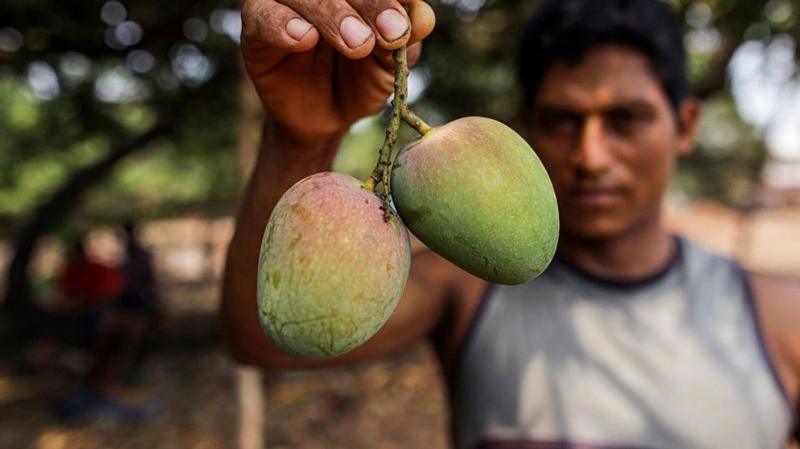
How do you modernise mango farming?
Summary
India, the world's largest mango producer, faces challenges in mango farming due to climate change and rising costs. Researchers are working on developing more resilient mango varieties and using modern farming techniques to improve yields. These efforts include genetic research, new farming methods, and adopting more resilient mango types.Key Facts
- India produces 23 million tonnes of mangoes each year, about 20% of its total fruit production.
- Climate change affects weather patterns, making mango farming unpredictable in India.
- Farmers face increased costs for pesticides, labor, and irrigation but are seeing lower yields.
- India cultivates nearly 700 types of mangoes, with different regions favoring specific varieties.
- Scientists are developing new mango varieties to withstand wider climate conditions and pests.
- Mango trees take 5 to 10 years to produce flowers after breeding.
- The mango genome was sequenced in 2016, aiding in identifying genes for key fruit traits.
- Modern farming practices, like canopy management and bagging, help improve mango yields.
Read the Full Article
This is a fact-based summary from The Actual News. Click below to read the complete story directly from the original source.