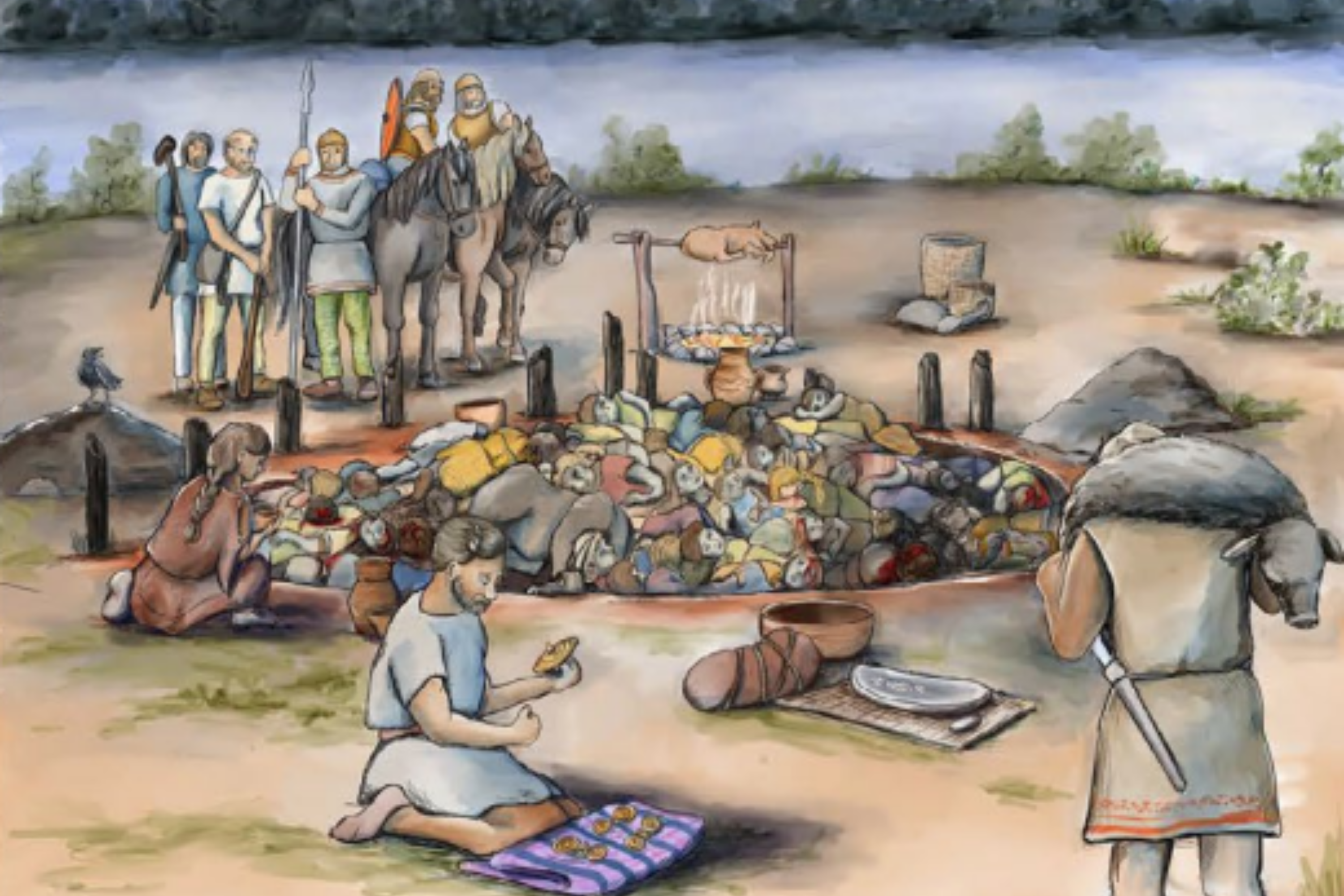
Archaeologists Discover 1,100-Year-Old Mass Grave of Women and Children
Summary
Archaeologists in Serbia discovered a mass grave from the 9th century BCE at Gomolava, containing the remains of mostly women and children who appear to have died violently. The findings suggest that the grave was part of a larger regional conflict. The site includes signs of careful burial practices and a variety of personal and animal remains.Key Facts
- The mass grave was found at Gomolava, Serbia, and dates back to the 9th century BCE.
- 77 individuals were studied; 66% were children and adolescents, and 71% of sex-identified individuals were female.
- Many skeletons showed signs of violence, including injuries to the head and evidence of defensive wounds.
- Isotope analysis suggests that those buried came from different regions.
- The grave included personal items and animal bones, indicating significant burial rituals.
- The grave is located in an area of cultural interaction, emphasizing its archaeological importance.
- A similar grave was discovered in 1954, also mainly containing women's remains, thought initially to be pandemic victims.
- Further research is needed to explore connections between community ties, violence, and mobility in the region's history.
Read the Full Article
This is a fact-based summary from The Actual News. Click below to read the complete story directly from the original source.