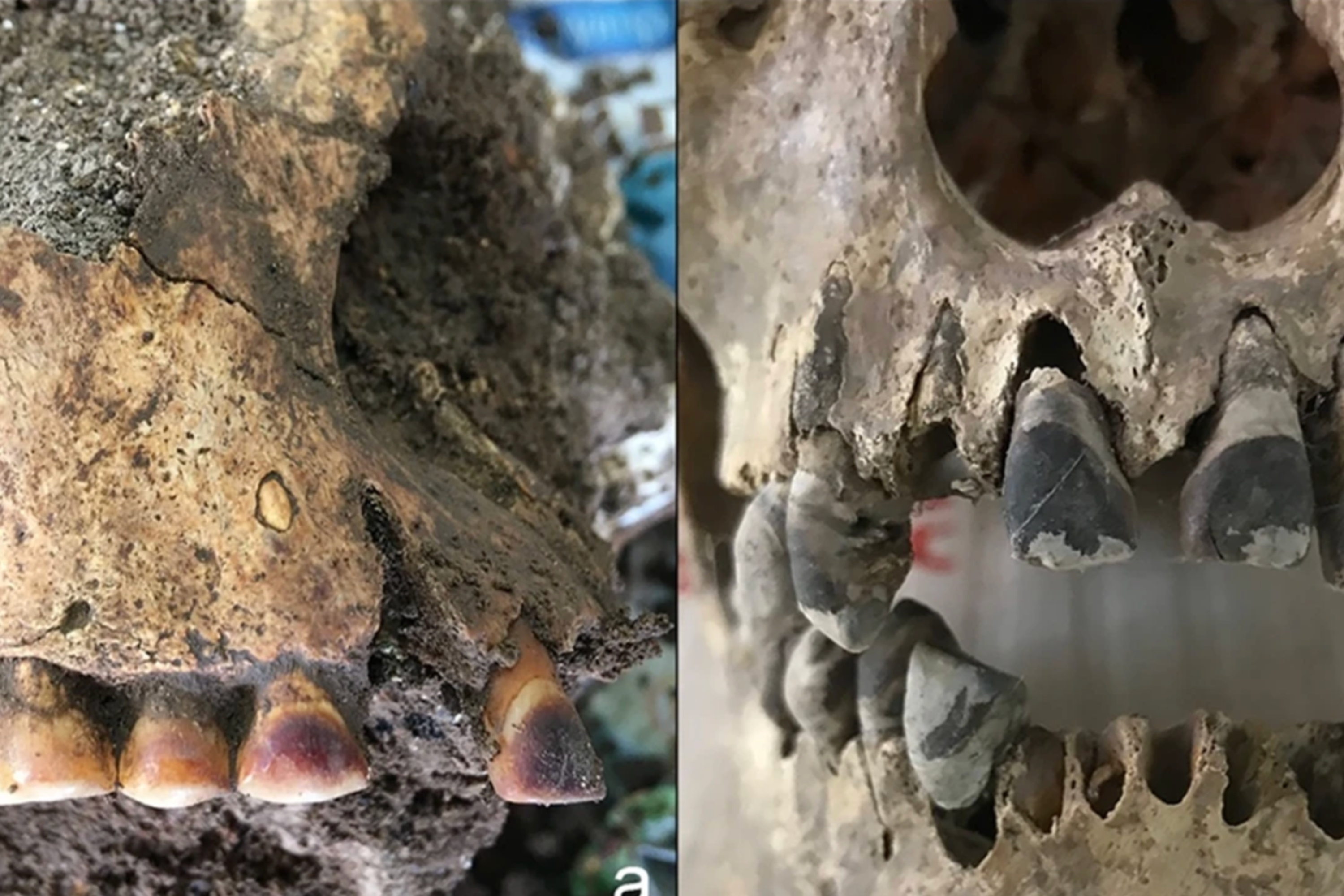
Archaeologists Reveal 2,000-Year-Old Skeleton With All Teeth Dyed Black
Summary
Archaeologists in Vietnam have found a 2,000-year-old skeleton with blackened teeth, showing evidence of an ancient cosmetic tradition. The practice used iron salts and tannin-rich plant extracts to permanently darken teeth, a custom that linked to beauty and cultural identity in Vietnam until the 20th century.Key Facts
- Archaeologists discovered a 2,000-year-old skeleton with black teeth in Vietnam's Red River Delta.
- The findings show the earliest known evidence of tooth blackening in Vietnam.
- Chemical analysis identified iron and sulfur on the teeth, suggesting the use of iron salts.
- Iron salts combined with plant extracts to create a black color that was applied to teeth.
- Tooth blackening was a beauty and cultural practice common in Vietnamese history.
- The practice began to decline in the 1900s due to Western cultural influences.
- Researchers linked this ancient tradition to later practices that occurred up to the 20th century.
- The custom possibly replaced an older tradition of tooth ablation (tooth removal) as a cultural marker.
Read the Full Article
This is a fact-based summary from The Actual News. Click below to read the complete story directly from the original source.