The Federal Reserve has created five task forces led by experts from economics, business, and technology to suggest changes to how the central bank operates. These groups will study topics like the impact of artificial intelligence, data use, the Fed’s large balance sheet, inflation, and communication strategies.
Key Facts
The Federal Reserve announced five task forces to review and recommend improvements in its operations.
Leaders include venture capitalist Marc Andreessen, economist Raj Chetty, former Bank of England governor Mervyn King, and other notable figures in economics and business.
Fed Chair Kevin Warsh has sought to reduce the Fed’s $6.7 trillion in government bond holdings and change how the Fed communicates about interest rates.
One task force focuses specifically on the economic effects of artificial intelligence and new technologies.
Raj Chetty’s task force will evaluate the data sources used by the Fed, with a focus on economic mobility and tracking families’ financial progress.
Another group will review the Fed’s balance sheet, which has grown significantly since the 2008 financial crisis.
Additional task forces will study inflation strategies and how the Fed communicates with the public.
The Federal Reserve staff will support all task forces in their work.
Read the Original
Want the full story? Tap a source to open the original
article.
The United States Strategic Petroleum Reserve (SPR) recently dropped to its lowest level since 1983 amid rising tensions between the US and Iran. These tensions have caused global oil prices to increase, affecting fuel costs for American consumers despite the US being a top oil producer.
Key Facts
The SPR fell by 6.2 million barrels to 319.5 million barrels as of early July.
The SPR has a total capacity of 713.5 million barrels but is currently far below that.
US President Donald Trump noted that strikes on Iran cause oil prices to jump.
Brent crude oil prices rose to $78.02 a barrel, the highest since June 19.
The US produces most of its own oil and is a net exporter, but still imports about 40% of its crude.
Only about 7% of US consumed oil passes through the Strait of Hormuz, a key shipping route near Iran.
Oil prices are set globally, so disruptions affecting any oil supply can increase prices worldwide.
The SPR was created in 1975 to provide emergency oil during supply disruptions like the Arab oil embargo.
Read the Original
Want the full story? Tap a source to open the original
article.
Nike and Adidas are competing strongly during the World Cup quarterfinals. Both companies are trying to become the top sports brand as the tournament continues.
Key Facts
The World Cup quarterfinals are currently happening.
Nike and Adidas are competing to be the leading sports brand.
The article is focused on the rivalry between these two companies during the event.
Both companies sponsor teams and players involved in the World Cup.
The competition between Nike and Adidas reflects the importance of sports events for business marketing.
This rivalry shows how major global sports events influence company strategies.
Read the Original
Want the full story? Tap a source to open the original
article.
Putting $100,000 into a 3-month certificate of deposit (CD) can earn about $936 to $973 in interest by October. CDs offer a fixed interest rate and protect the original money, making them a safe choice in today’s uncertain economy.
Key Facts
Current top 3-month CD interest rates range from 3.80% to 3.95%.
A $100,000 deposit in a 3-month CD can earn between $936.75 and $973.20.
Interest is fixed and guaranteed, so savers know exactly how much they will make.
CDs are insured by the FDIC up to $250,000, protecting the principal.
CDs can be a safe alternative during times of high inflation and economic uncertainty.
Online banks often offer better CD rates than local banks.
After the 3 months, savers can choose new investment strategies based on market conditions.
This approach gives a modest return and keeps money secure and accessible in a short time.
Read the Original
Want the full story? Tap a source to open the original
article.
The price of gold has dropped by more than 25% since January 2026, falling from nearly $5,600 to about $4,122 per ounce in July. This price decrease opens new opportunities for investors who were previously priced out, but they need to act quickly and wisely to benefit.
Key Facts
Gold prices reached a record high of nearly $5,600 per ounce in January 2026.
By July 9, 2026, gold had dropped approximately 26% to $4,122 per ounce.
Gold became too expensive for many investors during its price rise past $3,000, $4,000, and $5,000 marks.
Investors interested in gold should quickly choose the best type to invest in, such as bars, coins, gold IRAs (retirement accounts), or ETFs (gold-backed funds).
Experts recommend limiting gold investments to around 10% of an investor’s overall portfolio.
Gold primarily serves to protect money rather than to generate income.
It’s important to avoid scams by consulting reputable gold investing companies with good reviews.
Acting promptly is advised because drops in gold prices are often temporary, and prices may rise again.
Read the Original
Want the full story? Tap a source to open the original
article.
HVAC contracts often include hidden fees that homeowners may not notice at first. These fees can appear in financing, vague work clauses, refrigerant use, permits, disposal, and warranty costs. Knowing what to look for can help homeowners avoid unexpected extra charges.
Key Facts
Zero-percent financing deals often include hidden fees built into the equipment price.
Contracts may have vague clauses allowing contractors to charge more if extra work is needed.
New HVAC systems must use environmentally safer refrigerants, which can be listed as added fees.
Permit and disposal costs are sometimes not included in the initial estimate but added later.
Some contractors charge separate fees to register or activate equipment warranties.
A proper HVAC quote should be based on detailed calculations of your home’s needs, not rough estimates.
Asking for a written cash price alongside the financed price can reveal hidden financing costs.
Reputable contractors disclose all extra fees upfront with fixed amounts, not vague estimates.
Read the Original
Want the full story? Tap a source to open the original
article.
Moving $12,000 from a traditional savings account to a high-yield savings account can earn much more interest. High-yield accounts currently offer about 4% interest, compared to the average 0.38% in regular savings accounts, potentially adding up to nearly $500 in interest over one year.
Key Facts
The national average interest rate for traditional savings accounts is about 0.38%.
High-yield savings accounts offer roughly 4% interest, which is much higher.
A $12,000 deposit in a high-yield account at 4.10% interest can earn around $121 in 3 months.
After 6 months, the interest would be about $243 on the same amount.
After one year, the interest could total approximately $492.
High-yield savings accounts have variable rates that can change with market conditions.
Interest earnings could increase if rates rise, but could also decrease if rates fall.
High-yield savings accounts offer easy access to funds, unlike some investments.
Read the Original
Want the full story? Tap a source to open the original
article.
The Bank of England's chief economist, Huw Pill, said interest rates may need to rise this year to control inflation, which is currently above the Bank's 2% target. Pill is one of nine people who decide UK interest rates, a key factor affecting borrowing costs and prices.
Key Facts
Huw Pill is the chief economist at the Bank of England and a member of its Monetary Policy Committee (MPC).
The Bank of England aims to keep inflation at 2%, but current inflation is 2.8%.
Pill supports raising interest rates this year to help reduce inflation.
Interest rates affect mortgage costs, borrowing rates, and savings returns.
Productivity growth in the UK has slowed, especially in Wales where it is about 15% below the UK average.
Lower productivity in Wales contributes to lower wages and higher welfare claims.
Improving infrastructure and education are seen as ways to increase productivity and living standards.
Pill previously worked at the European Central Bank during the Eurozone crisis and views interest rate policy as an important but limited tool.
Read the Original
Want the full story? Tap a source to open the original
article.
Jet fuel prices have gone down after rising during the Iran war, but plane ticket prices remain high. Experts say strong travel demand and the shutdown of Spirit Airlines are keeping airfares expensive despite lower fuel costs.
Key Facts
Jet fuel prices dropped after rising due to the Iran war.
Plane ticket prices have not fallen much because demand for travel is still strong.
Spirit Airlines shut down, removing a low-cost option for travelers.
Airlines have less capacity to carry passengers, which keeps prices high.
Ticket prices rose 18% in May compared to the previous year.
Airlines raise prices quickly when costs increase but lower them slowly when costs drop.
Many travelers now prefer paying for better seats and services, not no-frills flights.
The number of passenger trips in May stayed about the same as the year before.
Read the Original
Want the full story? Tap a source to open the original
article.
A new survey shows that fewer Americans now support capitalism compared to ten years ago. The poll found that 48% of people think American capitalism is working well, while 51% believe it is not working well.
Key Facts
The survey was released by The Wall Street Journal and NORC Research Center.
48% of respondents said capitalism in the U.S. is working “very well” or “somewhat well.”
51% of respondents said capitalism is working “not too well.”
The data shows a decline in support for capitalism over the past decade.
The poll was shared publicly on a Wednesday (exact date not specified).
The survey reflects Americans’ opinions about how well the current economic system is functioning.
Read the Original
Want the full story? Tap a source to open the original
article.
The article argues that the U.S. Securities and Exchange Commission (SEC) should use artificial intelligence (AI) technology to improve fairness in financial markets. It says that with enough resources and advanced technology, the SEC can better oversee American capitalism.
Key Facts
The SEC is the government agency that regulates financial markets in the U.S.
Artificial intelligence (AI) can help analyze large amounts of data quickly and find unfair practices.
Using AI could make market oversight more effective and fair.
The article suggests the SEC needs proper funding to adopt advanced technology.
Improved technology could help protect investors and maintain market trust.
The goal is to make U.S. capitalism fairer for everyone involved.
Read the Original
Want the full story? Tap a source to open the original
article.
The average interest rate for a 30-year fixed mortgage in the U.S. rose to 6.49%, increasing the cost for homebuyers. This rise affects how much people can afford to borrow and has contributed to slower home sales this year.
Key Facts
The 30-year fixed mortgage rate increased to 6.49% from 6.43% last week.
One year ago, the average 30-year mortgage rate was higher at 6.72%.
Higher mortgage rates mean higher monthly payments for homebuyers.
The 15-year fixed mortgage rate also rose slightly to 5.82% from 5.79%.
Mortgage rates generally follow the yield on the 10-year U.S. Treasury bond, which is currently at 4.55%.
Inflation expectations and higher oil prices have pushed bond yields and mortgage rates higher.
Home sales have slowed, with sales of existing homes down compared to previous years.
The current pace of existing home sales is around 4 million annually, below the historical average of about 5.2 million.
Read the Original
Want the full story? Tap a source to open the original
article.
Creditors can sometimes place a lien, a legal claim, on property you inherit if you have unpaid debts, but it is not automatic. Whether this happens depends on the type of debt, if the creditor has a court judgment against you, and state laws.
Key Facts
Creditors need a court judgment to place a lien on inherited property for most unpaid debts like credit cards.
If you inherit property before a creditor has a judgment, the property might later be used to collect debts.
If there is already a judgment against you before inheritance, placing a lien can be easier depending on state rules.
Debts owed by the person who died are usually paid from their estate before heirs inherit property.
Secured creditors like mortgage lenders and tax authorities have stronger legal claims than unsecured creditors.
Some states have protections that limit creditor claims on a primary home, even if a lien exists.
It is important to check your debts and any existing judgments before selling or refinancing inherited property.
Options like debt settlement or consolidation can help manage unpaid debts and reduce risk of liens on property.
Read the Original
Want the full story? Tap a source to open the original
article.
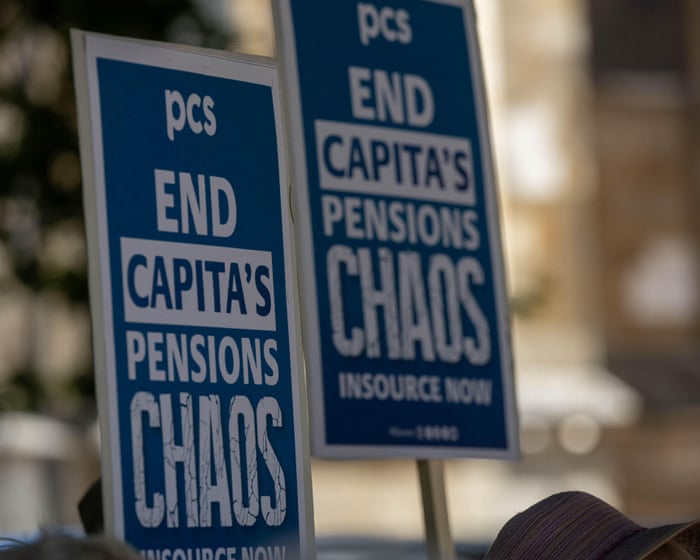
Capita announced it expects to lose up to £40 million in profits due to problems managing a civil service pension scheme. The company is facing criticism for poor service that caused delays in pension payments and is working with the government to fix the issues.
Key Facts
Capita is responsible for managing the civil service pension scheme, which has 1.7 million members.
The company admitted poor service has caused thousands of civil servants to wait months for payments and retirement details.
Capita expects extra staff costs and penalties will reduce its annual profits by £25-40 million.
The government has withheld nearly £10 million from Capita because of missed service targets.
Over 6,700 retirement quotations and 4,100 bereavement cases were still outstanding at the end of the last month.
The government lent £15.6 million in interest-free loans to about 2,700 people affected by the delays.
A taskforce led by HMRC is working to clear the backlog, costing the government around £12.5 million.
Capita executives said the pension scheme’s complex rules and missing data have slowed processing.
The company’s public services chief considered resigning but stayed to support staff during the crisis.
Read the Original
Want the full story? Tap a source to open the original
article.
New data shows that wages for lower-income workers are growing nearly as fast as those for higher earners, reducing the usual gap between them. Spending by lower- and higher-income households is also becoming more alike, although wealth differences still remain large.
Key Facts
Lower-income workers saw after-tax wage growth rise to 4.1% in June, up from 2.9% in May.
Middle-income workers’ wages grew by 3.4%, and higher-income workers’ wages grew by 4.2%.
The wage growth gap between lower-income and higher-income workers is the smallest in years.
Spending differences between lower- and higher-income households are the narrowest in three years.
Improved hiring and job-switching are helping raise wages for lower-income workers.
Some wage growth may be due to tax changes under the "One Big, Beautiful Bill Act."
Wealth, such as stocks and home values, still benefits mostly affluent households.
The overall economic divide, called the "K-shaped" recovery, is lessening in wages and spending but continues in wealth.
Read the Original
Want the full story? Tap a source to open the original
article.
The UK government will expand funding to help remove dangerous cladding from more buildings. Previously, only buildings 59ft (18m) or taller could get support, but now buildings under 36ft (11m) will also qualify. The goal is to fix safety risks without making residents pay.
Key Facts
Funding for cladding removal was limited to buildings 59ft or higher but will now include buildings under 36ft.
The change is part of the Remediation Acceleration Plan, launched in December 2024.
The Grenfell Tower fire in 2017, which killed 72 people, was worsened by unsafe cladding.
Applications for the new funding will open in August, but the government has not said how much money is available.
By 2029, all buildings 36ft or taller with unsafe cladding must be fixed or face penalties for landlords.
So far, 2,331 buildings have started or finished cladding removal work, with 4,411 identified as having unsafe cladding.
Officials want to make sure funding goes to buildings that pose the highest risk to residents, not just based on height.
The government aims to avoid unfair costs for leaseholders, who are people renting or owning flats in these buildings.
Read the Original
Want the full story? Tap a source to open the original
article.
The Ravinia Festival’s Hunter Pavilion near Chicago reopened after a $70 million renovation that improved comfort and sound quality. The pavilion, home to the Chicago Symphony Orchestra’s summer season, now has wider seats, better acoustics, and new cooling features.
Key Facts
The Hunter Pavilion in Highland Park, Illinois, underwent a $70 million renovation.
The pavilion reopened in July 2026, ahead of the summer concert season.
Its seating capacity decreased from 3,350 to 2,840 due to wider, accessible seats.
Renovations included improved sound design to make music clearer and softer for musicians.
New LED lights and nine ventilation fans were added to lower stage temperatures.
The pavilion originally opened in 1905, with a major rebuild in 1950 after a fire.
The Chicago Symphony Orchestra uses the pavilion as its summer home.
Over 335,000 tickets were sold for the 2025 season, with 94 programs planned for summer 2026.
Read the Original
Want the full story? Tap a source to open the original
article.
Oil prices have been going up and down due to renewed tensions between the United States and Iran. This conflict is causing uncertainty in the oil market.
Key Facts
The conflict between the U.S. and Iran has recently intensified.
Oil prices are fluctuating because of these rising tensions.
Changes in oil prices can affect the global economy.
Analysts are closely watching the situation for further developments.
Political conflicts often impact energy markets like oil.
The article is based on coverage by CBS News business analyst Jill Schlesinger.
The instability in oil prices is a direct response to international political events.
Read the Original
Want the full story? Tap a source to open the original
article.
A former top economist at mining company BHP says stronger government climate policies are needed to push miners to reduce their emissions faster. He supports using a carbon price to encourage big resource companies to make tougher decisions on cutting pollution.
Key Facts
BHP delayed or canceled major projects that would have significantly reduced emissions.
Internal documents showed BHP planned to delay switching diesel trucks and trains to electric power until decades later.
Experts warn this slowdown risks Australia’s climate goals and exposes problems with the safeguard mechanism climate policy.
Dr. Huw McKay, ex-BHP chief economist, calls for stronger government climate rules rather than voluntary company targets.
He supports a carbon pricing policy that makes companies include climate costs in their investment decisions.
BHP aims to reduce emissions by 30% from 2020 levels by 2030 and has made some progress using renewable energy deals.
The Australian government’s "safeguard mechanism" requires large polluting sites to reduce emissions intensity yearly or buy carbon offsets.
Climate Change Minister Chris Bowen defends the current safeguard framework and says there will be no carbon tax.
Read the Original
Want the full story? Tap a source to open the original
article.
President Donald Trump has proposed new tariffs with a different reason but aims for the same result. These tariffs mainly affect American households and companies by making goods more expensive.
Key Facts
President Trump introduced a new tariff plan recently.
The reasons behind the tariffs have changed from previous proposals.
Despite the new rationale, the tariffs still increase costs on many goods.
U.S. consumers (households) pay more because of these tariffs.
American businesses also face higher expenses due to the tariffs.
Tariffs act as taxes on imported goods.
The burdens of tariffs usually fall on people and firms inside the U.S.
Read the Original
Want the full story? Tap a source to open the original
article.