Florida has filed a lawsuit against OpenAI and its CEO, Sam Altman. The state claims OpenAI released and promoted ChatGPT while hiding serious safety risks from the public.
Key Facts
Florida is the first state to sue OpenAI and CEO Sam Altman over ChatGPT.
The lawsuit says OpenAI ignored safety warnings inside and outside the company.
Florida Attorney General James Uthmeier says the company hid dangers of ChatGPT from users.
The suit accuses OpenAI of putting children at risk by allowing a unsafe product to be widely used.
OpenAI is responsible for creating ChatGPT, an AI chatbot used by millions.
The state held a news conference to announce the lawsuit on Monday.
The complaint mentions previous concerns about ChatGPT being used for harmful plans, such as a mass shooting.
Read the Original
Want the full story? Tap a source to open the original
article.
Mortgage rates in the U.S. remain high, around 6.5% for a 30-year loan as of June, making home buying more expensive. However, some borrowers can find mortgage rates below 6% by comparing lenders, considering adjustable-rate mortgages, and using other strategies.
Key Facts
Average 30-year mortgage rates are near 6.5% in June 2024.
High inflation is causing the Federal Reserve to keep interest rates from dropping soon.
Mortgage rates vary by lender, type of loan, and borrower details.
Comparing offers from multiple lenders can help find a lower rate.
Adjustable-rate mortgages (ARMs) often start with rates below 6%, but rates can change after an initial fixed period.
Borrowers who plan to move or refinance soon may benefit from ARMs despite their risks.
Shopping around and considering loan types can lead to meaningful savings over time.
Read the Original
Want the full story? Tap a source to open the original
article.
Anthropic, a company that makes artificial intelligence software including the Claude chatbot, has secretly submitted paperwork to start selling its shares to the public. This process is called an initial public offering (IPO).
Mark Cuban and doctors want health insurance companies to be responsible when they deny care that hurts patients. They say the current system lets insurers avoid blame because most patients do not challenge the denials.
Key Facts
Health insurers sometimes deny coverage for treatments or care.
These denials can harm patients who need medical help.
Most patients do not appeal or challenge the denial decisions.
Mark Cuban and doctors argue insurers should be held accountable.
They believe the system currently allows insurers to avoid responsibility.
Read the Original
Want the full story? Tap a source to open the original
article.
EasyJet’s share price rose a little after news of a possible takeover bid from US investment fund Castlelake, but the market remains doubtful. Key questions include whether both sides agree on the price, how Castlelake might meet European ownership rules, and the opinion of easyJet’s founder who owns a significant share.
Key Facts
EasyJet’s share price increased about 10% on news of a possible takeover by Castlelake.
Analysts question whether Castlelake and easyJet agree on the company’s value.
EasyJet’s profits have fallen sharply this year but aim to recover over time.
The value of easyJet’s planes and airport slots is estimated higher than the current share price.
European rules require majority UK/EU ownership of easyJet, complicating a US takeover.
Castlelake may need a European partner to meet ownership rules.
EasyJet’s founder and family own 15% of the company and can influence decisions.
Castlelake has bought a 2% stake but has shared few details about its takeover plan.
Read the Original
Want the full story? Tap a source to open the original
article.
Sir Alan Bates criticized government-run compensation schemes for post office operators affected by the faulty Horizon IT system. He said these schemes were overly complicated and caused distress, and that an independent body should handle such programs instead of the government.
Key Facts
Sir Alan Bates led efforts for over 20 years to get justice for post office operators wrongly convicted due to the Horizon IT system errors.
He described government compensation schemes as an "utter disaster" because they became too complex and legal-focused.
Bates believes the government should not manage compensation schemes; they should be run by an independent group.
The government paid around £1.48 billion to over 11,500 claimants by February 2024.
More than 900 post office operators were wrongly convicted between 1999 and 2015 due to flawed Horizon IT system data.
These wrongful convictions were reversed by a special act of parliament in 2024.
Many affected operators did not seek compensation because they lost trust in the system.
Bates agreed to a multimillion-pound settlement with the government in November 2023.
Read the Original
Want the full story? Tap a source to open the original
article.
Anthropic, an artificial intelligence company, has secretly filed documents with the U.S. Securities and Exchange Commission to become a publicly traded company. This filing sets the stage for a large initial public offering, where the company will sell shares to the public for the first time.
Key Facts
Anthropic is an artificial intelligence (AI) company.
The company filed paperwork confidentially with the U.S. SEC.
The filing is a step toward going public through an initial public offering (IPO).
Going public means selling company shares on the stock market.
Anthropic is competing with other AI companies planning to go public.
The IPO is expected to be large, signaling strong investor interest.
The filing was announced on a Monday.
Read the Original
Want the full story? Tap a source to open the original
article.
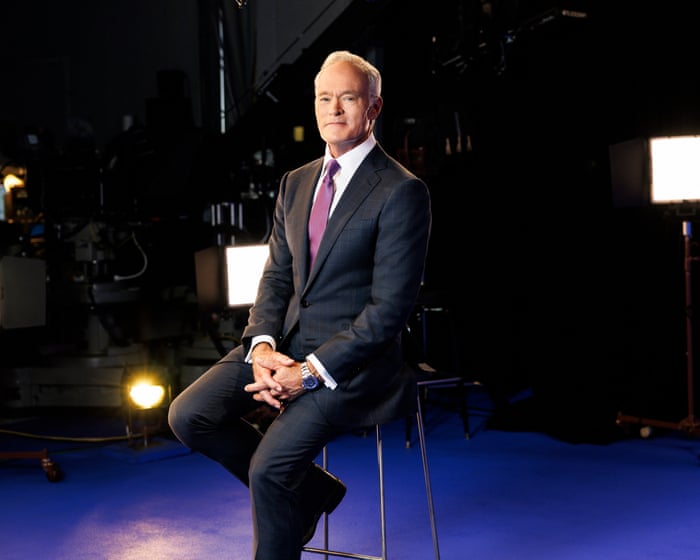
Scott Pelley, a longtime correspondent for the TV show 60 Minutes, strongly criticized CBS News leaders for firing key staff members as part of changes to the show. He and others expressed concern that new management is harming the show's reputation and interfering with journalism.
Key Facts
CBS fired 60 Minutes’ executive producer, executive editor, and correspondents Sharyn Alfonsi and Cecilia Vega.
Scott Pelley criticized CBS leadership, especially editor-in-chief Bari Weiss, saying she is damaging 60 Minutes.
Pelley and other staff showed open dissatisfaction with the recent changes during a staff meeting.
Sharyn Alfonsi said CBS is removing journalists who challenge authority, risking the show's quality.
Cecilia Vega claimed political bias is affecting stories and causing censorship on the show.
60 Minutes staff gave Pelley a standing ovation for his defense of the show and his colleagues.
CBS News disputed Vega’s claim of political bias in a formal statement.
The incident raises questions about Scott Pelley’s future at 60 Minutes.
Read the Original
Want the full story? Tap a source to open the original
article.
Anthropic, an AI company known for its Claude chatbot, has filed confidentially to sell shares on the US stock market. The company recently raised $65 billion, valuing it at $965 billion, making it the most valuable AI startup.
Key Facts
Anthropic makes the Claude chatbot, used by software engineers and businesses.
The company filed confidentially for an initial public offering (IPO) in the US.
Anthropic raised $65 billion in funding, with a post-money valuation of $965 billion.
Its value increased from $380 billion in February to $965 billion recently.
Anthropic is now the most valuable AI startup, surpassing competitor OpenAI.
OpenAI is also expected to file for a public offering soon.
Elon Musk’s SpaceX plans to go public this year, seeking $75 billion at a $1.75 trillion valuation.
The AI industry is attracting large investments as these companies prepare to enter the stock market.
Read the Original
Want the full story? Tap a source to open the original
article.
The Guardian newspaper is inviting children aged 8 to 14 in the UK to write short articles about recent experiences they have had with nature. Selected articles will be published every month from June to August, and the children whose work is published will receive payment.
Key Facts
The Young Country Diary series seeks articles from children aged 8 to 14.
Articles should describe a recent encounter with nature, such as animals, plants, or natural scenes.
Submissions must be 200-250 words long and can include photos or drawings but do not have to.
Parents or guardians must give permission and fill out the submission form.
The deadline for spring submissions is noon on Wednesday, 1 July.
Six articles will be published: two each in June, July, and August.
Children will be paid if their articles are published.
The competition encourages children to explore nature and describe their sensory experiences.
Read the Original
Want the full story? Tap a source to open the original
article.
In the first quarter of 2026, investors in the U.S. bought fewer homes than they have in several years, reaching the lowest level since 2020. This decline is linked to higher home prices, increased costs, and uncertainty about future profits from real estate investments.
Key Facts
Investors purchased 45,397 homes nationwide from January to March 2026, a 6% drop from the previous year.
Home purchases by investors are at their lowest since 2020, and the lowest in many large U.S. metro areas since 2016.
Condo purchases by investors fell 8% year-over-year, reaching the lowest first-quarter number since 2015.
Factors reducing investor interest include higher home prices (up over 60% since 2019), higher mortgage rates (around 6%), and rising property taxes, insurance, and HOA fees.
Although median profits per home sold by investors rose to about $196,618, this gain is smaller compared to the double-digit profits seen in 2020 and 2021.
The slow pace of home price growth in the past year has decreased investors' confidence in making future profits.
Economic uncertainty, especially related to the Iran war, may be causing investors to hold back on buying more homes.
Some lawmakers are working on rules to limit investors' participation in the housing market.
Read the Original
Want the full story? Tap a source to open the original
article.
Jeff Bezos’ rocket test for Blue Origin failed, causing a delay in the program. Ferrari introduced its first electric car, the Luce, which received mixed reactions online. Meanwhile, Elon Musk and Sam Altman are pushing ambitious goals for their companies SpaceX, Tesla, and OpenAI, sparking debate about their value and impact.
Key Facts
Blue Origin’s New Glenn rocket experienced an “anomaly” during a test on May 28 at Cape Canaveral, damaging the rocket and launchpad but causing no injuries.
This failure will delay Blue Origin’s rocket program for several months.
Ferrari launched the Luce, their first fully electric car, inspired partly by Apple design, costing around $640,000.
The Luce received mixed to negative reactions, with some seeing it as a betrayal of Ferrari’s legacy; Ferrari’s stock dropped 6% after the reveal.
Elon Musk aims to have SpaceX valued between $1.75 trillion and $2 trillion despite ongoing financial losses.
Tesla shareholders approved a pay plan for Musk potentially worth close to $1 trillion if certain ambitious milestones are met.
Sam Altman of OpenAI envisions AI becoming a utility that people pay for like electricity or water.
Critics express concerns about the high costs, secrecy, and impact of these big tech projects on communities and markets.
Read the Original
Want the full story? Tap a source to open the original
article.
Federal Reserve officials warn that the economic costs from artificial intelligence (AI) may come faster than the benefits in productivity. They say that while AI has promise, it is currently driving up costs and inflation more than it is boosting worker efficiency.
Key Facts
Some Federal Reserve leaders caution against relying on AI to reduce inflation quickly.
AI investment is increasing demand for workers, equipment, and infrastructure, pushing prices up.
Inflation remains higher than the Fed’s target, making immediate risks from AI-related costs more pressing.
Productivity gains linked directly to AI are not yet clear or strong enough to affect Fed policy.
Productivity growth has been about 2.4% annually over the last three years, higher than the previous decade but not clearly driven by AI.
A recent survey predicts notable AI-driven productivity gains in most sectors will take another two years.
Companies report high costs to deploy AI but are still unsure of significant efficiency improvements.
Fed officials note that AI-related investments, including roughly $1.5 trillion in data centers, increase demand and prices for key inputs like chips and labor.
Read the Original
Want the full story? Tap a source to open the original
article.
The 2026 FIFA World Cup, hosted partly by the U.S., was expected to bring a large boost to the U.S. economy, but experts now say the financial benefits will likely be much smaller. Factors like high hosting costs, slow ticket sales, and fewer visitors than expected may reduce the economic impact.
Key Facts
A 2025 FIFA study estimated an $80 billion global economic impact from the World Cup, with $30.5 billion for the U.S.
Experts say the actual boost to the U.S. economy could be as low as $17.2 billion, or 0.05% of U.S. GDP.
The "substitution effect" means locals might spend money on tickets instead of other things, limiting new economic activity.
"Crowding out" refers to fewer regular tourists visiting host cities because of crowds, which lowers expected gains.
About 80% of hotels reported reservations below forecasts for host cities.
Thousands of World Cup tickets remained unsold less than two weeks before the event started.
A sudden removal of available tickets from the FIFA website raised concerns about attendance interest.
The Trump administration maintains confidence that the event will be highly successful and safe.
Read the Original
Want the full story? Tap a source to open the original
article.
Oil prices rose sharply due to fighting that threatens the U.S.-Iran ceasefire, reaching $97.22 per barrel for Brent crude. Despite higher oil costs and inflation concerns, U.S. stock markets stayed near record highs, helped by strong gains in major companies like Nvidia.
Key Facts
Brent crude oil price jumped 6.7% to $97.22 per barrel on Monday.
Rising oil prices increase inflation and push up bond yields worldwide.
High interest rates hurt smaller companies more, causing the Russell 2000 index to fall 1%.
The S&P 500 was nearly unchanged near its record high; the Dow Jones fell 0.2%, and Nasdaq stayed flat.
United Airlines and Carnival shares dropped due to their large fuel expenses.
Nvidia’s stock rose 4.8% after announcing progress on its new AI platform called Vera Rubin.
The top 10 companies make up almost half of the S&P 500’s total market value, the highest in 40 years.
Science Applications International Corp. gained 12.8% after reporting better-than-expected profits and raising its financial forecasts.
Read the Original
Want the full story? Tap a source to open the original
article.
A bank account freeze means you cannot access or use your money for a time. Sometimes banks freeze accounts by mistake because of errors or mistaken identity, and fixing this usually requires contacting the bank and providing proof of who you are.
Key Facts
A frozen account restricts actions like withdrawing money, paying bills, or using a debit card.
Banks usually notify account owners about freezes, but notification timing can vary.
Mistaken freezes can happen due to suspected fraud, clerical errors, or confusion with other customers’ accounts.
If your account is frozen by mistake, contact your bank to find out why and what steps to take.
You may need to prove your identity or respond to legal documents to lift the freeze.
Resolving mistaken freezes can take from a day to several weeks depending on the situation.
To avoid future freezes related to debt, it helps to monitor credit and respond to any collection or court notices promptly.
Falling behind on debts is a common cause for banks to freeze accounts legally.
Read the Original
Want the full story? Tap a source to open the original
article.
A study by the Federal Reserve Bank of New York found that remote work has made companies less likely to hire young, less experienced workers, causing higher unemployment for recent college graduates. The study shows that the rise in youth unemployment is linked to remote work, not advances in artificial intelligence.
Key Facts
Remote work jobs (like software development) saw a 1% rise in unemployment for college grads under 29 from 2017-2019 to 2022-2024.
Older workers in remote jobs experienced a slight drop in unemployment during the same period.
In jobs that must be done in person (like nursing), unemployment rates between younger and older grads stayed about the same.
The study found companies hesitate to hire new graduates remotely because it’s harder to train and mentor them outside the office.
Remote work is responsible for almost two-thirds of the increase in young graduates’ unemployment since the pandemic.
The rise in youth unemployment started before AI tools like ChatGPT appeared, and AI has little effect on this trend.
A large tech company’s hiring patterns matched the study’s findings: fewer young hires when working remotely, more after offices reopened.
Unemployment for college grads under 29 rose to 3.7%, with ages 22-27 reaching 5.8% in 2024, the highest outside the pandemic since 2012.
Read the Original
Want the full story? Tap a source to open the original
article.
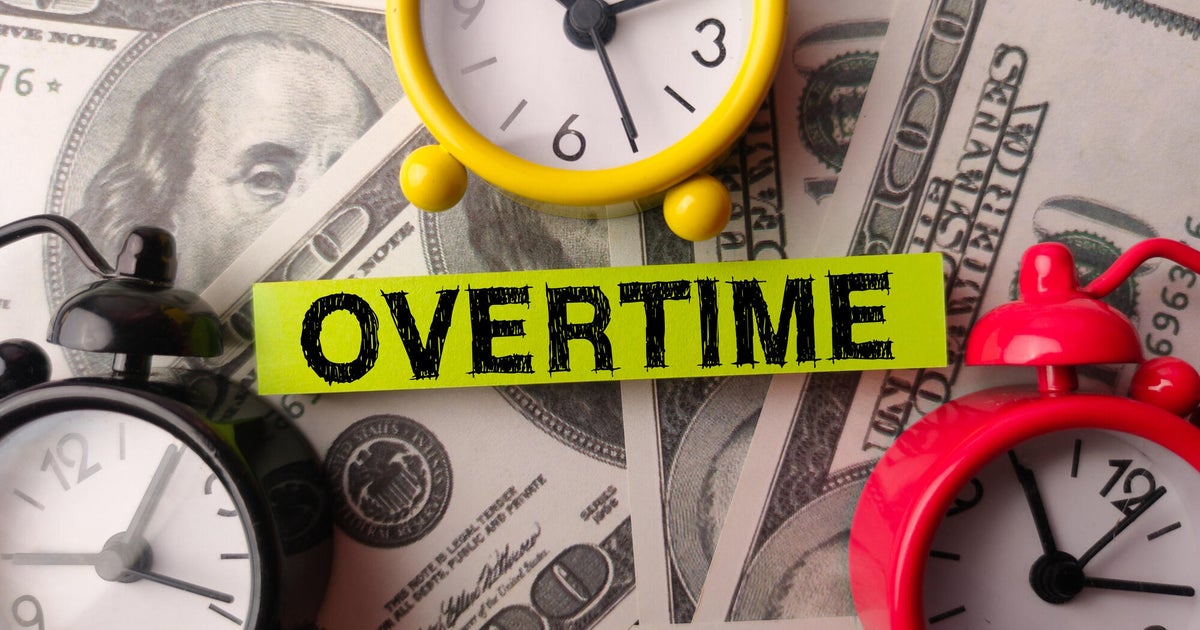
Overtime pay can be taken by debt collectors through garnishment, just like regular wages. The law treats overtime earnings as part of your total income, and a portion can be withheld to repay debts under certain rules.
Key Facts
Overtime pay counts as "earnings" and can be garnished just like regular wages.
Garnishment applies only to your disposable earnings, which is income left after taxes and required deductions.
For most debts, up to 25% of disposable earnings or the amount over 30 times the federal minimum wage can be garnished, whichever is less.
Earning more through overtime can increase the amount that can be garnished in dollar terms, but not the percentage.
Some debts like child support and federal student loans have different garnishment rules and higher limits.
Debt collectors usually need a court order to garnish wages for consumer debts.
Some states prevent wage garnishment for most consumer debts, protecting overtime pay in those areas.
Wage garnishment rules can vary depending on local state laws, affecting how much overtime pay can be taken.
Read the Original
Want the full story? Tap a source to open the original
article.
A Chicago developer bought a land parcel on Fisher Island, Miami, for $180 million and planned to build expensive condos. The developer later agreed to sell the land to Miami-Dade county for $400 million, aiming to make a $220 million profit without starting construction. The property includes a fuel depot critical to the cruise industry, causing concerns about economic impacts and legal disputes over land control.
Key Facts
The land on Fisher Island sold for $180 million in September 2023 to the HRP Group, a Chicago developer.
HRP planned to build condominium towers costing about $2 billion on this last available development parcel.
The Miami-Dade county agreed to buy this land from HRP for $400 million in early 2024.
The land hosts a fuel depot vital to Miami’s cruise ships, servicing companies like Royal Caribbean and Carnival.
Removing the depot could risk the local cruise industry and related jobs because the closest alternative fuel terminal is 22 miles away.
County officials voted in September 2023 to try legally stopping the land sale to protect the fuel depot.
Fisher Island property owners sued to block the county from taking the land by eminent domain, claiming it is unconstitutional.
HRP’s deal with the county could give it a $220 million profit without building anything on the site.
Read the Original
Want the full story? Tap a source to open the original
article.
Australia’s property market has seen price drops following recent budget changes that limit tax benefits for property investors. These rules, combined with rising interest rates and household pressures, are cooling the market and changing buyer behavior.
Key Facts
The budget limits negative gearing (a tax benefit) on established properties bought after mid-next year.
Auction clearance rates in major cities have dropped below 55%, the lowest since April 2020.
Property prices in some Australian capitals have started to fall, with some forecasts predicting declines up to 10%.
Investors are now focusing more on rental income and growth prospects rather than tax incentives.
Rising interest rates and a tougher global economy also affect property prices.
The reforms aim to make it easier for first-time buyers to compete at auctions.
Some homeowners worry about negative equity if prices drop below their loan amounts.
The policy changes intend to reverse decades of investor dominance and improve housing affordability.
Read the Original
Want the full story? Tap a source to open the original
article.