Consumer spending in the United States has stayed strong despite the ongoing war and rising gas prices. The national average price for gas has reached $4.30 per gallon, the highest level in four years. President Trump said gas prices will fall quickly once the war with Iran ends.
Key Facts
Consumer spending remains steady even with current challenges.
The national average price of gas is $4.30 per gallon.
This gas price is the highest in four years.
President Trump stated gas prices will drop sharply after the Iran war ends.
Ted Rossman, a Bankrate analyst, discussed the situation on CBS News.
The war mentioned is affecting oil and gas prices.
Rising gas prices often influence the overall cost of living and spending habits.
Read the Original
Want the full story? Tap a source to open the original
article.
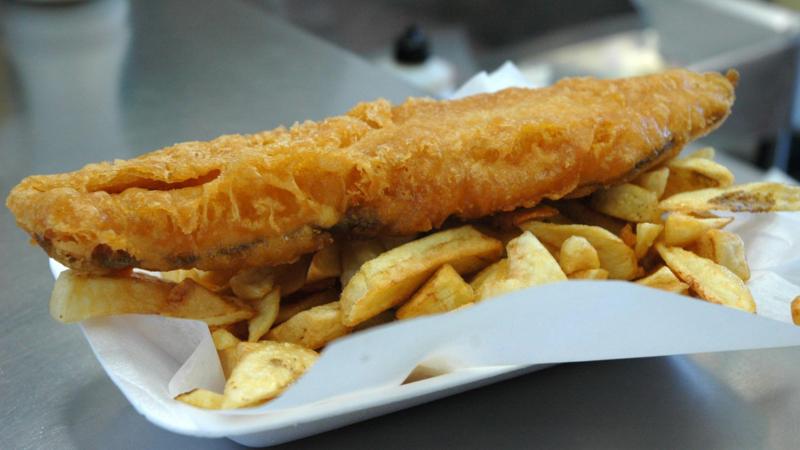
Some chip shops in the north-west of England have been selling a type of cheap imported catfish called pangasius as if it were traditional fish like cod or haddock. A BBC investigation used DNA tests to find that three out of ten sampled fish servings were actually this catfish, which is less expensive and not usually labelled clearly to customers.
Key Facts
The catfish, known as pangasius or river cobbler, is farmed and imported from South East Asia.
Pangasius is sold wholesale at about £3.40 per kilogram, much cheaper than cod or haddock at around £15 per kilogram.
A BBC investigation found 3 out of 10 fish meals sampled from chip shops in Liverpool and Manchester were pangasius.
Some shops labelled the fish as "traditional fish and chips," "white fish," or did not specify the fish type.
Legally, businesses must tell customers the species of fish if asked.
DNA barcoding at Liverpool John Moores University was used to identify the fish species.
Local authorities and the Food Standards Agency are responsible for investigating fish mislabelling, but few investigations have been reported.
Some councils have issued warnings after discovering mislabelled fish in businesses.
Read the Original
Want the full story? Tap a source to open the original
article.
The Restore Britain party has returned donations it received from a cryptocurrency project called Britain Token after questions were raised about the source of the money. The UK government plans to ban crypto donations to political parties due to concerns about anonymity and transparency.
Key Facts
Restore Britain refunded all donations it got from Britain Token, a cryptocurrency project.
Britain Token is a memecoin launched anonymously in February 2024.
Britain Token claimed to donate about £26,000 (around $34,800) to Restore Britain.
Crypto donations to UK political parties are not illegal now, but a ban is planned.
Concerns exist that crypto donations can hide the true source of money.
Labour MP Phil Brickell asked the Electoral Commission to investigate the donations.
Restore Britain says it follows all rules and refunded the crypto money voluntarily.
Britain Token’s value dropped recently and a new version was created on a different platform.
Read the Original
Want the full story? Tap a source to open the original
article.
China will stop charging tariffs (import taxes) on goods from all African countries except Eswatini, which has ties with Taiwan. This zero-tariff policy, which started earlier for some poor African nations, now applies to 53 countries until April 2028, aiming to boost African exports to China.
Key Facts
China will remove tariffs on imports from all African countries except Eswatini starting Friday.
Eswatini is excluded because it maintains diplomatic relations with Taiwan.
The zero-tariff policy already covered 33 least-developed African countries since December 2024 and now includes 53 countries.
The policy will last until April 30, 2028; what happens after is unknown.
Africa’s exports to China are mainly raw materials like oil and minerals.
Africa has a large trade deficit with China, meaning it buys more from China than it sells. The deficit grew 65% to about $102 billion last year.
Experts say tariff removal alone won’t solve deeper economic problems in Africa, like lack of industry and poor infrastructure.
The policy could increase African agricultural exports such as coffee, nuts, and avocados.
Read the Original
Want the full story? Tap a source to open the original
article.
Chanel showed new sandals in a fashion show in France. These sandals caused a lot of reactions on the internet because people found their design unusual.
Key Facts
Chanel is a well-known fashion brand.
The sandals were shown during a runway event in France.
The sandal design attracted widespread attention online.
Many people shared their opinions about the sandals on the internet.
The news about the sandals was covered by CBS News.
The story highlights how fashion choices can create strong public reactions.
Read the Original
Want the full story? Tap a source to open the original
article.
The war near Iran is disrupting the supply of fertiliser and its key ingredients, risking the production of up to 10 billion meals a week worldwide. This situation could especially harm poor countries and lead to higher food prices and shortages.
Key Facts
The conflict has blocked shipping through the Strait of Hormuz, affecting fertiliser supplies.
Svein Tore Holsether, CEO of fertiliser company Yara, said about half a million tons of nitrogen fertiliser are not being produced currently.
Reduced fertiliser use could cut some crop yields by up to 50% in one season.
Fertiliser prices have risen by 80% since the war involving the US and Israel against Iran began.
Farmers face higher costs for energy, diesel, and fertilisers but have not seen equivalent increases in crop prices.
A bidding war for food between richer and poorer countries may happen, making food less affordable in vulnerable nations.
Food producers' increased costs are expected to raise food prices in the UK, possibly leading to 10% food inflation by year-end.
The situation highlights risks of food shortages, scarcity, and hunger, especially in developing countries.
Read the Original
Want the full story? Tap a source to open the original
article.
More people in Britain are facing court action over unpaid debts, especially energy bills that have risen sharply. In the first three months of this year, there were over 270,000 new County Court Judgements (CCJs), a 17.5% increase from last year, as energy debt reaches a record £4.5 billion.
Key Facts
Mark Sumner owed over £2,000 after his energy bills rose from £80 to £220 a month.
A County Court Judgement (CCJ) is a legal order requiring payment of debts and can affect credit records for six years.
In the first quarter of this year, 270,537 new CCJs were registered, up 17.5% from last year.
The total energy debt in Britain is now more than £4.5 billion, a record high.
Some people are using credit cards and food banks to cope with rising bills.
Falling debit card use and rising credit card use suggest more people rely on borrowed money for daily needs.
Paying off a CCJ within one month of receiving it can remove it from a credit report.
People like Jane in Coventry, who live on benefits and have health issues, struggle to pay energy bills and manage everyday expenses with help from charities.
Read the Original
Want the full story? Tap a source to open the original
article.
Heating oil prices in Northern Ireland rose by 92% in March, setting a new record. Prices peaked in early April but have since decreased slightly. Two-thirds of households in Northern Ireland use heating oil, and lower-income users will receive a £100 grant later this year.
Key Facts
Heating oil prices in Northern Ireland increased by 92% in March 2024.
The previous highest increase was 59% in March 2022 after the Russian invasion of Ukraine.
About two-thirds of Northern Ireland households use heating oil for their homes.
Prices peaked on April 8, with 500 litres costing around £627.
After peaking, prices fell to approximately £530 for 500 litres in the last week.
Lower-income households that use heating oil will get a £100 grant later in 2024.
Gas prices in Great Britain have not risen as much, and most GB households use gas heating.
Petrol and diesel prices in Northern Ireland have decreased slightly in the past week.
Read the Original
Want the full story? Tap a source to open the original
article.
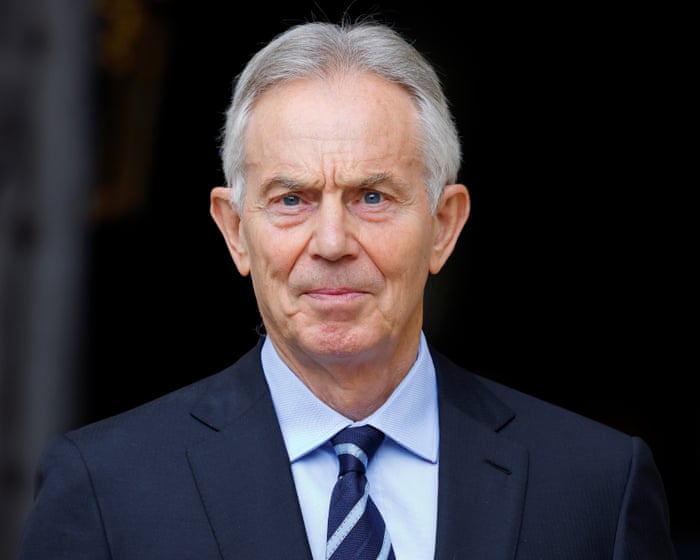
Tony Blair’s thinktank recommends that the Labour Party stop the pension triple lock policy because it is too expensive for government finances. The triple lock, which raises pensions each year based on inflation, wage growth, or 2.5%, is putting pressure on public spending as the UK faces inflation and an aging population.
Key Facts
The triple lock guarantees state pensions rise each April by the highest of inflation, average wage growth, or 2.5%.
The policy was introduced in 2010 by George Osborne during the Conservative-Liberal Democrat coalition government.
Rising inflation due to factors like the Middle East conflict and Covid pandemic has increased pension costs.
The Tony Blair Institute says the triple lock is “unaffordable” due to the growing number of pensioners in the UK.
The population of pensioners is expected to grow from 12.6 million now to nearly 19 million by 2070.
Without change, pension spending could rise from 5% to 7.8% of the UK’s gross domestic product, adding £85 billion annually.
The thinktank suggests a new “lifespan fund” that lets people save into a personal pension fund with flexible access.
The Labour government has committed to keeping the triple lock for this parliament but faces calls for reform before the next election.
Read the Original
Want the full story? Tap a source to open the original
article.
Rising fuel prices linked to the war with Iran are causing financial problems for several U.S. budget airlines. Spirit Airlines is struggling the most, facing possible bankruptcy and seeking a $500 million government bailout.
Key Facts
Jet fuel prices have increased sharply due to the conflict with Iran.
Several U.S. budget airlines are asking the federal government for $2.5 billion in aid.
Spirit Airlines is in financial trouble and may go bankrupt.
Spirit is negotiating separately for a $500 million government bailout.
The situation affects the aviation and transportation industries.
Reuters correspondent David Shepardson discussed these issues in a recent interview.
Read the Original
Want the full story? Tap a source to open the original
article.
Hershey's sales of mints and gum are rising because people using certain weight-loss drugs are buying more breath fresheners. These drugs, like Ozempic and Wegovy, can cause bad breath or burping, which may increase demand for Hershey’s breath-freshening products.
Key Facts
Hershey’s CEO reported a sales increase for their mints and gum during the first quarter.
The Ice Breakers brand saw an 8% sales growth over the quarter.
Weight-loss drugs called GLP-1 receptor agonists are linked to increased breath freshener use.
These drugs include Ozempic and Wegovy.
Some users report a side effect called "Ozempic breath," which causes bad breath or fishy-smelling burps.
Bad breath is not officially listed as a side effect by drug makers.
About 9% of users in a trial reported burping; nausea and vomiting are more common side effects.
Doctors are still studying how these drugs might affect oral hygiene.
Read the Original
Want the full story? Tap a source to open the original
article.
Apple reported its highest revenue for the March quarter, earning $111.2 billion, beating Wall Street’s predictions. CEO Tim Cook announced he will step down in September, and John Ternus will become the new CEO as Apple continues to face rising costs from the AI technology boom.
Key Facts
Apple earned $111.2 billion in revenue for the second quarter of 2026, surpassing the expected $110 billion.
The iPhone 17 lineup saw very strong sales.
Apple made $2.01 per share in earnings, exceeding the expected $1.96.
Revenue in Greater China reached $20.4 billion.
Apple’s stock price increased after the earnings report.
CEO Tim Cook will step down in September, with John Ternus taking over as CEO.
Apple faces higher costs because AI companies like OpenAI, Google, and Microsoft are buying much of the world’s memory chip supply.
John Ternus has been with Apple since 2001 and has worked on many important products like the iPad and AirPods. He will lead when Apple releases its first foldable iPhone later this year.
Read the Original
Want the full story? Tap a source to open the original
article.
Australia's housing prices are slowing down, especially for expensive homes, while rents are rising quickly in many cities. Australia and South Korea have agreed to work together to keep energy supplies steady and safe.
Key Facts
Melbourne and Sydney house prices dropped 0.6% in April, marking almost 18 months of slow housing market activity.
Expensive homes' prices fell by 1.2%, while cheaper properties rose slightly by 0.1% in major cities.
Rents increased by 5.7% over the past year, with April alone seeing a 0.6% rise, the fastest since October 2024.
Rental vacancy rates in all capital cities are below 1.8%, which is much lower than the 2010s average of 3.3%.
Rising rents contribute significantly to Australia’s inflation, which reached 4.6% in March.
The Reserve Bank of Australia is considering raising interest rates again due to inflation concerns.
Australia and South Korea signed a joint statement to cooperate on energy supply security, covering resources like diesel and liquefied natural gas (LNG).
South Korea is Australia’s largest buyer of LNG and a top supplier of diesel and jet fuel to Australia.
Read the Original
Want the full story? Tap a source to open the original
article.
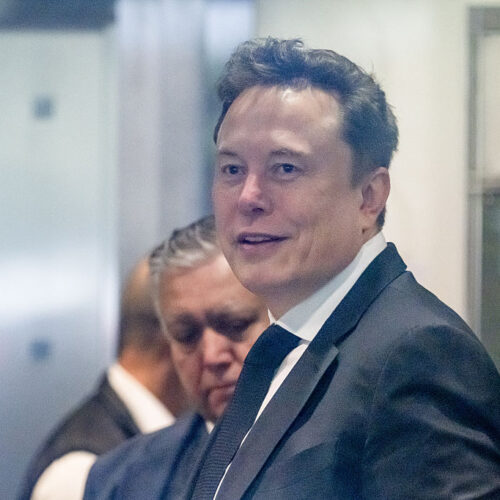
Elon Musk is involved in a lawsuit against OpenAI and its CEO, Sam Altman. Musk said in court that he regrets funding OpenAI and accuses the company of changing its mission when it switched from a nonprofit to a for-profit business.
Key Facts
Elon Musk is suing OpenAI and its CEO, Sam Altman.
Musk testified that he feels he was "a fool" for funding OpenAI.
He claims OpenAI betrayed him and the public by changing its mission.
OpenAI changed from a nonprofit organization to a for-profit company.
The lawsuit involves a trial where Musk was cross-examined by OpenAI’s attorney.
The issue centers on whether OpenAI stayed true to its original goals.
The case received coverage on CBS News, including commentary from a Wired writer.
Read the Original
Want the full story? Tap a source to open the original
article.
Elon Musk testified in a lawsuit against OpenAI, claiming the company abandoned its original nonprofit mission to become a for-profit business. During the trial, Musk made several mistakes on the stand, including contradictions and losing legal arguments, which could weaken his case.
Key Facts
Musk sued OpenAI, accusing it of moving away from its nonprofit goals and planning to go public.
He testified for three days in a trial where OpenAI denies his claims.
OpenAI’s lawyer challenged Musk, showing documents that conflicted with his statements.
Musk admitted he left OpenAI after not getting control over a for-profit branch he wanted.
He was criticized by the judge for being sarcastic and avoiding questions during testimony.
Musk’s own AI company, xAI, currently lags behind OpenAI.
The lawsuit may be an attempt by Musk to slow OpenAI’s progress.
The trial also involves revealing Musk’s connections to President Donald Trump, which could affect his credibility.
Read the Original
Want the full story? Tap a source to open the original
article.
A recent poll shows that only 25% of people who do not own homes believe they will be able to buy one in the next five years. Chen Zhao, an economic researcher at Redfin, talks about what income is needed to afford the average home price.
Key Facts
Only one in four non-homeowners feel confident they can buy a house within five years.
The article focuses on the income required to afford an average-priced home.
Chen Zhao is the head of economic research at Redfin.
Redfin is a real estate company that studies housing market trends.
The discussion is based on recent polling data.
The housing market affordability is a concern for many people.
The article was shared along with various other news stories on April 30, 2026.
Read the Original
Want the full story? Tap a source to open the original
article.
The latest inflation report showed that prices for goods and services bought by U.S. consumers increased by 0.7% from February to March. CNBC host Jim Cramer expressed concern about the report, suggesting it indicates difficult economic times ahead.
Key Facts
The Personal Consumption Expenditures (PCE) index measures price changes of goods and services bought by U.S. consumers.
The PCE index rose 0.7% from February to March.
The report was released by the U.S. Commerce Department.
Jim Cramer, a CNBC host, reacted negatively to the report.
The increase in the index suggests rising inflation in the U.S.
Inflation could cause costs to go up for everyday items and services.
The report may signal tougher financial conditions in the near future.
The data covers consumer spending patterns in the United States.
Read the Original
Want the full story? Tap a source to open the original
article.
Some people will receive an extra paycheck in May because of how pay periods fall on the calendar this year. This bonus payday happens only a few times annually when the payment schedule aligns in a certain way.
Key Facts
May will include an extra paycheck for some workers.
This happens because of the timing of pay periods during the year.
Bonus paydays occur only a few times each year.
The extra paycheck usually happens if you are paid every two weeks.
People paid monthly or weekly may not see this change.
The bonus payday can help with extra expenses or savings.
This is a normal part of some payroll schedules.
Employers follow their usual pay calendars to determine paydays.
Read the Original
Want the full story? Tap a source to open the original
article.
Bari Weiss, the head of CBS News, replaced a longtime London bureau chief after disagreements over Middle East coverage. She hired Shayndi Raice, a former Wall Street Journal editor known for a pro-Israel stance, to lead CBS’s international news from London.
Key Facts
Bari Weiss is the current leader of CBS News and has been making changes to the network's staff and coverage.
CBS News removed Claire Day, the London bureau chief with 25 years at CBS, reportedly due to conflicts over coverage of Israel and Gaza.
Shayndi Raice, previously a Wall Street Journal editor based in Israel, was hired to be CBS’s new foreign editor in London.
Raice is known for having a perspective that favors Israel more than Palestine, which caused some tension with colleagues at the Wall Street Journal.
The Wall Street Journal reviewed Raice’s work and found that she often relied heavily on Israeli sources in coverage.
Bari Weiss is a vocal supporter of Israel and the U.S. administration’s positions on Middle East conflicts.
Weiss’s management at CBS has faced criticism, including staff dissatisfaction and lower audience ratings.
The Free Press, a publication founded by Weiss and bought by Paramount, often publishes articles with a pro-Israel viewpoint.
Read the Original
Want the full story? Tap a source to open the original
article.
The cost of owning pets in the U.S. has grown significantly, with routine care averaging over $4,200 per year and rising veterinary bills adding financial pressure. Many pet owners face challenges managing these expenses alongside other rising household costs, sometimes relying on credit cards for unexpected medical bills.
Key Facts
Average annual cost for routine pet care (food, vet visits, grooming, supplies) is about $4,272.
Over a pet’s 12-year life, routine care costs can total more than $50,000.
Spending on pets nationwide reached around $158 billion in 2025 and is expected to keep rising.
Average veterinary visit cost rose 32% from 2020 to 2025, reaching roughly $392 per visit.
Emergency vet care and surgeries can cost thousands or tens of thousands of dollars.
About 25% of pet owners with chronically ill pets spent between $5,000 and $10,000 on pet care in a year.
Nearly 58% of owners of chronically ill pets report financial stress from pet expenses.
Many pet owners reduce other household spending or use credit cards to cover vet costs.
Read the Original
Want the full story? Tap a source to open the original
article.