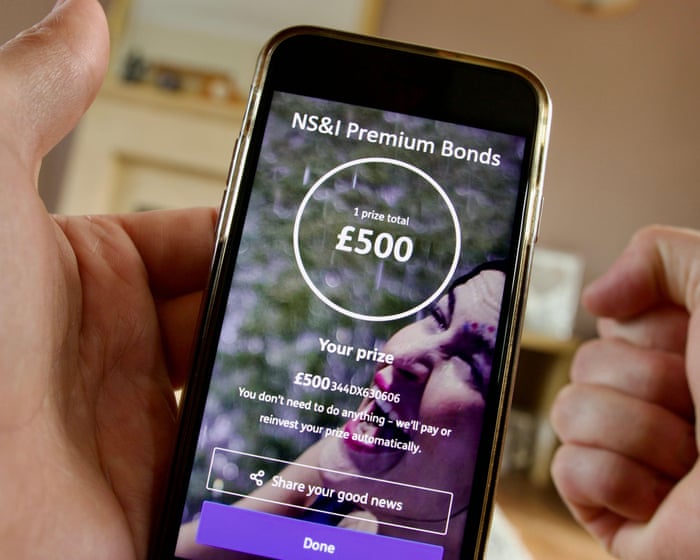
The UK’s National Savings and Investments (NS&I) has raised the prize fund rate for premium bonds from 3.8% to 4.35%, increasing the number of prizes and improving the chances of winning. This change will start in September and means more higher-value prizes but fewer small £25 prizes. However, many bond holders have never won, and premium bonds do not pay interest, which may affect returns when considering inflation.
Key Facts
NS&I raised the premium bond prize fund rate from 3.8% to 4.35% starting in September.
The odds of winning with each £1 bond improve from 22,000-1 to 21,000-1.
There will be about 308,000 more prizes and the total prize money will increase by £63 million to £497 million.
The number of bigger prizes (£50,000 and £100,000) will increase, while smaller £25 prizes will reduce.
Premium bond winnings are tax-free, but the bonds do not pay interest, which means they may lose value compared to inflation.
A freedom of information request showed that 62% of premium bond holders have never won a prize.
Premium bonds may appeal to savers who have used their ISA allowance or reached their personal savings allowance.
Savings accounts currently offer up to 5% interest, which guarantees returns unlike the chance-based premium bonds.
Read the Original
Want the full story? Tap a source to open the original
article.
Trade talks between the U.S. and Canada ended without agreement, leading both countries to announce they will impose new tariffs on each other's goods. These tariffs include a 50% tax on many Canadian products, while some key exports like energy and minerals were temporarily excluded.
Key Facts
The U.S. planned to apply a 50% tariff on Canadian goods such as alcohol, hockey equipment, cement, and dairy products.
The tariff threat comes from Section 338 of the Tariff Act of 1930, which has never been used before.
The tariffs were set to begin early Wednesday but were delayed briefly after both sides thought they had reached a deal.
Talks collapsed after Canada and the U.S. each accused the other of making last-minute demands or changes.
Canadian Prime Minister Mark Carney announced Canada would retaliate with matching tariffs to protect its workers and companies.
Trade between the U.S. and Canada totaled $376 billion in the first half of the year, making Canada the U.S.'s second-largest trading partner.
The U.S. excluded some important Canadian exports like energy, potash, and critical minerals from the tariffs.
This tariff dispute represents a significant and aggressive move by the U.S. after over a year of tariff threats against Canada.
Read the Original
Want the full story? Tap a source to open the original
article.
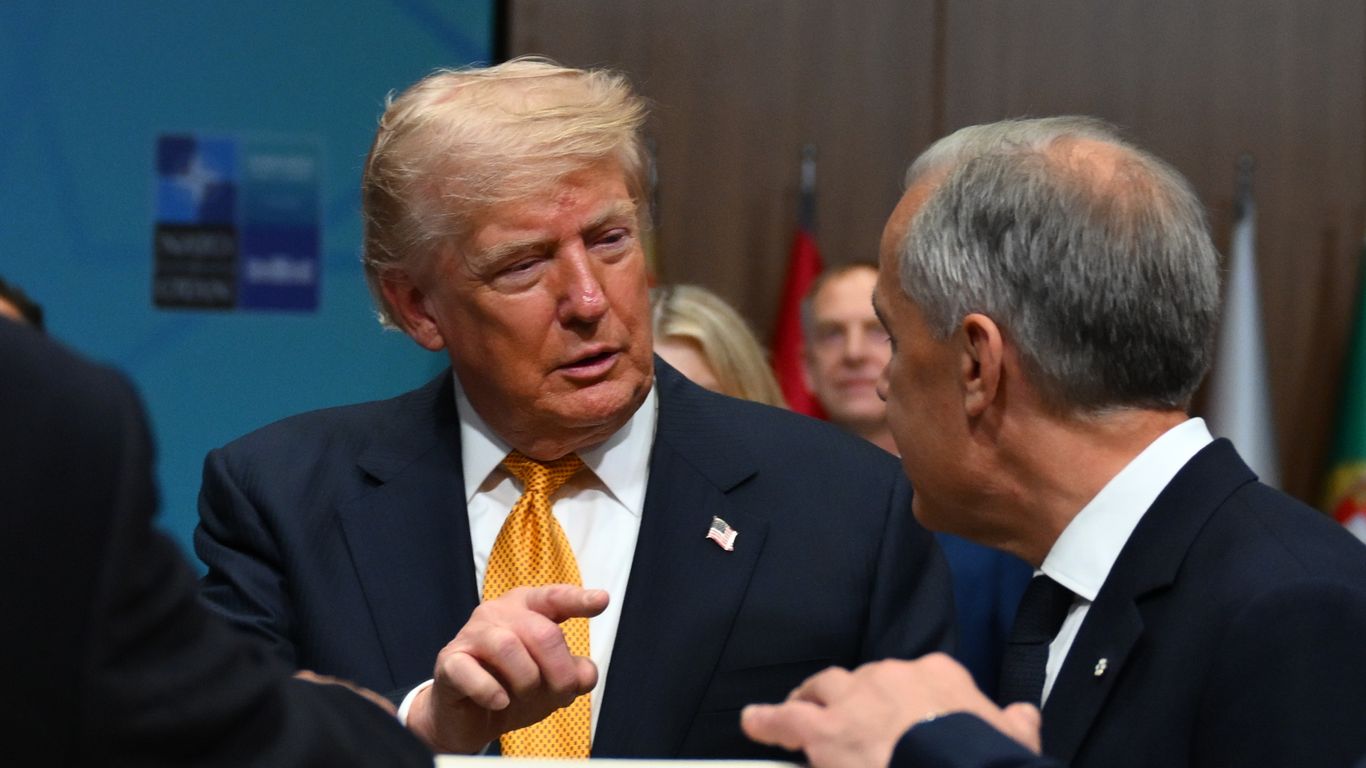
Canada has promised to match the 50% tariffs that the United States, under President Donald Trump, is imposing on Canadian goods after trade negotiations failed. Both sides could not agree on a deal by the deadline, leading to new tariffs affecting about $20 billion in Canadian products.
Key Facts
The US imposed 50% tariffs on certain Canadian goods after trade talks failed.
Canadian Prime Minister Mark Carney said Canada will match these tariffs dollar for dollar.
The tariffs impact around $20 billion worth of Canadian exports to the US, about 5% of total Canadian shipments.
The two countries failed to reach a trade deal by the midnight deadline after last-minute changes from the US side.
The US Trade Representative said Canada declined to finalize the deal due to new demands.
The trade between Canada and the US was worth $880 billion last year.
President Trump extended the tariff deadline by three days to allow more talks, but no agreement was made.
Products affected include items like hockey sticks and tongue depressors.
Read the Original
Want the full story? Tap a source to open the original
article.
The bond market influences the interest rates people pay on loans, like mortgages and car loans, and how much they earn on savings and retirement accounts. Recently, rising bond yields have caused the U.S. Treasury to take unusual steps to calm the market, signaling concerns about higher borrowing costs slowing consumer spending and government borrowing.
Key Facts
The bond market is where governments and big companies borrow money by selling IOUs called bonds.
Bonds pay interest to investors, and their yield reflects the real return based on the bond’s price.
The U.S. Treasury bond market is the largest in the world, valued at about $31.5 trillion.
Higher yields mean borrowing costs go up, impacting loans for homes, cars, and other consumer spending.
Recently, bond yields have risen partly because investors can find better interest rates from bonds in other countries, like Japan, the UK, and Germany.
This competition is making U.S. bond yields rise to stay attractive.
Treasury Secretary Scott Bessent has tried to calm the bond market, but so far, those efforts have not fully worked.
Higher borrowing costs from rising yields could slow down the economy because consumers may spend less.
Read the Original
Want the full story? Tap a source to open the original
article.
The United States has imposed 50% tariffs on $20 billion of Canadian goods after trade talks between the two countries failed to produce an agreement. Canada has responded by promising to match these tariffs and introduce measures to protect its workers and businesses.
Key Facts
The US applied 50% tariffs on Canadian goods worth about $20 billion after talks in Washington DC ended without a deal.
The tariff deadline was set by President Donald Trump and expired early Saturday morning Eastern Time.
Canadian Prime Minister Mark Carney said Canada would respond by imposing equivalent tariffs on US goods.
The tariffs affect about 5% of Canadian exports to the US, including electronics, machinery, and dairy products.
Canada had already faced US tariffs on steel, lumber, and autos.
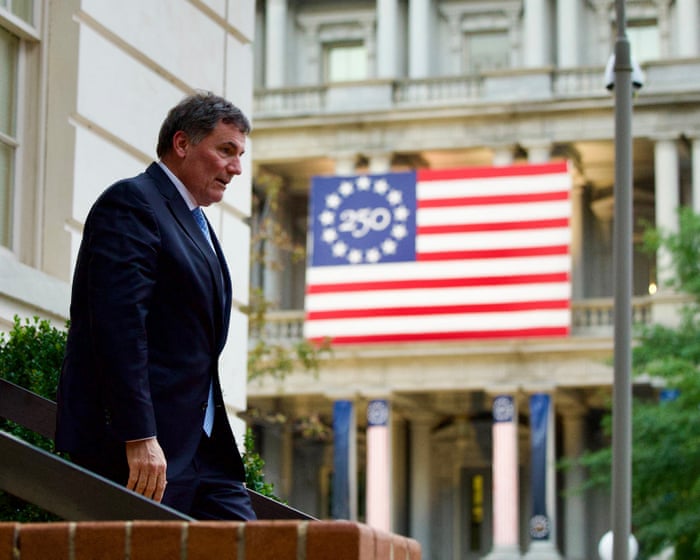
US Trade Representative Jamieson Greer said Canada declined to finalize the deal after changing demands.
President Trump had accused Canada of unfair treatment of American products, which led to these tariffs.
Experts warn that the 50% tariffs could make many Canadian goods too expensive for the US market.
Read the Original
Want the full story? Tap a source to open the original
article.
The United States is set to impose 50% tariffs on $20 billion worth of Canadian products after trade talks failed to reach an agreement. This action will affect about 5% of Canadian goods exported to the U.S. each year and marks a significant rise in trade tensions between the two countries.
Key Facts
The U.S. will apply 50% tariffs on $20 billion of Canadian imports starting Saturday.
The tariffs cover various products, including hockey sticks and tongue depressors.
The tariffs represent about 5% of the total Canadian goods shipped to the U.S. annually.
Negotiations ended without agreement despite a last-minute three-day delay to extend talks.
U.S. Trade Representative Jamieson Greer said Canada changed demands and withdrew commitments near the deadline.
Canadian Prime Minister Mark Carney called the U.S. proposed changes unfair and said Canada will support affected workers and businesses.
The U.S. and Canada trade about $880 billion in goods and services each year.
This tariff move breaks from the traditional close and cooperative trade relationship between the two countries.
Read the Original
Want the full story? Tap a source to open the original
article.
South Korea plans to send a container ship through the Arctic to test a shorter shipping route to Europe. This new path could avoid Middle East conflicts but may speed up Arctic ice melting, which worries environmental groups.
Key Facts
South Korea's container ship "PanStar Acro" will sail from Busan to Europe via the Arctic route.
The voyage will stop in Britain, the Netherlands, and Poland, taking about 45 days.
The Arctic route can shorten the Asia-Europe trip by around 7,000 kilometers and 10 days compared to the Suez Canal route.
The Middle East conflict involving US-Israeli strikes on Iran has disrupted global shipping lanes.
China recently sent a ship via the Northern Sea Route, making Arctic shipping more common.
South Korean officials say the Arctic route could become an alternative to risky Middle Eastern routes.
Payments for Russian navigation and weather services during the Arctic trip raise concerns about Western sanctions violations.
South Korea has completed consultations with relevant countries to prepare for the voyage.
Read the Original
Want the full story? Tap a source to open the original
article.
The $111 billion merger between Paramount and Warner Bros. Discovery faces legal challenges from California and 11 other states. In response, Paramount Skydance CEO David Ellison warned he might move his business out of California if the deal is blocked.
Key Facts
Paramount and Warner Bros. Discovery want to merge in a deal worth $111 billion.
California's attorney general and 11 other states have sued to stop the merger.
Paramount Skydance CEO David Ellison said he could relocate his company from California if the merger is blocked.
The legal challenge is a major obstacle to completing the merger.
William Brangham discussed the situation with Matthew Belloni from Puck News.
Read the Original
Want the full story? Tap a source to open the original
article.
Timber companies and the U.S. Forest Service are using more glyphosate, a weedkiller, in California forests than ever before. Glyphosate helps remove plants that compete with young trees, but it has been linked to cancer in some lawsuits.
Key Facts
Glyphosate is the main chemical in the weedkiller called Roundup.
It is sprayed to kill plants that grow near young trees in forests.
Timber companies and the U.S. Forest Service are using record amounts of glyphosate in California.
The Center for Investigative Reporting conducted the investigation.
Glyphosate has faced lawsuits claiming it caused cancer to people exposed to it.
The weedkiller’s use supports reforesting efforts by reducing competing plants.
Concerns exist about potential health risks from glyphosate exposure.
Read the Original
Want the full story? Tap a source to open the original
article.
In 2026, many people searching for jobs face new challenges like automated rejections from AI and unclear hiring processes. While technology makes applying easier, it also causes delays in hiring and lowers trust between job seekers and companies.
Key Facts
Recruiters now review about 291 applications per hire, up from 100 in early 2021.
Around 63% of U.S. job candidates have been interviewed by AI systems.
46% of candidates trust the hiring process less than before.
It takes about 25% longer to fill job openings than before the pandemic.
About 18–22% of job postings are “ghost jobs” that companies are not actively trying to fill.
AI resume filters sometimes block qualified applicants and can lead to unfair practices.
Almost half of hiring managers say AI has improved the quality of candidates.
Easy-to-use applications can flood employers with resumes, making it harder to respond to candidates.
Read the Original
Want the full story? Tap a source to open the original
article.
Walmart will start accepting Apple Pay and other tap-to-pay methods at some stores on August 24. The company plans to have this payment option in all Walmart and Sam's Club locations by the end of 2026 and at its gas stations by mid-2027.
Key Facts
Walmart will let customers pay with Apple Pay, Google Pay, and other tap-to-pay options starting August 24 at select stores.
Tap-to-pay will be available at all Walmart and Sam's Club stores by the end of 2026.
Walmart gas stations will offer tap-to-pay by mid-2027.
This change aims to give customers more payment choices and make shopping easier.
Walmart previously encouraged customers to use its own Walmart Pay app, which uses QR codes.
Customers have complained that they could not use Apple Pay at Walmart stores before.
Apple Pay is accepted at over 85% of U.S. retailers.
This move aligns Walmart with common digital payment methods used nationwide.
Read the Original
Want the full story? Tap a source to open the original
article.
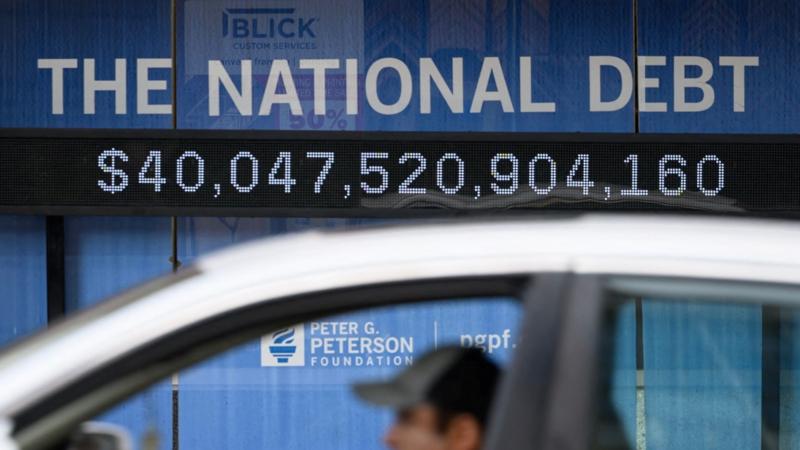
The US national debt has grown to $40 trillion, more than doubling in ten years. This increase comes from large government spending and rising interest payments under President Donald Trump and President Joe Biden.
Key Facts
The US national debt is now $40 trillion.
In 2016, the debt was just under $20 trillion.
The debt has increased due to heavy government spending.
Both President Donald Trump’s and President Joe Biden’s administrations contributed to the rise.
Higher interest payments have also added to the debt total.
The growing debt can impact American consumers and the global economy.
Treasury Department data provides these debt figures.
Read the Original
Want the full story? Tap a source to open the original
article.
Two New York City renters have filed a class action lawsuit against the real estate company Compass. They claim Compass removed many rental listings from free websites like Zillow to create a false shortage, which raised rent prices in Manhattan.
Key Facts
Compass controls over 80% of rental listings in Manhattan as of 2025 data.
Renters say Compass hides thousands of rental listings from free online platforms.
By hiding listings, Compass allegedly increases rent prices and broker fees.
Zillow owns a popular free New York City rental platform called StreetEasy.
Compass stopped listing many units on Zillow to push renters towards brokers.
Zillow responded by blocking hidden listings from its sites to keep listings public.
Compass filed an antitrust lawsuit against Zillow but dropped it after a judge’s decision.
U.S. government and local authorities, including Senator Elizabeth Warren, are investigating Compass for possible unfair market control.
Read the Original
Want the full story? Tap a source to open the original
article.
Dutch regulators have fined Uber nearly $1 billion for using automated software to suspend driver accounts without human checks. The fine was given because Uber broke European privacy rules by not informing drivers about these automatic decisions and by relying on fully automated account suspensions.
Key Facts
The Dutch Data Protection Authority fined Uber 825 million euros (about $964 million).
Uber used automated software to suspend driver accounts without human review from 2018 to 2022.
The fine is based on violations of the EU’s General Data Protection Regulation (GDPR) that bans fully automated decision-making.
Uber did not properly inform drivers that account suspensions were decided automatically.
Uber disagrees with the fine and plans to appeal the decision.
This is the fourth time Dutch regulators have fined Uber for privacy violations.
In 2024, Uber was fined 290 million euros ($324 million) for transferring driver data to the U.S. without proper safeguards.
Uber says it now includes human reviews and allows drivers to appeal suspension decisions.
Read the Original
Want the full story? Tap a source to open the original
article.
People in many U.S. cities are searching for hidden money dropped in public places, guided by social media accounts that post videos and clues. These accounts use cash drops to promote themselves and local businesses and can earn money through sponsorships and advertising on social platforms.
Key Facts
Social media accounts post videos showing large amounts of cash hidden in places like parks, trash bins, and tree hollows for people to find.
People quickly rush to find the money, sometimes arriving by bike, car, or on foot.
Some cash drops are linked to promotions by local businesses like restaurants or lawyers, while others mainly promote the social media accounts themselves.
Over 50 such accounts exist across about 24 U.S. cities, with more than 7 million followers combined.
The activity reflects economic concerns like inflation, according to experts.
PassPass is a national group behind many cash drops, also running an app where users can win prizes and get clues to cash drops.
These accounts make money through sponsorships, collecting user data, advertising revenue, and app subscriptions.
The cash drops create large crowds and social media attention, helping these accounts grow their brand.
Read the Original
Want the full story? Tap a source to open the original
article.
Trade negotiators from the US and Canada have met for the third day to try to finalize a deal before new US tariffs on Canadian goods begin. President Donald Trump has set a Saturday deadline to impose 50% tariffs on about $20 billion of Canadian imports if no agreement is reached.
Key Facts
US and Canadian trade negotiators have been meeting in Washington, DC, for three days.
President Donald Trump has threatened 50% tariffs on $20 billion worth of Canadian goods starting Saturday.
The tariffs were paused earlier in the week while negotiations continue.
The last tariffs were introduced by President Trump in 2025 during his second term, causing Canada to retaliate.
A possible deal may reduce vehicle tariffs from 25% to 15% and cut steel and aluminum tariffs by half.
Canadian public opinion is largely against making concessions to the US in these talks.
Key Canadian provinces have differing views, some wanting tariffs completely removed.
Canada sends 70% of its exports to the US, making it very sensitive to American trade policies.
Read the Original
Want the full story? Tap a source to open the original
article.
Logitech is facing a class action lawsuit for not refunding customers the money related to import tariffs that the U.S. Supreme Court declared unlawful. The lawsuit claims Logitech raised prices because of these tariffs, kept the extra money, and did not pass on the refunds it received from the government to customers.
Key Facts
In April 2025, Logitech raised prices on 51% of its products by up to 25% due to import tariffs.
The U.S. Supreme Court ruled in February 2026 that these tariffs, imposed under the International Emergency Economic Powers Act (IEEPA), were illegal.
Logitech received a full refund of $61 million from the government for these tariffs.
Customers who bought Logitech products at higher prices are suing for refunds of the tariff-related price increases.
Logitech’s CFO said in 2026 that the price increases offset tariff costs and contributed to high company profits.
The lawsuit was filed in the U.S. District Court for the Northern District of California by a housing builder and a California resident.
Logitech has not publicly commented on the lawsuit or the price increases.
Other companies like Microsoft, Nintendo, and Sony are facing similar lawsuits over tariff refund issues.
Read the Original
Want the full story? Tap a source to open the original
article.
Aon, a large insurance broker, expects that health costs for U.S. employers will increase by about 9.5 percent in 2024. They also predict a roughly 10 percent rise in 2027 if current trends continue.
Key Facts
Aon is the second largest insurance broker worldwide.
They performed a risk analysis on employer health costs in the U.S.
Health costs for employers are expected to rise by 9.5 percent in 2024.
Costs could increase by about 10 percent by 2027.
The projections assume no major changes in current healthcare conditions.
Read the Original
Want the full story? Tap a source to open the original
article.
Walmart plans to use $2.9 billion it received from tariff refunds to lower prices for customers. The company aims to pass the savings from these refunds onto shoppers.
Key Facts
Walmart received $2.9 billion from tariff refunds.
The refunds come from tariffs previously placed on imported goods.
Walmart intends to use this money to reduce prices.
Lower prices are meant to benefit Walmart customers.
The company is focusing on making shopping more affordable.
Tariffs are taxes on imports that can increase costs for retailers.
By getting refunds on tariffs, Walmart can spend less on products.
Read the Original
Want the full story? Tap a source to open the original
article.