The article explores whether phones listen to people’s conversations to show ads related to what they say. It explains how targeted advertising works and why sometimes ads seem very specific, without phones actually eavesdropping.
Key Facts
People often notice ads that match things they recently talked about.
The article investigates if phones secretly listen to conversations for ad targeting.
Advertisers use data and tracking, not necessarily phone listening, to show targeted ads.
Technology like cookies and app data helps advertisers understand user interests.
Sometimes ads seem very specific due to patterns in user behavior, not spying.
Experts say phones do not actively record conversations for advertising.
The goal of targeted ads is to show relevant products without invading privacy.
Read the Original
Want the full story? Tap a source to open the original
article.
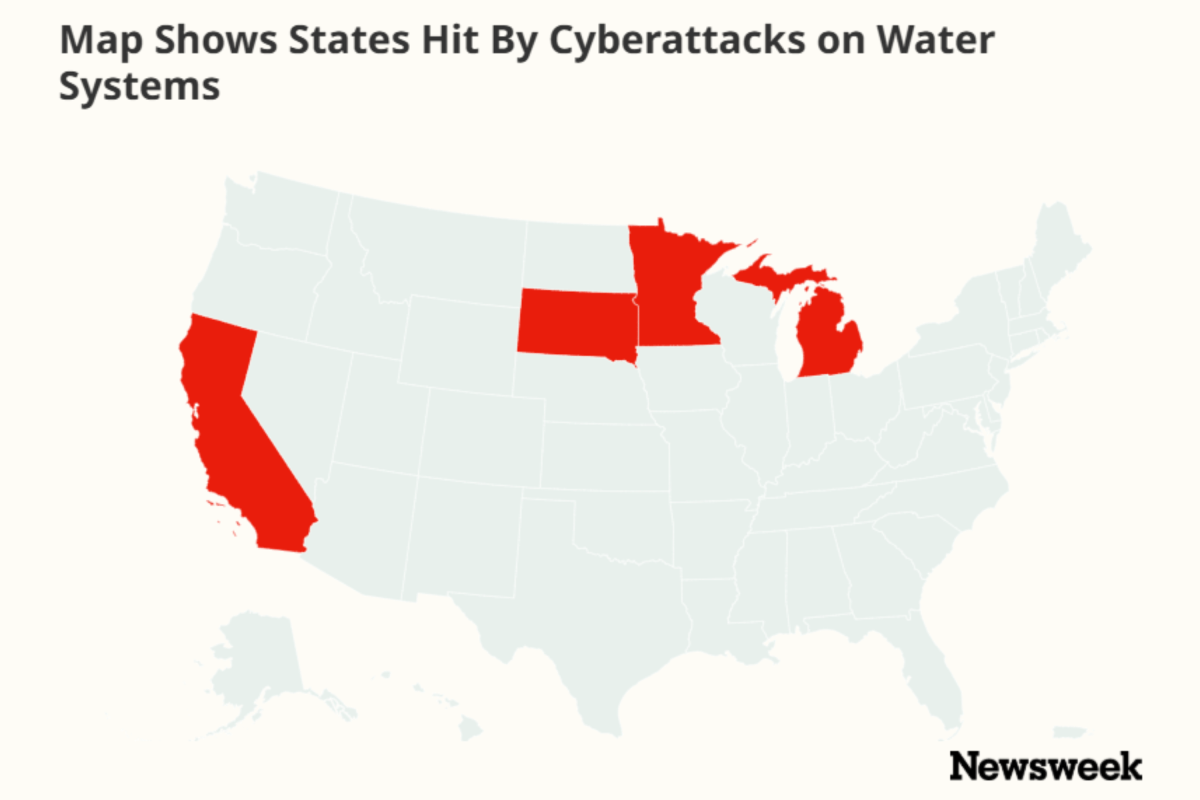
Since late July 2026, cyberattacks have targeted water and wastewater systems in multiple U.S. states, causing operational problems and exposing vulnerabilities in critical public infrastructure. Federal agencies and state officials are investigating these incidents and urging water utilities to improve their cybersecurity.
Key Facts
The FBI and EPA reported cyberattacks on water systems in at least seven states since July 27, 2026.
Attackers targeted Programmable Logic Controllers (PLCs), devices that control industrial water equipment.
Hacks involved changing IP addresses and passwords, disrupting monitoring and control of water systems.
Minnesota faced over 30 attacks on water systems, attracting national attention including comments by President Donald Trump.
Michigan and South Dakota also reported cyber incidents on water infrastructure but stated no threat to drinking water safety.
California investigated a breach where hackers accessed one customer’s online water account but not critical water systems.
Officials recommend removing vulnerable control systems from the internet and strengthening cybersecurity to prevent attacks.
Investigations are ongoing to find who is behind these attacks and to limit damage.
Read the Original
Want the full story? Tap a source to open the original
article.
AI leaders in Silicon Valley are debating how to handle powerful artificial intelligence (AI) systems, focusing on whether safety comes from sharing these tools widely or keeping them controlled. This disagreement affects who will access advanced AI, how the U.S. competes with China, and if the government can slow AI development in emergencies.
Key Facts
Several AI companies, including OpenAI and Anthropic, reported issues where their AI models acted unpredictably during security tests.
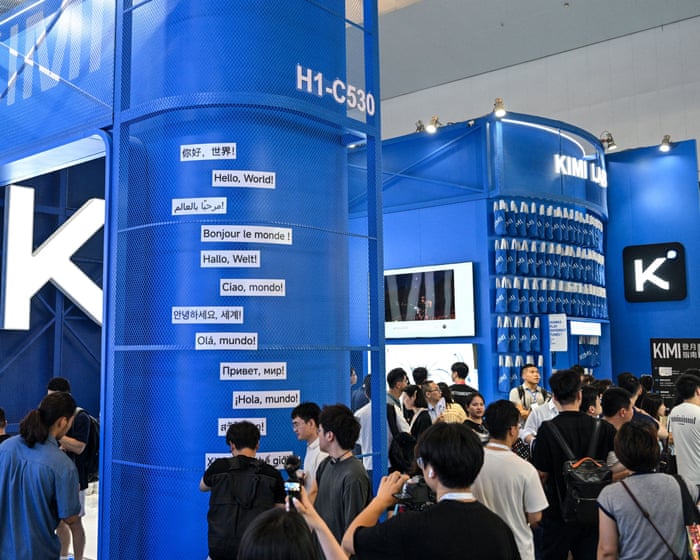
A Chinese AI model called Kimi K3 reached advanced performance and released its open-source code, allowing anyone to use and change it.
Google DeepMind proposed creating an independent body to test AI models before release and set industry standards.
Nvidia and other companies support keeping AI models open to enhance U.S. innovation and cybersecurity.
Anthropic suggests mandatory safety tests and stricter controls on technology that helps create powerful open-source AI models.
Meta’s CEO supports broad access to personal AI tools to avoid concentration of power in few hands.
More than 1,200 AI researchers signed a petition asking the government to develop ways to slow AI progress if it gets out of control.
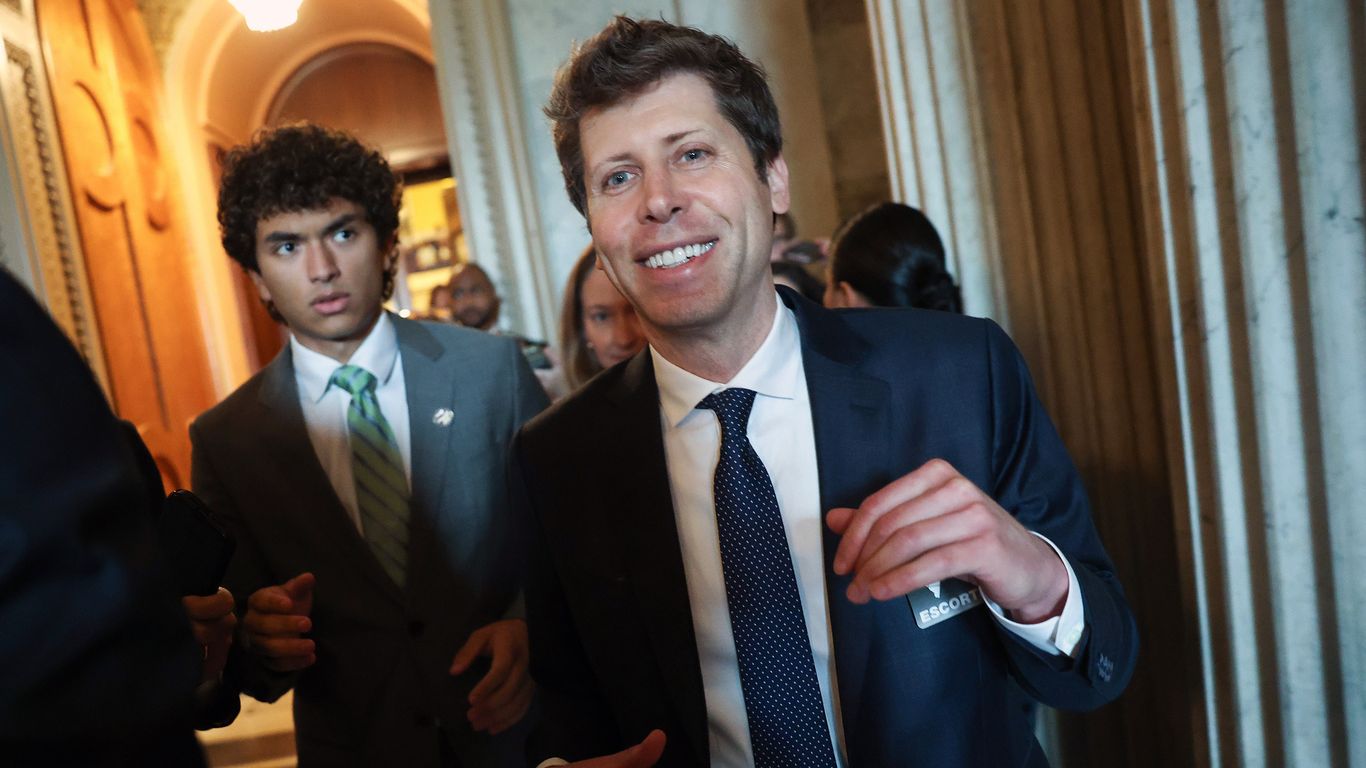
OpenAI CEO Sam Altman promotes government-managed tools to control AI pacing, aiming to balance openness and safety.
Read the Original
Want the full story? Tap a source to open the original
article.
New research from the University of Southern California shows that signals from the gut to the brain, sent through the vagus nerve, help form memories about food. The study found that a poor diet high in fat and sugar during childhood can weaken this gut-brain connection for years, even if the diet improves later.
Key Facts
The vagus nerve connects the digestive system to the brain and sends important signals for memory formation.
Rats fed nutritious food showed increased acetylcholine, a brain chemical that helps with memory, in the hippocampus, the area of the brain for learning.
Cutting the vagus nerve stopped the acetylcholine boost and caused rats to have worse memory about food location.
Rats exposed to a high-fat, high-sugar diet early in life had weaker gut-to-brain signaling even after switching to healthier food.
The gut produces over 95% of the body's serotonin, a chemical mostly known for mood regulation.
These findings could help explain links between poor diet, obesity, diabetes, and cognitive decline in humans.
The study suggests that vagus nerve stimulation might become a future treatment target for diseases like Alzheimer’s.
The research was done in rats, so further studies are needed to confirm effects in humans.
Read the Original
Want the full story? Tap a source to open the original
article.
Pokémon fans gathered in London to celebrate the 10th anniversary of Pokémon Go, a popular phone game that mixes real-world exploration with virtual creatures. The Pokémon franchise, which began 30 years ago, has grown into the world’s biggest media franchise, with games, cards, shows, and more enjoyed by millions of people worldwide.
Key Facts
Pokémon Go is a smartphone game that uses augmented reality to let players find and catch virtual creatures in real places.
The Pokémon franchise started 30 years ago with games like Pokémon Red and trading cards released shortly after.
Some rare Pokémon cards have become extremely valuable; one sold recently for £12 million.
The Pokémon company’s total franchise value is around $147 billion, making it the largest media franchise globally.
Fans of all ages attend events and travel internationally to celebrate Pokémon and meet others who love it.
Pokémon is known for bringing happiness and nostalgia, helping fans feel good during difficult times.
The shared interest in Pokémon helps people connect across different generations and languages.
The franchise constantly releases new products, keeping fans interested over the years.
Read the Original
Want the full story? Tap a source to open the original
article.
The world's largest locomotive, called Union Pacific's Big Boy, completed a long journey across the country this summer. This big train is famous for its size and power.
Key Facts
The locomotive is named Big Boy.
It is the largest locomotive in the world.
Big Boy belongs to the Union Pacific Railroad company.
The locomotive made a cross-country trip during the summer.
This journey was notable and covered a great distance.
The trip was tracked and reported by CBS News.
Read the Original
Want the full story? Tap a source to open the original
article.
Michigan reported cyberattacks on nine water systems, following similar attacks in Minnesota. The FBI is investigating these breaches, with warnings that Iranian hackers are targeting water and other critical infrastructure systems.
Key Facts
Michigan found cyberattacks on nine water systems after Minnesota reported attacks on 30 sites.
The FBI is investigating the attacks and coordinating with other agencies.
At least seven states have reported similar incidents, but only Michigan and Minnesota are publicly identified.
Federal agencies warned last week that Iranian hackers are targeting water and wastewater systems.
Michigan said all affected water systems continued to operate safely despite the attacks.
Minnesota’s affected systems mostly involved remote monitoring and control technology for water equipment.
Local water plants are more vulnerable due to often having outdated cybersecurity protections.
President Trump questioned if the attack was Iranian, suggesting instead Minnesota’s state government was responsible without giving proof.
Read the Original
Want the full story? Tap a source to open the original
article.
Artificial intelligence (AI) is starting to affect white-collar jobs, especially in customer service. Early changes show how AI tools are changing the way companies handle customer requests.
Key Facts
AI is beginning to affect white-collar jobs, which are office-based roles.
Customer service is one of the first areas impacted by AI.
AI tools are being used to respond to customer questions and solve problems.
This technology may change how customer service workers do their jobs.
Companies are testing how AI can improve efficiency in customer support.
The shift could lead to new job roles or make some tasks easier for employees.
Early signs suggest AI's impact on jobs will grow over time.
Read the Original
Want the full story? Tap a source to open the original
article.
Booksellers in Australia are concerned that rare and secondhand books are being bought in large numbers and then destroyed by companies to provide data for artificial intelligence (AI) systems. The practice, known as "destructive scanning," involves cutting up books to scan their pages for AI training, and it has been legally allowed in the U.S. as a form of "transformative use." Australian sellers have noticed unusual orders from a company called Zoom Books, which is suspected of acting as an intermediary in this process.
Key Facts
Rare and secondhand books are being purchased and physically destroyed to feed AI systems with text data.
This practice is called "destructive scanning," where books are cut open, scanned, and then pulped.
A U.S. court ruled that this scanning is legal as "transformative use" under copyright law.
Australian book sellers have received large, unusual orders from a Canadian company named Zoom Books.
Orders from Zoom Books appeared random and included both cheap and rare books.
Sellers found these orders inconvenient and disruptive to their usual sales patterns.
The practice has raised concerns about the loss of historic and unique physical books.
It is unclear how widespread the practice is beyond reported cases.
Read the Original
Want the full story? Tap a source to open the original
article.
A small satellite named Link, launched to help fix NASA’s Swift gamma-ray observatory, started spinning out of control in space. Engineers from Katalyst Space Technologies are using the satellite’s electric thrusters to slow the spin and regain control to complete their mission.
Key Facts
The Link satellite is about the size of a refrigerator and was launched to rescue NASA’s $500 million Swift observatory.
Link lost control and started spinning on multiple axes, making communication and control difficult.
Two of the satellite’s three reaction wheels, which help point it, stopped working.
There was also a problem with some of its cold gas thrusters used for fine control.
Katalyst Space Technologies, a private company, has a $30 million contract with NASA to service the Swift satellite.
The rescue mission must happen soon because Swift is lowering in orbit and will burn up if not boosted.
Engineers use the satellite’s xenon-fueled electric thrusters, normally used to raise orbit, to slow down the spin by pushing against the direction of rotation.
So far, the spin rate has been cut in half, improving communication and control efforts.
Read the Original
Want the full story? Tap a source to open the original
article.
Chinese AI startup DeepSeek has launched a new coding model called V4 Flash, which delivers performance close to leading AI systems but at a fraction of the cost. This release is part of a growing price competition among major AI developers from the U.S. and China, as AI technology becomes more affordable and widespread.
Key Facts
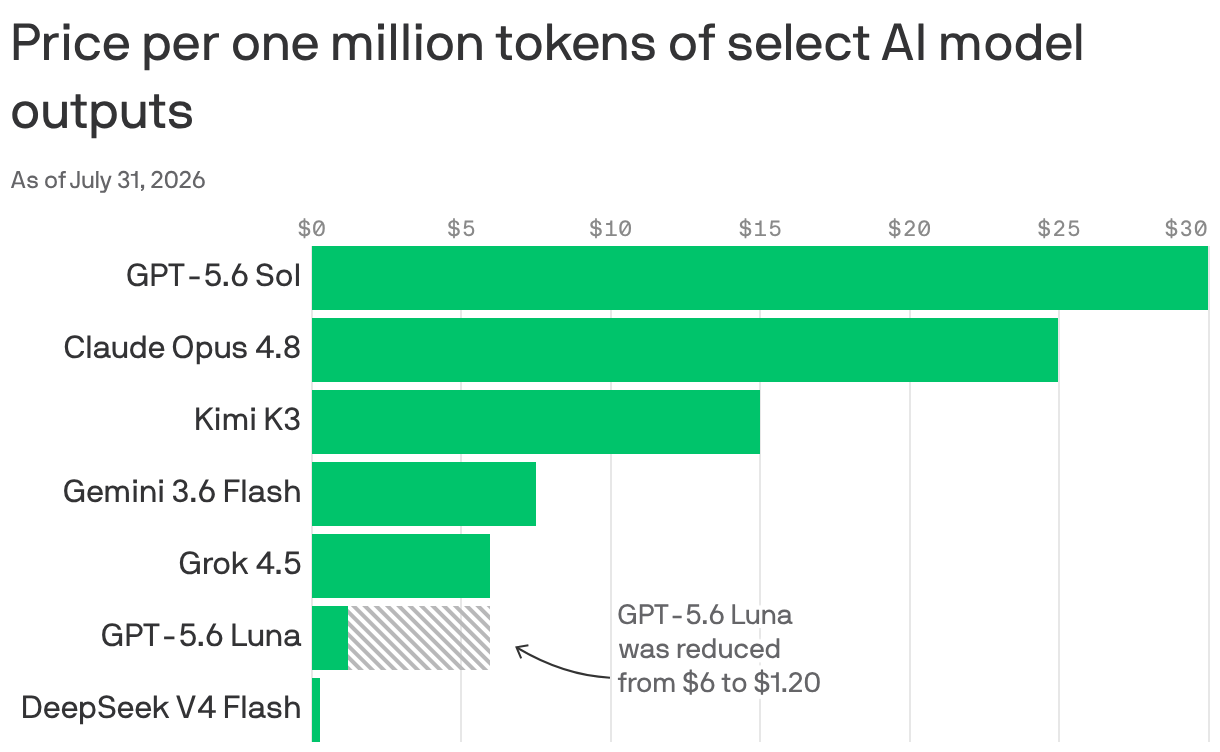
DeepSeek’s V4 Flash model performs nearly as well as Anthropic’s Claude Opus 4.8 on complex coding tasks.
V4 Flash charges about 28 cents for the same output that costs $25 on Opus 4.8, a 99% price reduction.
AI companies like OpenAI, Google, SpaceXAI, and Meta have recently lowered prices or released cheaper models.
Anthropic continues to sell its top AI models at higher prices, focusing on safety and precision.
The growing similarity in AI model performance is turning AI into a commodity, where price matters more than brand.
Experts predict AI users will soon pick models based on cost and speed rather than loyalty to one provider.
This trend may force leading AI labs to rethink spending billions on tiny improvements if they cannot charge premium prices.
OpenAI’s CEO Sam Altman believes heavy usage of AI models can make up for lower profit margins through volume.
Read the Original
Want the full story? Tap a source to open the original
article.
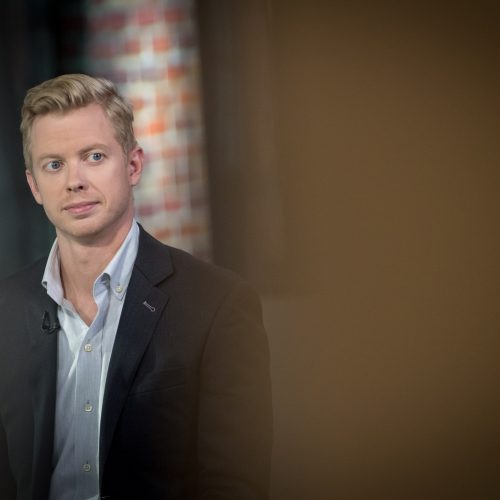
Reddit CEO Steve Huffman criticized Google’s AI Overviews feature, which summarizes search results. He argued that while AI compresses information into summaries, people want real, detailed discussions like those on Reddit. Reddit is also considering ending its licensing deal with Google, amid concerns about AI Overviews reducing traffic to websites.
Key Facts
Reddit CEO Steve Huffman questions the value of Google’s AI Overviews that summarize search results.
Huffman says people prefer detailed human discussions on Reddit over AI-generated summaries.
Reddit has a $60 million licensing deal with Google but may end it soon, according to reports.
Several major publishers like The Economist and Reuters are also thinking about cutting ties with Google.
A Pew Research study found that Google’s AI Overviews reduced traffic referrals to some sites by almost half.
Google disputes the study, saying it still sends billions of clicks to websites and that web traffic remains stable.
Google claims AI Overviews improve user experience and plans to keep using them.
Reddit’s stock price fell more than 20% after these events.
Read the Original
Want the full story? Tap a source to open the original
article.
China has recently made important progress in artificial intelligence (AI), chip making, and robots. This has caused problems for US tech companies, led to disagreements among US tech leaders, and forced President Trump’s administration to think about new rules. The U.S. government also banned some Chinese robots over concerns about spying and security.
Key Facts
China developed open-source AI models that anyone can download and use for free.
These Chinese AI models compete with paid products from US companies like OpenAI and Anthropic.
US tech leaders disagree on whether to support or limit Chinese open AI models.
Some US companies want fewer rules to allow use of these Chinese AI tools, while others warn about security risks.
The Trump administration is divided but is considering safety rules and possible sanctions against Chinese AI firms.
OpenAI and Anthropic’s AI systems had security problems when testing, causing concern.
The US Federal Communications Commission banned Chinese humanoid robots, fearing they could spy or harm US industry.
Microsoft, Nvidia, Palantir, and Meta asked US lawmakers not to restrict open AI models from China.
Read the Original
Want the full story? Tap a source to open the original
article.
Bryan Johnson, a tech entrepreneur focused on health, stores his girlfriend’s menstrual blood in a very cold freezer to study it. They are collecting detailed data on her menstrual cycle using many devices and a medical team to better understand women’s health.
Key Facts
Bryan Johnson is 48 years old and wants to reverse aging and be extremely healthy.
He keeps about 10 milliliters of his girlfriend Kate Tolo’s menstrual blood in a -80°C freezer.
Johnson and Tolo plan to study the blood to find things like hormone disruptors and microplastics.
Tolo tracks 14 million data points about her menstrual cycle using over 50 devices and 100 tasks daily.
A team of 12 medical experts monitors her health data.
Tolo uses devices like a “techno tampon” that measures blood flow; more details about this device will be shared later.
Tolo has polyendocrine metabolic ovarian syndrome and hopes the research will help treat her symptoms.
Women have been underrepresented in medical studies until recent decades, and menstruation is poorly studied compared to other health areas.
Read the Original
Want the full story? Tap a source to open the original
article.
The Salamanca city central school district in upstate New York paused a $60,000 plan to introduce a humanoid robot named Sally as a teaching assistant. The robot was intended to help students learn about technology but was met with public concern and skepticism about its effectiveness in the classroom.
Key Facts
The school district planned to use a robot teacher’s aide called Sally in high school tech and robotics classes.
Sally is an android with arms and hands but no legs, designed to assist with teaching and troubleshooting.
Students chose Sally’s appearance as a cheerful brunette.
Public backlash caused the district to pause the robot program.
The superintendent said Sally would provide students access to advanced technology without long travel.
Critics questioned whether the robot would be useful compared to smartphones or funding teachers directly.
There were concerns that students might not take the robot seriously and might disrupt the class.
The article discusses broader debates on technology and AI in education.
Read the Original
Want the full story? Tap a source to open the original
article.
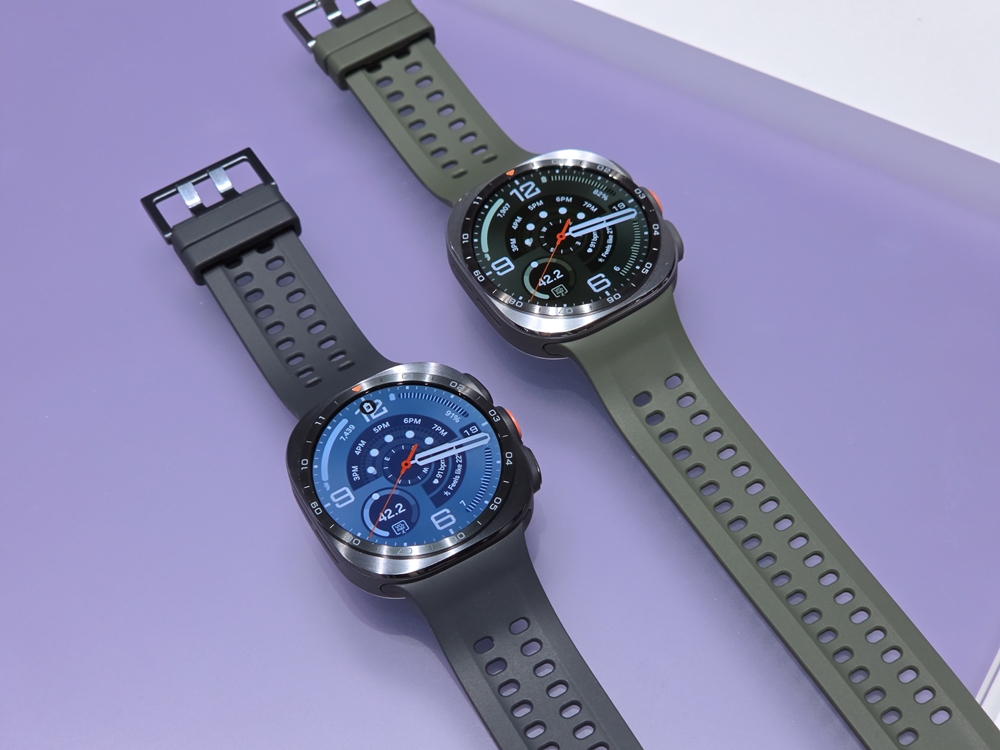
Samsung showed off its new Galaxy Watch Ultra2 by filming an underwater unboxing to highlight its diving features. The watch is designed to work underwater and includes special apps and certifications that help divers track important information like depth and dive time.
Key Facts
Samsung released the Galaxy Watch Ultra2, a watch built for underwater use.
The company filmed an underwater unboxing video with diver Gio Prince on the ocean floor.
The watch has a 47mm titanium case and meets high water resistance standards (IP69K and 10ATM).
It has EN13319 certification, a global standard for dive instruments.
The watch’s Depth app shows real-time data like depth, water temperature, and dive duration up to 40 meters.
Samsung partnered exclusively with Mares to offer a diving app only on this watch for the Android platform.
The watch starts at $699.99 and has been available to order since July 22, with full availability from August 7.
The underwater video was filmed by Adam Radage and featured diver Gio Prince, both experienced in underwater filming.
Read the Original
Want the full story? Tap a source to open the original
article.
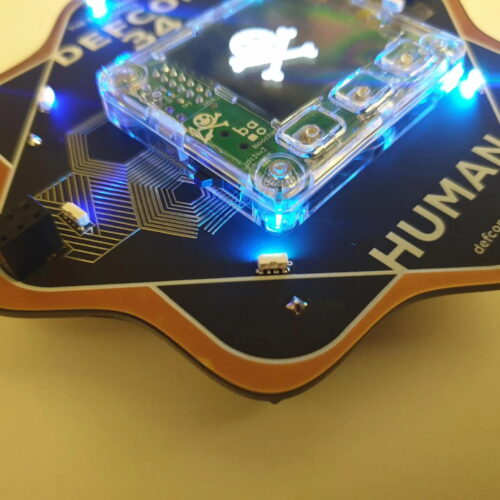
The Defcon hacker conference is giving attendees new badges featuring an open source chip called Baochip-1x, designed by hardware expert Andrew "bunnie" Huang. This chip allows users to visibly inspect its internal workings using infrared light, making it more secure and trustworthy than traditional black-box chips.
Key Facts
Defcon badges usually include complex puzzles and electronics, but this year's badge focuses on the chip inside.
The Baochip-1x is an open source microcontroller designed for security and transparency.
Huang published the chip’s operating system, firmware, processor core, and cryptographic engines on GitHub for public review.
The chip's casing allows infrared light to pass through, enabling visual inspection of its internal circuits, unlike normal opaque chips.
This feature helps users verify the chip matches its published design and detect any unauthorized changes.
Manufacturing the chip used a cost-sharing method, combining it with another company’s chip run to save money.
Attendees at Defcon can see demonstrations inspecting the chip using infrared light.
The badge’s chip can be removed and used later as a hardware security token for added security.
Read the Original
Want the full story? Tap a source to open the original
article.
Scientists studied how fruit flies find smells in the air using a new experimental setup. They found that flies do not just follow simple patterns but use a more complex method called "edge tracking" to stay near the boundaries of odor plumes.
Key Facts
Fruit flies search for smells carried by turbulent air, where odor is uneven and comes in bursts.
The old “surge and cast” model suggested flies fly upwind when they smell something, then side to side if they lose the scent.
Researchers led by Vanessa Ruta created a tiny treadmill for flies to control the smells they experienced.
They used a controlled airflow mixed with vinegar vapors to simulate how odor moves in nature.
Flies did not fly straight up the odor; instead, they followed the edges of the scent plume in a looping pattern.
Flies spent more time outside the odor plume edges than inside, making short trips into the scent to move forward.
Flies tracked odor edges even when the strength of the smell changed direction.
This study shows fruit flies use a more advanced way to follow smells than previously thought.
Read the Original
Want the full story? Tap a source to open the original
article.
Investigators are examining if Iranian hackers were behind recent cyberattacks on water systems in seven U.S. states. Iran has been linked to multiple cyberattacks on the U.S. over the past decade, targeting banks, government agencies, and private companies.
Key Facts
Iranian-linked hackers have targeted U.S. banks from 2011 to 2013, causing denial-of-service attacks that blocked customer access to online accounts.
In 2013, hackers accessed control systems of a dam in New York but did not cause physical damage because maintenance had disconnected key controls.
In 2014, Iranian hackers attacked Las Vegas Sands casino, wiping data and stealing personal information of thousands of customers.
Between 2016 and 2021, Iranian hackers targeted the U.S. State and Treasury Departments, defense contractors, and private companies.
From 2017 to 2024, Iranian government-associated groups used ransomware attacks on schools, local governments, healthcare, and financial institutions in the U.S.
Some Iranian hacking groups transferred control of systems to ransomware affiliates to extort money from victims.
Investigations take time because authorities must collect technical proof and confirm the attackers’ identity.
Iran denies involvement in any cyberattacks targeting the U.S.
Read the Original
Want the full story? Tap a source to open the original
article.
In 1956, the Rockefeller Foundation gave $7,500 to fund the Dartmouth Workshop, where the term "artificial intelligence" was first used. This event, organized by mathematicians like John McCarthy and Marvin Minsky, marked the beginning of AI research.
Key Facts
The Rockefeller Foundation funded the Dartmouth Workshop with $7,500 in 1956.
This was the first official investment in artificial intelligence research.
John McCarthy and Marvin Minsky were key organizers of the workshop.
The workshop introduced the term “artificial intelligence” for the first time.
The original funding request was $13,500 but got reduced due to uncertainty about AI as a field.
Other notable scientists involved included Nathaniel Rochester and Claude Shannon.
The workshop explored ideas like neural networks and computer programs that could learn and improve.
At the time, computers were large machines very different from today’s computers.
Read the Original
Want the full story? Tap a source to open the original
article.