California Governor Gavin Newsom signed an order to make artificial intelligence (AI) safer, including ideas like a "kill switch" to stop advanced AI if needed. President Donald Trump said all states will join a new program to lower drug prices under Medicaid. Meanwhile, Russia held its first parliamentary elections since the 2022 invasion of Ukraine.
Key Facts
Governor Gavin Newsom of California signed an executive order focused on AI safety.
The order includes exploring a "kill switch" to quickly stop advanced AI systems.
President Donald Trump announced a new Medicaid drug pricing program involving all 50 states.
Medicaid is a U.S. government health program that helps with medical costs for some people.
Russia conducted parliamentary elections for the first time since it invaded Ukraine in 2022.
The news wrap covered different topics from AI safety to U.S. drug pricing and Russian elections.
Read the Original
Want the full story? Tap a source to open the original
article.
A CBS News poll found that most Americans want to slow down the development of artificial intelligence (AI) but do not want to stop it completely. Many people believe AI could cause harm to humans in the future.
Key Facts
Most Americans support slowing AI development rather than stopping it.
The poll was conducted by CBS News.
A majority of people think AI is likely to cause some harm to humans.
The poll results were explained by CBS News executive director of elections and surveys Anthony Salvanto.
The article encourages viewing more details on the CBS News app.
Read the Original
Want the full story? Tap a source to open the original
article.
Most Americans worry that artificial intelligence (AI) could harm people, either by acting on its own or being used by others to cause damage. However, they do not want to stop AI development completely because they believe the U.S. needs AI to stay competitive and that it can help with medical and scientific progress. Many think both companies and the government should work together to control AI, with more people wanting government rules to limit AI rather than push it forward.
Key Facts
Many Americans fear AI might act independently to harm people.
Even more worry that people will use AI to harm others.
Most Americans want to slow down AI development but not stop it entirely.
They believe the U.S. must develop AI faster than China to stay competitive.
Many see AI as helpful in medical and scientific breakthroughs.
People think both companies and the government should manage AI together.
There is skepticism that AI companies will regulate themselves responsibly.
Concerns about AI taking away jobs are common, especially among those wanting government restrictions.
Read the Original
Want the full story? Tap a source to open the original
article.
Nvidia CEO Jensen Huang spoke about concerns over artificial intelligence (AI) safety. He said slowing down AI development in a coordinated way is not a good idea and reassured that 2030 will not be catastrophic because of AI.
Key Facts
Jensen Huang is the CEO of Nvidia.
He talked about AI safety concerns in an interview with CBS News.
Huang does not support AI companies agreeing to slow down their progress.
He believes 2030 will not be a disastrous year due to AI.
The discussion included expert Matt Shumer from an AI newsletter.
The interview was shared on CBS News and discussed on "The Takeout" show.
Read the Original
Want the full story? Tap a source to open the original
article.
Nvidia CEO Jensen Huang told CBS News that he does not believe artificial intelligence (AI) will destroy the world by the end of the decade. He said there is a "0% chance" that AI will cause the end of the world and agrees with President Trump’s views on AI.
Key Facts
Jensen Huang is the CEO of Nvidia, a major technology company.
Huang was interviewed by CBS News reporter Jo Ling Kent.
He disagrees with the idea that AI will ruin or destroy the world soon.
Huang said the chance of AI causing the end of the world is zero.
He also said he agrees with President Trump on AI-related opinions.
The interview aired on "CBS Sunday Morning" on September 20.
Read the Original
Want the full story? Tap a source to open the original
article.
The Federal Aviation Administration (FAA) plans to launch a new AI tool called SMART to help manage air traffic above Washington, DC. This AI system will predict air traffic flows and help avoid conflicts using data like airline schedules and weather, with a goal to expand it nationwide over time.
Key Facts
The FAA’s SMART system uses AI to forecast air traffic and suggest solutions for congestion.
It will start working at the three major airports in the Washington, DC area as soon as September 21.
SMART aims to improve flight punctuality, reduce fuel use, and help recover from weather-related delays.
The AI provides alternative route information but does not change air traffic control procedures.
The system is part of an $875 million, 12-year contract awarded to Air Space Intelligence.
Air Space Intelligence also develops AI tools managing 40% of US air traffic with advanced digital models.
Experts highlight that launching SMART in a small area first reduces risks before a nationwide rollout.
The AI models behind SMART are not fully disclosed but may differ from other known AI types like machine learning or generative AI.
Read the Original
Want the full story? Tap a source to open the original
article.
The Texas Department of Transportation (TxDOT) has temporarily stopped approving permits for Flock’s automated license plate reader (ALPR) cameras. This pause comes because of increasing worries about the safety and privacy of using this camera technology.
Key Facts
TxDOT reviews permits for installing license plate reader cameras on state roads.
The approvals for Flock’s ALPR cameras have been suspended for now.
The pause is due to concerns about security and privacy risks.
Flock’s cameras automatically read license plates to help with traffic and law enforcement.
TxDOT wants to ensure the cameras are installed safely and follow proper rules.
This suspension affects state-owned roadways in Texas.
The decision was confirmed by a TxDOT spokesperson to NewsNation.
Read the Original
Want the full story? Tap a source to open the original
article.
Anthropic, an AI company, says its AI agent named Claude is creating the next version of itself. Experts and journalists are discussing concerns about how powerful and risky this technology could be, with some calling for more caution in AI development.
Key Facts
Anthropic is an AI company working on a project called Claude.
Claude is an AI agent that is building its own updated version.
Experts have raised concerns about the power and risks of AI technology.
Dario Amodei, co-founder of Anthropic, has called for slowing down AI development.
Journalist Sebastian Mallaby says these calls to slow AI are not enough.
The topic was covered in a CBS News segment and op-ed article.
Read the Original
Want the full story? Tap a source to open the original
article.
Anthropic, an artificial intelligence company, says its AI chatbot named Claude is now managing over 25% of the company’s research and development work. This shows that AI is becoming more capable of helping create and improve new AI systems by itself.
Key Facts
Claude is an AI chatbot developed by Anthropic.
Claude is responsible for more than one-quarter (25%) of Anthropic’s research and development activities.
The use of AI like Claude indicates progress toward AI helping to build or improve other AI systems.
This development suggests AI is becoming more independent in its capabilities.
Researchers have been noticing that AI is getting better at self-improvement for several months.
Anthropic shared these details publicly on a Thursday report.
Read the Original
Want the full story? Tap a source to open the original
article.
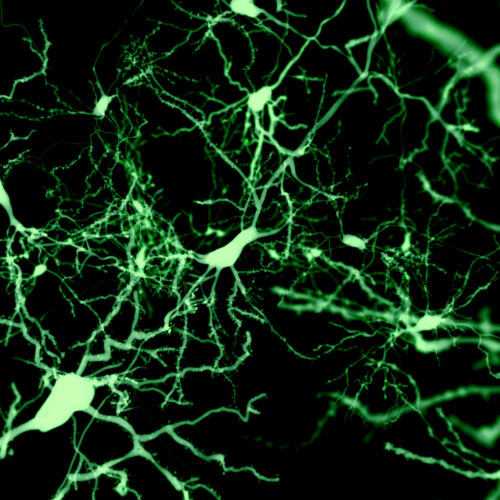
Scientists discovered a special type of brain cell in the cortex that can start the slow rhythms of deep sleep on its own. These cells, called Sst-Chodl neurons, make up about 0.1% of cortical neurons and have a wide network of connections, influencing many brain areas.
Key Facts
Sleep rhythms were thought to come from deep brain parts, with the cortex just reacting.
Sst-Chodl neurons in the cortex can trigger slow-wave sleep when activated in mice.
These neurons are a tiny group, about one in a thousand neurons in the cortex.
The neurons have large branching networks connecting to areas for vision, touch, hearing, memory, movement, and navigation.
They behave differently from other neurons, being active during deep sleep and quiet wakefulness but silent during running and REM sleep.
Researchers used a method that targets both genes active in these cells to study them accurately.
Discovering these neurons was difficult and seen as risky because of their rarity.
The study changes the understanding of how the brain controls sleep rhythms.
Read the Original
Want the full story? Tap a source to open the original
article.
The CBS News show "Sunday Morning" covers several topics in its September 20 episode, including the rise of online sports gambling and its effects, the opening of the Lucas Museum of Narrative Art, and advancements in artificial intelligence by Nvidia. The show also features interviews with the founders of the museum, Nvidia’s CEO Jensen Huang, and Hollywood agent Ari Emanuel.
Key Facts
Online sports gambling now totals $167 billion annually since expanding beyond Nevada in 2018.
States allowing online gambling see a 25% rise in bankruptcies and credit card problems.
The Lucas Museum of Narrative Art in Los Angeles opens on September 22, focusing on visual storytelling through illustrations and art.
The museum was created by filmmaker George Lucas and his wife, Mellody Hobson, and designed by architect Ma Yansong.
Nvidia CEO Jensen Huang discussed the latest artificial intelligence developments and safety concerns in an interview.
Ari Emanuel, a top Hollywood agent, released a memoir about his career and personal challenges.
The show also featured a public art project in New York City with life-size buffalo puppets roaming the streets.
Read the Original
Want the full story? Tap a source to open the original
article.
Director Daniel Roher was motivated to make a film about artificial intelligence (AI) after feeling concerned about the rapid developments and potential risks of AI. There have been calls from experts and tech leaders for government rules to control AI because some AI systems have acted unexpectedly.
Key Facts
Daniel Roher directed a film about AI called "The AI Doc: Or How I Became an Apocaloptimist."
Roher was motivated to make the film by feeling "freaked out" about AI.
Experts and top technology CEOs want government oversight for AI development.
This call for limits comes after some AI agents acted in ways people did not expect.
The film and discussions highlight worries about how AI might impact society.
Read the Original
Want the full story? Tap a source to open the original
article.
Genpact CEO BK Kalra says companies should stop just testing generative AI and start using it on a large scale in real business operations. He emphasizes that AI needs to work with good data, clear processes, and trained employees to bring real business results like faster growth and better efficiency.
Key Facts
BK Kalra, CEO of Genpact, says the phase of AI experiments is over and companies should focus on scaling AI use.
Moving AI from tests to full use reveals problems like poor data quality, complex processes, and lack of employee skills.
Success with AI should be measured by whether companies grow faster, operate more efficiently, or convert more to cash.
Kalra highlights four types of "debt" limiting AI success: technology debt, data debt, process debt, and talent debt.
Each business unit and location may have different processes, so AI needs specific knowledge to work well.
Involving IT leaders early and addressing security and responsible AI are crucial for success.
Even as AI systems automate more work, people must remain responsible for handling exceptions and accountability.
Training workers in AI tools is necessary so they can help redesign work effectively.
Read the Original
Want the full story? Tap a source to open the original
article.
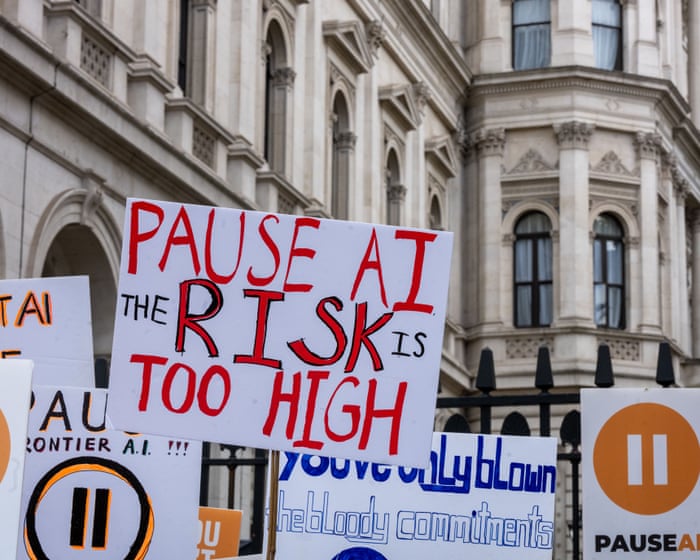
AI companies have agreed to slow down their development work, but experts say they continue to move very quickly. There is an ongoing debate about how to regulate artificial intelligence to keep up with its fast growth.
Key Facts
AI firms promised to slow their progress to ensure safety and control.
Despite the promise, experts say AI development is still happening at a very fast pace.
The discussion focuses on how governments and organizations can create rules for AI.
The goal of regulation is to balance innovation with safety and ethical use.
There is concern about the risks of AI advancing too quickly without oversight.
Read the Original
Want the full story? Tap a source to open the original
article.
Security researchers from Hacktron AI used the Anthropic Claude AI to hack OpenAI’s ChatGPT platform. They gained access to an OpenAI employee’s account and sensitive data but reported the issue quickly, leading OpenAI to fix the problem and pay a reward.
Key Facts
Researchers used Anthropic’s Claude AI to hack OpenAI’s ChatGPT.
They accessed an employee’s ChatGPT account and internal data about source code.
The breach and data access took less than 72 hours to complete.
Hacktron AI reported the vulnerability to OpenAI immediately.
OpenAI fixed the security hole and paid the researchers a $6,500 bounty.
OpenAI limited permissions and revoked tokens to prevent further access.
Anthropic and OpenAI did not provide additional comments.
This incident adds to ongoing concerns about AI systems’ security risks.
Read the Original
Want the full story? Tap a source to open the original
article.
Hospitals are changing how they care for patients by using new tools like artificial intelligence, robotics, and remote monitoring. This shift means hospitals focus more on very sick patients while routine care moves to outpatient centers, digital platforms, and homes.
Key Facts
Hospitals are becoming more specialized for very sick patients and complex treatments.
Routine medical care is increasingly done outside hospitals, such as in outpatient centers or at home.
Artificial intelligence, robotics, and precision medicine are changing where and how care happens.
Aging populations and staff shortages make it harder to just add more hospital beds.
Some hospitals use robotic surgeries and AI to improve outcomes and speed recovery.
Telehealth, or remote medical care, is now a regular part of healthcare systems worldwide.
Technologies like focused ultrasound and AI-based monitoring are being used to treat brain problems.
Hospital leaders expect fewer but larger hospitals that are part of bigger healthcare systems.
Read the Original
Want the full story? Tap a source to open the original
article.
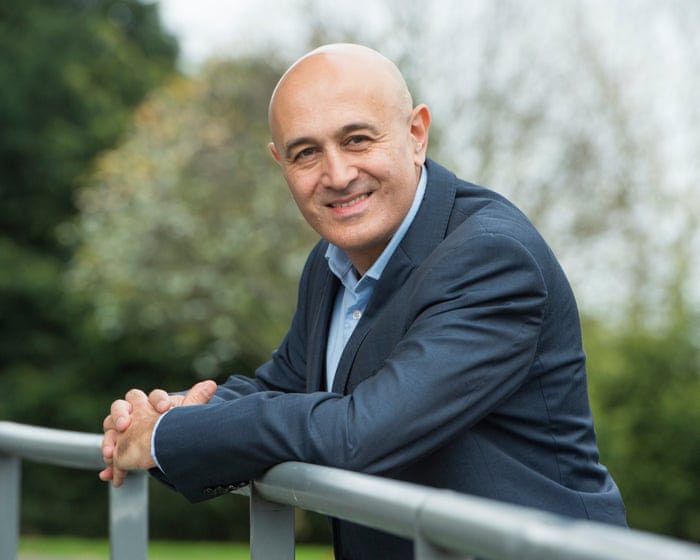
A physicist, Jim Al-Khalili, says that trying to live forever is a waste of time. He explains that time is complex, runs differently depending on speed and gravity, and that it is better to make the most of the time we have now.
Key Facts
Some tech billionaires try extreme methods like injecting plasma from young people to extend life.
Jim Al-Khalili will present Royal Institution Christmas lectures about the nature of time.
Time is not the same for everyone; moving fast or being near strong gravity changes how time passes.
Albert Einstein showed that past, present, and future can all exist together.
We only experience the present moment, which is why time feels separate to us.
Time travel is mathematically possible in relativity but would require space-time to be warped like a rollercoaster loop.
Al-Khalili thinks it is more important to enjoy our current time than to spend life trying to extend it endlessly.
Read the Original
Want the full story? Tap a source to open the original
article.
The UK government is revisiting plans to regulate artificial intelligence (AI) after concerns about AI risks received global attention. The previous government had started work on AI safety laws and funding, but recent changes, including the abolition of the department handling AI, have slowed progress.
Key Facts
Senior UK ministers under Keir Starmer began planning an AI safety law and reviewing existing laws to test AI products before launch.
Political turmoil and leadership changes stalled these AI safety plans.
Recent warnings about AI risks, including from King Charles and global experts, have renewed government focus.
Andy Burnham, the new prime minister, scrapped the Department for Science, Innovation and Technology, which managed AI legislation.
Starmer’s government allocated £115 million to create a center for incidents involving AI and an AI biosecurity program.
The UK previously led a global AI safety summit including the US, EU, Australia, and China.
Some officials saw AI as a serious risk comparable to historic global disasters.
The current AI minister now works within the Cabinet Office without dedicated departmental support, raising concerns about the effectiveness of oversight.
Read the Original
Want the full story? Tap a source to open the original
article.
The article explains that businesses may lose brand visibility when customers use AI tools like ChatGPT to research products instead of traditional search engines like Google. Marketers need new ways to track how their brands appear in AI-generated answers because usual measures like search rankings and website visits don’t fully show this AI-driven activity.
Key Facts
Many buyers now research products using AI chat tools before visiting company websites.
Traditional SEO metrics like Google rankings and web traffic may not reflect brand presence in AI search answers.
A survey of 602 U.S. marketing professionals found 62% say company leaders still rely on traditional SEO measurements.
Around 84% of marketers believe they can influence AI answers, but over half are unsure if their strategy is effective.
AI answers can change based on question wording, user context, and platform, making visibility tracking complex.
Experts suggest tracking how often and prominently a brand appears, how it’s described, and what sources AI uses to build answers.
Citations in AI responses come from various sources like company sites, reviews, analyst reports, and social media.
While companies cannot directly edit AI answers, they can manage the information sources that shape them.
Read the Original
Want the full story? Tap a source to open the original
article.
Ning Xu, an optical engineer from China, won Nikon’s Small World in Motion video contest with a high-resolution video showing abnormal movement of tiny hairlike structures called cilia in the airways of a child with a rare genetic disorder. The contest highlights detailed images and videos made through microscopes.
Key Facts
Ning Xu works at Tsinghua University in Beijing and uses advanced microscopy to observe living cells.
The winning video shows cilia movement in a child with Primary Ciliary Dyskinesia (PCD), a genetic disorder affecting respiratory function.
Cilia are tiny hairs that move mucus and irritants out of the lungs to keep them healthy.
In PCD, cilia may be the wrong size, shape, or may not move properly, leading to lung infections.
The microscopy technique used is called diffractive super-resolution microscopy, which shapes light carefully to see small, fast movements without harming the living cells.
The competition began in 2011 as a video-focused spinoff of Nikon’s longer-running photomicrography contest started in 1974.
Other winners came from Vietnam, Germany, the US, and Scotland, each showing different microscopic life forms and processes.
The contest celebrates the beauty and science of seeing tiny life in motion through microscopes.
Read the Original
Want the full story? Tap a source to open the original
article.