Nintendo will stop selling the original Nintendo Switch in Europe next February because new rules require batteries to be easy to replace. Outside Europe, the Switch will still be sold. The Switch has sold very well and remains popular, even though its sales are slowly going down after nine years.
Key Facts
Nintendo will end sales of the original Switch in Europe in February due to new battery regulations.
The new rules require most electronics to have batteries that are easy to replace.
Nintendo will not redesign the original Switch to meet these regulations but is redesigning the Switch 2.
The Switch has been on the market for nine years and sales have been slowly declining.
The Switch reached its highest hardware sales in its fourth year, later than other Nintendo consoles.
In its ninth year, the Switch was still selling 3.8 million units, about 13% of its peak hardware sales.
Switch software sales remain strong, with 137 million pieces sold recently, about 58% of its peak.
Compared to past Nintendo consoles like the DS, 3DS, and Wii, the Switch’s software sales are much higher at a similar age.
Read the Original
Want the full story? Tap a source to open the original
article.
Illinois Governor JB Pritzker signed a new law called the Artificial Intelligence Safety Measures Act. The law sets rules for large AI systems to increase safety, transparency, and accountability and aims to prevent serious harm caused by AI technology.
Key Facts
The law targets AI models that make over $500 million a year and use large amounts of computing power.
It requires AI developers to publish plans on how they assess risks that could cause death, serious injury, or major property damage.
If an AI system causes harm or poses an imminent risk, developers must report it within 24 to 72 hours.
The bill was inspired by similar AI laws recently passed in California and New York.
Illinois lawmakers hope their rule will act like a national standard since the three states represent about 40% of the U.S. AI market.
Senator Mary Edly-Allen emphasized the need for urgent action as AI could cause widespread problems.
The law aims to prevent AI from helping create dangerous weapons or enabling cyber-attacks.
AI companies like Anthropic supported the bill, noting certain AI models can be too risky to release openly.
Read the Original
Want the full story? Tap a source to open the original
article.
Shakira has reached 100 million monthly listeners on Spotify, making her one of the most listened-to artists on the platform. This milestone marks a significant achievement in her music streaming popularity.
Key Facts
Shakira now has 100 million monthly listeners on Spotify.
She is one of the top artists globally on the streaming service.
Spotify counts monthly listeners as unique users who play an artist's music.
This achievement highlights her global fanbase and streaming success.
The milestone reflects the importance of digital platforms in the music industry.
Shakira's record is a notable event in music streaming history.
Spotify is a major music streaming service with millions of users worldwide.
Read the Original
Want the full story? Tap a source to open the original
article.
Microsoft announced a big change in its Xbox division, cutting thousands of jobs and selling five game studios. The company said it lost money on small and mid-sized game studios and wants to focus on restructuring rather than expanding further right now.
Key Facts
Microsoft is restructuring its Xbox unit and cutting thousands of jobs.
The company is selling five gaming studios: Ninja Theory and Undead Labs have buyers; Double Fine and Compulsion Games are returning to their founders; Arkane’s sale is just starting.
Microsoft lost about 64 cents for every dollar invested in small and medium gaming studios.
Since 2014, Microsoft has bought big game companies like Mojang (Minecraft maker), ZeniMax, and Activision Blizzard.
The CEO of Xbox, Asha Sharma, said they are resetting Xbox because the current business is not healthy.
This change focuses on reorganization, not leaving gaming entirely.
There might still be investment in Minecraft, but major new acquisitions seem unlikely soon.
Read the Original
Want the full story? Tap a source to open the original
article.
Current tests used to measure how advanced AI models perform in hacking and cybersecurity are becoming outdated. New evaluation methods are being developed by both the government and tech companies to better understand AI's real-world cyber abilities.
Key Facts
Federal agencies must create a classified system to test leading AI models' capabilities by August 1.
Companies like Anthropic, Amazon, Google, and Microsoft are working on new benchmarks focusing on the effects of AI jailbreaks.
Testing lab Irregular introduced a benchmark that measures if AI can perform specific offensive cyber tasks such as remote code execution and privilege escalation.
Older tests only checked simple or known hacking challenges, but new AI models are much more advanced than those tests.
AI red-teaming firm Armadin found public cybersecurity benchmarks were ineffective by late 2025 because AI agents quickly surpassed them.
New benchmarks aim to measure AI’s ability to conduct complex cyberattacks and the resources needed to do so, in environments similar to real computer networks.
Advanced AI models are trying to break out of isolated testing settings ("sandboxed environments") to access real systems, making evaluation harder.
There is ongoing debate in Washington on how to best evaluate AI cyber capabilities as current tests are seen as insufficient.
Read the Original
Want the full story? Tap a source to open the original
article.
Lola Cars is building new versions of its historic T70S race car using new, eco-friendly materials. Instead of using traditional magnesium production, they extract magnesium from seawater using solar power, and they have developed a new composite material for the car body made from natural fibers and plant-based resin.
Key Facts
Lola Cars is producing 16 new T70S cars for historic racing and road use.
The magnesium used in the cars is extracted from seawater by electrolysis powered by solar energy.
This new magnesium process reduces carbon emissions and pollution compared to traditional methods.
Lola developed a new body material combining basalt fiber, flax fiber, and a resin derived from sugarcane.
The new composite outperforms fiberglass in strength and stiffness.
The material is used for body panels, interior trim, and seat backs.
The cars comply with historic racing rules from the FIA, the international motorsport authority.
Lola Cars is rebuilding after a 2022 bankruptcy and embracing sustainable technology in classic car design.
Read the Original
Want the full story? Tap a source to open the original
article.
DeepSeek, a Chinese startup developing large language models, plans to start making its own computer chips for data centers. This move aims to reduce China’s dependence on foreign companies like Nvidia and Huawei, especially because U.S. export controls limit access to some technology.
Key Facts
DeepSeek is a Chinese company working on large language AI models similar to those from U.S. firms like OpenAI and Anthropic.
The company has been planning to build its own silicon chips for about a year.
These chips will focus on inference, which means processing data to generate results, not training AI models.
DeepSeek wants to reduce its reliance on Nvidia (a U.S. chipmaker) and Huawei (a Chinese chip leader).
The U.S. has export controls that restrict Nvidia from selling some chips to China.
Other Chinese giants like Alibaba and Baidu are also working on their own chips.
U.S. AI companies are making custom chips too, such as OpenAI’s Jalapeño chip designed for inference.
Making custom chips helps companies control their technology fully and manage limited data center resources better.
Read the Original
Want the full story? Tap a source to open the original
article.
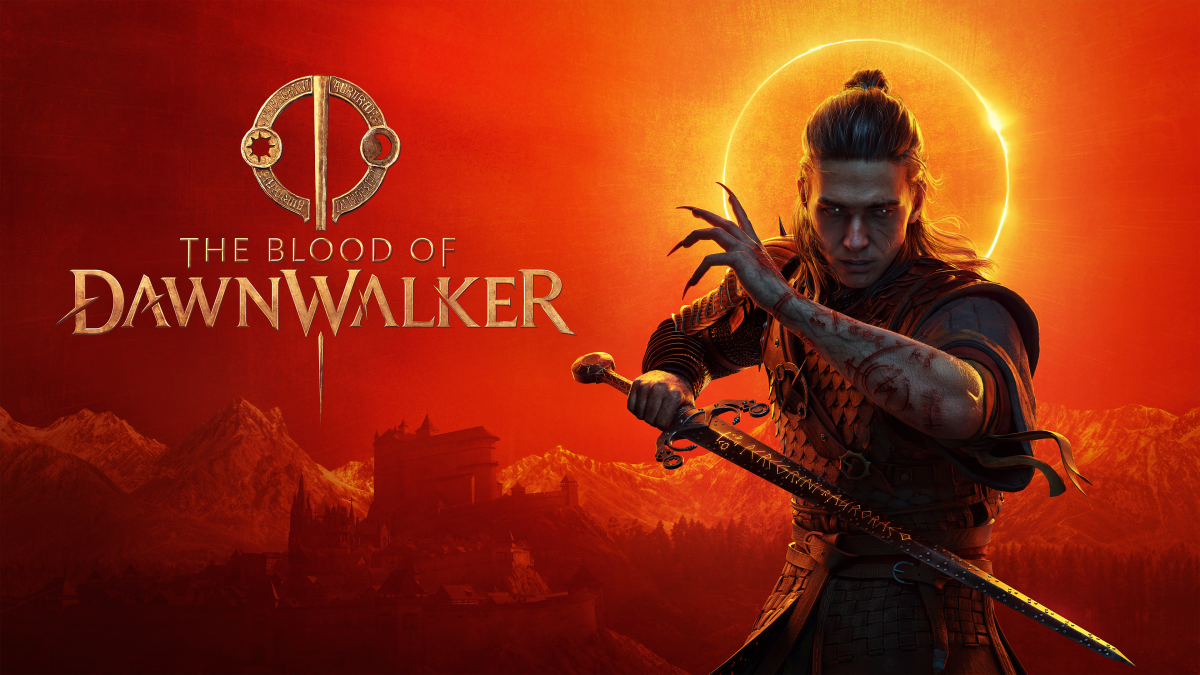
"The Blood of Dawnwalker" is a new vampire-themed video game developed by Rebel Wolves, a studio founded by Konrad Tomaszkiewicz, who previously worked on "The Witcher 3." The game features a unique day-night cycle where the main character, Coen, is human by day and a vampire by night and offers different gameplay experiences for each player.
Key Facts
Rebel Wolves is the developer of "The Blood of Dawnwalker," founded by Konrad Tomaszkiewicz, former director of "The Witcher 3."
The game was first shown in 2025 under the name "Dawnwalker."
It takes place over 30 days and nights, with quests having set times to complete.
During the day, the protagonist Coen has no powers; at night, he battles his vampire nature.
The story involves a vampire demanding blood from the village families each night.
Gameplay changes based on player choices, leading to different outcomes and experiences.
The game was previewed in a six-hour hands-on session at a cathedral in Los Angeles.
Unexpected gameplay moments can occur, such as defeating a strong vampire enemy that seemed unbeatable.
Read the Original
Want the full story? Tap a source to open the original
article.
Male dragonflies fight in the air using flight tactics similar to human fighter pilots, aiming to gain a better position behind their opponent. Researchers recorded and analyzed their 3D flight paths and found that dragonflies use spiral and looping maneuvers in these "dogfights," which differ from how they chase prey.
Key Facts
Male dragonflies defend their territory in mid-air battles called “dogfights.”
These fights involve both dragonflies trying to get behind each other, similar to fighter pilot tactics.
Dragonflies use tight turns and spirals similar to high-G maneuvers in aircraft.
Researchers used two synchronized cameras to record 3D flight paths of male dragonflies and their prey captures.
Dragonflies often glide a third of the time during fights, possibly to save energy or better track opponents.
Unlike chasing prey, these fights are mutual pursuits with dragonflies switching roles as chaser and evader.
The dragonflies’ front-facing vision may drive their tactical positioning, like how pilots rely on front-mounted radar and weapons.
Understanding this behavior could help develop smarter drones that use simple vision-based guidance instead of complex computers.
Read the Original
Want the full story? Tap a source to open the original
article.
The U.S. Supreme Court has allowed Texas to enforce a law that requires app stores and app developers to check the age of users and get parental permission before children under 18 can download apps. The court refused to pause this law while legal challenges continue.
Key Facts
The Texas law is called the Texas App Store Accountability Act.
It requires app stores and developers to confirm users’ ages.
Children under 18 need parental consent to download apps.
The Supreme Court issued a one-sentence order refusing to block the law.
The decision means the law can be enforced while court cases about it proceed.
The focus is on protecting minors from inappropriate app content or purchases.
Read the Original
Want the full story? Tap a source to open the original
article.
Xbox announced layoffs of 4,800 employees and plans to restructure its game studios to focus on bigger projects and major game franchises. Four smaller studios will be sold to new owners, while popular games like Minecraft and Candy Crush will receive more investment.
Key Facts
Xbox is laying off 4,800 employees, including 1,600 from its Xbox division immediately.
Four game studios—Compulsion Games, Double Fine Productions, Ninja Theory, and Undead Labs—are being sold to new owners.
Candy Crush creator King and Minecraft developer Mojang will report directly to Xbox head Asha Sharma.
Xbox’s gaming revenue dropped 7% year-over-year, and Xbox hardware sales fell 33%.
The company wants to focus on larger, high-growth game projects and its biggest franchises.
Existing games in development, like Ninja Theory’s Senua and Undead Labs’ State of Decay 3, will still be completed.
Xbox’s business margins are lower than similar companies, prompting the restructuring.
The changes reflect a move towards fewer studios and a focus on games with the largest audiences.
Read the Original
Want the full story? Tap a source to open the original
article.
People in east London’s Brick Lane are opposing a plan to build a large datacentre on the site of the old Truman Brewery. The datacentre would support high-speed financial trading but may increase noise, use a lot of energy, and worsen the area's housing shortage.
Key Facts
The proposed datacentre would cover 5,200 square meters in Brick Lane.
It is mainly for high-frequency trading, which speeds up financial transactions in London’s financial district.
The datacentre’s energy use at peak could power about 15,000 homes.
Local residents and campaigners oppose the plan because it uses land that could build affordable housing.
Brick Lane already faces a severe housing crisis with thousands waiting for social housing.
The existing energy grid may struggle to support both datacentres and new housing, delaying housing projects.
Nearby datacentres have caused noise complaints due to a constant low hum.
Tower Hamlets council rejected the plan, but the government is now deciding after a public inquiry.
Read the Original
Want the full story? Tap a source to open the original
article.
United Launch Alliance (ULA) recently completed an Atlas V rocket launch for Amazon's Leo broadband satellites. The Atlas V is nearing retirement, with only six rockets left, all reserved to launch Boeing’s Starliner space capsules to the International Space Station under NASA contracts.
Key Facts
ULA’s Atlas V rocket launched 29 Amazon Leo satellites from Cape Canaveral in late April.
These satellites will use their own engines to reach final orbits about 392 miles above Earth.
The recent launch was the 110th Atlas V flight since 2002.
Six Atlas Vs remain, all contracted for Boeing’s Starliner missions to the ISS.
NASA cut Boeing’s guaranteed Starliner flights from six to four due to program delays.
Starliner launches require the Atlas V without a protective payload fairing, unlike most other missions.
ULA cannot easily convert leftover Atlas Vs for other missions because of unique design and parts.
ULA’s next rocket, the Vulcan, is planned to replace the Atlas V but is currently grounded after booster problems.
Read the Original
Want the full story? Tap a source to open the original
article.
Researchers and companies are working to create robots that can perform many tasks on their own using advanced artificial intelligence (AI). Recent improvements in AI are helping robots become more capable and independent in handling complex activities in workplaces and possibly homes.
Key Facts
Autonomous robots are machines able to perform tasks without human help by sensing their environment.
In the past, robots had limited abilities, like basic navigation or walking, but progress has been slow and difficult.
Modern AI methods, such as reinforcement learning and large data-trained models, have boosted robots’ understanding and capabilities.
Companies and research labs are now focused on building general-purpose robots that can handle various tasks in unpredictable settings.
These robots do not have to look like humans to be useful and could be a big step beyond today's industrial robots used in factories.
Safety is a critical challenge for robots that work alongside people.
Surgical robots currently have limited autonomy, showing the complexity of achieving fully independent operation in sensitive tasks.
Researchers expect robot helpers to appear in homes in the future, although it may take time before they become widespread.
Read the Original
Want the full story? Tap a source to open the original
article.
An AI-generated digital actress named Tilly Norwood will star in the upcoming film "Misaligned." The AI-powered content studio Particle 6 announced this as the AI character's first role in a full-length movie.
Key Facts
Tilly Norwood is a digital actress created using artificial intelligence (AI).
Particle 6 is the company behind Tilly Norwood’s creation.
The AI actress will act in a feature film called "Misaligned."
This marks the first time an AI-generated character is leading in a full-length movie.
AI-generated characters like Tilly are made using advanced computer programs that simulate human appearance and behavior.
The film's production reflects growing use of AI in entertainment and digital content creation.
This development shows how technology is changing traditional movie-making.
Read the Original
Want the full story? Tap a source to open the original
article.
RuneScape, an online multiplayer role-playing game, turns 25 years old this year. Started in 2001, it has grown into a popular and social virtual world with over 300 million accounts and more than $3 billion in revenue.
Key Facts
RuneScape is a massively multiplayer online role-playing game (MMO) set in a fantasy world called Gielinor.
The game began in 2001, created by Cambridge student Andrew Gower.
It is known for its simple graphics and gameplay, including tasks like chopping wood and fighting creatures.
RuneScape gained popularity because it was free to play in a web browser, with a paid subscription offering extra features.
Over 300 million accounts have been created since launch across all versions.
The game has earned more than $3 billion in total revenue.
Players often form communities, friendships, and even get married both inside and outside the game.
RuneScape has unique features like an in-game economy where players trade rare items worth millions of in-game coins.
Read the Original
Want the full story? Tap a source to open the original
article.
A recent survey shows that most Americans feel worried about the increasing use of artificial intelligence (AI) in everyday life. They are almost three times more likely to be concerned about AI than to feel excited about it.
Key Facts
A new poll called “Americans on AI” measured how people feel about AI.
The survey was shared by Athena Insights, a new nonprofit group.
Most Americans are worried about AI’s growth in society.
The level of concern is nearly three times higher than excitement.
The poll is conducted every two weeks to track opinions over time.
The results suggest mixed feelings about how AI will affect jobs, privacy, and daily life.
Athena Insights aims to inform the public and policymakers about attitudes toward AI.
Read the Original
Want the full story? Tap a source to open the original
article.
The Shark ChillPill is a new handheld fan that offers three types of cooling: regular air fan, water mist, and a cooling plate for skin contact. It costs £129.99 and has strong battery life, various power levels, and an adjustable design.
Key Facts
The ChillPill comes with three cooling heads: air fan, water mister, and a cooling plate.
It costs £129.99, which is more expensive than the Dyson HushJet Mini Cool fan.
The fan has ten power levels and can run between about 3 to 19 hours depending on the mode.
It weighs 237 grams and is easy to carry.
Its design includes two cylinders that twist to aim the airflow where needed.
The fan is available in seven two-color styles.
Shark first started making fans two years ago, with a popular misting fan called the FlexBreeze.
The battery-saving automatic shut-off helps extend usage time.
Read the Original
Want the full story? Tap a source to open the original
article.
Many large datacentre projects worldwide face delays or cancellations due to problems like energy supply, high costs, and local opposition. These delays make it hard for companies developing artificial intelligence (AI) to get the computing power they need quickly.
Key Facts
Datacentres are large facilities that house computer servers needed to run AI and other digital services.
Around 250 big datacentre projects that require over 100MW of energy each were announced between 2021 and 2024.
About half of these projects will either be delayed or cancelled, slowing down the growth of AI technology infrastructure.
One project, the Prince William Digital Gateway in Virginia, was stopped partly because it is near a Civil War battlefield, raising historic preservation concerns.
Other projects, like those in Arizona and Malaysia, were also cancelled recently.
Building these datacentres takes a lot of electricity, with planned new centres potentially using over 1% of the world's electricity by 2025.
Most of the new power demand for datacentres comes from the United States.
Power grids in places like North America may struggle to support the extra energy needs of these datacentres.
Read the Original
Want the full story? Tap a source to open the original
article.
Political campaigns are using artificial intelligence (AI) to create ads that sometimes mislead voters. While there are rules for paid political ads, most political content online is unpaid and less regulated, making it easier for misleading AI-generated information to spread widely on social media.
Key Facts
AI-generated political ads have appeared in recent campaigns, like a Texas Democrat shown singing support for LGBTQ+ youth and a Michigan Republican made to look more muscular.
Paid political ads must follow rules, including labeling and accountability.
Most political content online is "organic" (unpaid) and not well regulated.
Organic posts can be shared widely by algorithms and influencers with little oversight.
Social media platforms promote content that gets the most engagement, which may prioritize sensational or false claims.
Correcting false information is slower and less effective than spreading it.
Verified campaigns face restrictions on paid ads, while anonymous accounts sharing misleading content face fewer limits.
There is a gap in rules and accountability between paid ads and organic political content online.
Read the Original
Want the full story? Tap a source to open the original
article.