Quantum computing startup QuEra announced plans to build a much more powerful quantum computer by 2028 with over 10,000 qubits, aiming to support 256 error-corrected logical qubits. They also plan a follow-up machine in 2029 that will double the qubits and improve error correction, but significant challenges remain in reducing hardware errors to meet these goals.
Key Facts
QuEra currently has quantum hardware with about 260 qubits that have significant error rates.
By 2028, QuEra plans to deliver a system with over 10,000 physical qubits to Amazon.
This system aims to support 256 error-corrected logical qubits with a 99.9999% error-free operation rate.
In 2029, QuEra promises a successor with twice the hardware qubits and over 1,000 logical qubits, targeting 99.9999999% error-free operation.
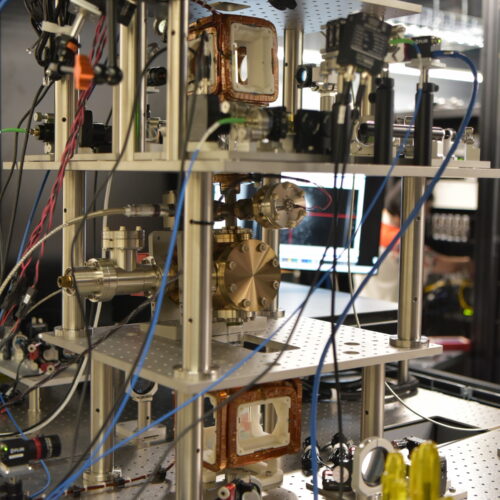
QuEra uses neutral atoms held by lasers to form qubits, allowing more qubits by increasing laser capacity.
Two academic labs that helped start QuEra have demonstrated a 3,000-qubit system and techniques to replace lost atoms during operations.
Error correction depends on the number of physical qubits per logical qubit and the error rate of the hardware qubits.
QuEra plans to reduce the number of hardware qubits per logical qubit from 40 in 2028 to 20 in 2029 while improving error rates, but it is not clear how they will achieve these improvements so quickly.
Read the Original
Want the full story? Tap a source to open the original
article.
South Korean companies Samsung Electronics and SK Hynix plan to invest $518 billion to build new computer chip factories in the southwest region of South Korea. This move aims to meet rising global demand for memory chips used in artificial intelligence (AI) technology.
Key Facts
Samsung and SK Hynix will invest a total of 800 trillion won ($518 billion) in new chip manufacturing facilities.
The new factories will be built in the southwest region of South Korea, an area less developed industrially than Seoul.
Each company will build two fabrication plants, expanding beyond their existing sites near Seoul.
The project supports the South Korean government’s plan to spread industrial growth outside the capital area.
These chip factories will help meet growing demand for memory chips driven by AI technology, such as data centers, robots, and self-driving cars.
Building these new factories requires large sites with enough power, water, and skilled workers.
The government says the region’s renewable energy resources will help provide cleaner electricity for the chip plants.
President Lee emphasized the goal of quickly advancing South Korea’s AI industry by strengthening chip production and AI-related infrastructure.
Read the Original
Want the full story? Tap a source to open the original
article.
A recent poll by the Artificial Intelligence Policy Institute shows strong support across political parties for stricter rules on artificial intelligence. Most people want the government to review advanced AI systems before these are released to the public.
Key Facts
68% of poll respondents support government reviews of advanced AI models before public release.
The poll indicates support for regulations from people across different political parties.
The idea is to create a formal process to check the safety and impact of advanced AI.
The poll was conducted by the Artificial Intelligence Policy Institute (AIPI).
Around 20% of respondents did not favor government review or had other views.
Read the Original
Want the full story? Tap a source to open the original
article.
WhatsApp will let users chat without sharing their phone numbers by using unique usernames instead. This new feature will be available worldwide to WhatsApp’s three billion users in the coming months.
Key Facts
Users can reserve a unique username through the app starting soon, but it is optional.
Usernames can be changed or removed at any time.
Once fully active, users will connect by exchanging usernames, not phone numbers.
Phone numbers will still be needed to create a WhatsApp account.
Usernames can be up to 35 characters long and have few restrictions, except for some public figures.
There will be no public directory of usernames, and users can still block or report others.
This feature aims to improve privacy by hiding phone numbers during chats.
WhatsApp is owned by Meta, a company criticized for how it handles user data and privacy.
Read the Original
Want the full story? Tap a source to open the original
article.
Laika Studios is making a new stop-motion animated movie called Wildwood, based on a 2011 fantasy novel by Colin Meloy and Carson Ellis. The film tells the story of a girl named Prue who enters a magical forest to find her baby brother who was taken by crows. The studio recently shared a behind-the-scenes video showing how they created the movie’s detailed stop-motion world.
Key Facts
Wildwood is a stop-motion animated fantasy film directed by Travis Knight.
The movie is adapted from a 2011 novel by Colin Meloy (musician) and Carson Ellis (illustrator).
The story follows 12-year-old Prue McKee, who enters a magical forest to rescue her baby brother.
Laika Studios, led by Travis Knight, is producing the film using old-school stop-motion animation techniques.
A behind-the-scenes video shows how the studio made the film’s handmade sets and figurines.
The voice cast includes Peyton Elizabeth Lee, Jacob Tremblay, Carey Mulligan, Angela Bassett, Mahershala Ali, and others.
Wildwood will be released in theaters on October 23, 2026.
Travis Knight also directed the Oscar-nominated film Kubo and the Two Strings and has worked on live-action movies like Bumblebee.
Read the Original
Want the full story? Tap a source to open the original
article.
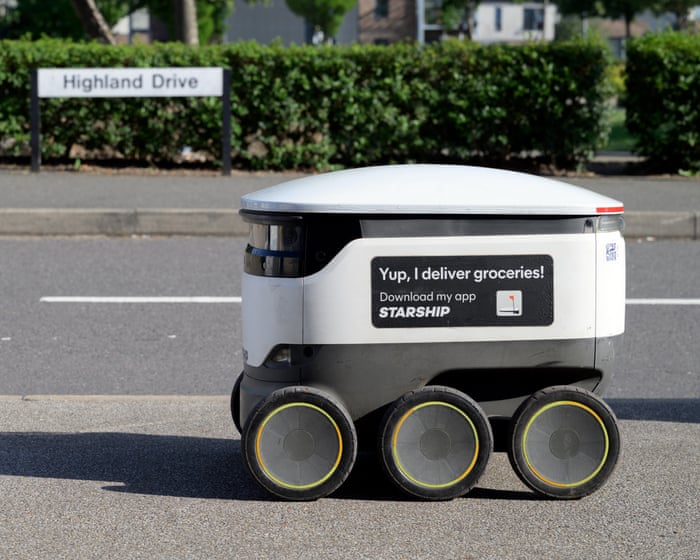
Ministers in England are likely to change the law to allow delivery robots to use pavements legally. These small robots deliver groceries and food but currently operate in a legal grey area, causing safety concerns from campaigners focused on pedestrian access.
Key Facts
Current law from 1835 bans “carriages” on pavements, affecting delivery robots.
Ministers plan to include delivery robots in new micromobility vehicle rules, along with e-scooters.
Starship Technologies, a US company, runs delivery robots in several English cities like Cambridge and Bristol.
The company aims to introduce over 10,000 robots in England and may build a UK factory if laws change.
Safety and accessibility groups worry that robots will crowd pavements and create hazards, especially for disabled and elderly people.
Some local people were not informed about robot operation hubs installed in their areas.
The charity Living Streets is campaigning against legalizing robotic deliveries on pavements without strong safety measures.
The government says it wants to support innovation but prioritizes pedestrian and vulnerable user safety in any law updates.
Read the Original
Want the full story? Tap a source to open the original
article.
In Milton Keynes, UK, delivery robots made by Starship Technologies have been operating since 2018, delivering groceries from local stores like the Co-op. These small, six-wheeled autonomous robots use cameras, sensors, radar, and AI to navigate sidewalks and avoid obstacles, offering a new way for people to receive goods. Some people find the robots helpful, while others raise concerns about their impact on pedestrian safety.
Key Facts
Delivery robots have been active in Milton Keynes since 2018 and are expanding to other UK cities like Wakefield, Leeds, and Bristol.
The robots carry deliveries, such as groceries, directly to customers’ homes.
The robots move at about 4 miles per hour (6.5 kph) and use technology to detect and avoid obstacles, including pedestrians.
Users like Amrita Singh appreciate the convenience, especially when managing children or illness.
The UK government is considering laws to allow such delivery robots on sidewalks nationwide.
Disability and pedestrian groups express concern that robots can block paths and create safety issues, especially for people with disabilities or parents with strollers.
Starship Technologies says the robots recognize mobility devices and can be remotely controlled by a human if needed.
Tests in other countries have faced pauses due to complaints from disabled users about blocked access.
Read the Original
Want the full story? Tap a source to open the original
article.
Security agencies from the Five Eyes countries warned that AI tools can now hack computer systems automatically, increasing cyber risks. Unlike before, AI lowers the skill needed for attacks, letting more people cause harm online, so defending against these threats will also need AI help.
Key Facts
Five Eyes national security agencies issued a joint warning about AI increasing cyber-attack risks.
AI models can now hack into networks, steal data, launch ransomware, and damage systems with little human guidance.
Previously, hacking required high skill, but AI reduces this skill gap, enabling less-experienced attackers to carry out attacks.
"Script kiddies" used pre-made hacking tools before; AI tools make this problem much bigger and more dangerous.
AI developed by large companies tries to prevent harmful uses, but smaller and open-source AI models don’t have these safety limits.
Open-source AI models can run on personal computers and will spread like past hacking tools, increasing risks.
Using AI to spy on users or report bad behavior only works for big companies and fails for open-source versions.
The growing availability of AI hacking tools challenges traditional cyber defenses and ethics, requiring new AI-based security methods.
Read the Original
Want the full story? Tap a source to open the original
article.
Researchers at the University of South Florida studied tiny sea creatures called ascidians in Antarctica and found that toxins they produce may kill melanoma cancer cells in mice. The team plans to continue lab research to develop a safe drug for human use, though many tests are still needed.
Key Facts
The study focused on ascidians, also known as sea squirts, collected from Antarctic waters.
Toxins from these creatures showed the ability to kill melanoma cells in mice without harming the mice.
Researchers aim to produce the toxin synthetically in the lab because collecting large amounts from Antarctica would harm the environment.
The project involved deep and challenging diving conditions, including cold temperatures and dangerous wildlife.
Further animal studies and human trials are required before the toxin can become a medicine.
Collaborations are underway with other research institutions to advance the work.
Over half of FDA-approved drugs come from natural sources like marine organisms.
The research team has developed a better understanding of how the toxin and microorganism interact in nature, helping guide future drug development.
Read the Original
Want the full story? Tap a source to open the original
article.
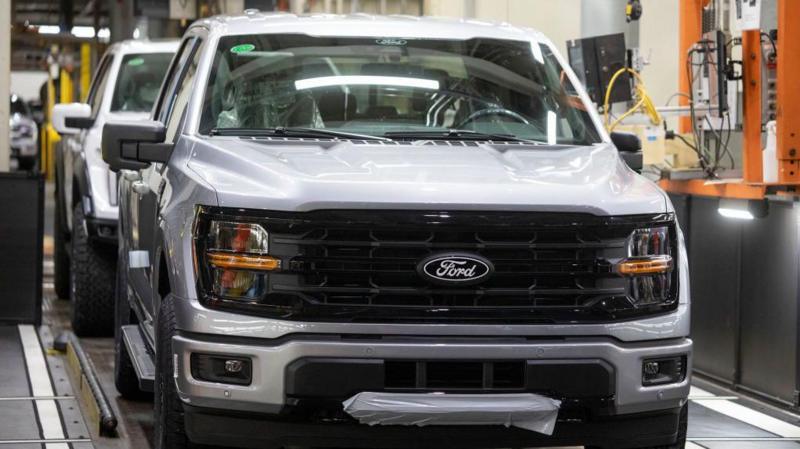
Ford tried using artificial intelligence (AI) to check the quality of its cars but found it did not work as well as human experts. The company has rehired over 300 experienced engineers to improve quality and help train the AI systems.
Key Facts
Ford introduced AI to help with quality checks in its car production.
The AI system did not meet the quality standards expected.
Over 300 veteran quality inspectors were rehired to address the problems.
Experienced engineers are helping to train and improve the AI tools.
Ford says using AI alone was not enough without the knowledge of skilled workers.
The company recently became number one in a US vehicle quality ranking for the first time since 2010.
Ford replaced some senior leaders to improve quality across engineering and manufacturing.
The company uses around 900 AI-powered cameras in its plants to detect issues early.
Read the Original
Want the full story? Tap a source to open the original
article.
A new legal case is raising questions about whether social media platforms should be responsible if illegal child abuse material is shared on their services. The case involves a 13-year-old boy who was targeted through Snapchat by someone pretending to be a girl.
Key Facts
Social media platforms may face legal challenges over child sexual abuse material shared by users.
The case involves a 13-year-old boy, called John Doe, who was approached on Snapchat.
The person contacting the boy was not real but an online trick or deception.
The legal outcome could affect how social media sites monitor and control harmful content.
This situation highlights risks children face using mainstream social media apps.
The discussion reflects growing concerns about online safety for minors.
There is debate about how much responsibility social media companies should have.
The case may set a precedent that changes current internet platform laws.
Read the Original
Want the full story? Tap a source to open the original
article.
NASA is testing a new airplane called the X-59 designed to fly faster than sound without making loud sonic booms. Instead, the X-59 produces a softer sound like a quiet thump, which could allow supersonic planes to fly over land without causing noise disturbances.
Key Facts
NASA’s X-59, built with Lockheed Martin, first flew late last year and has started supersonic test flights.
The plane's shape, including a long nose and engine placement, is designed to reduce shockwaves that cause loud sonic booms.
The sound from the X-59 at supersonic speeds is expected to be as quiet as a car door closing 20 feet away.
NASA plans to take the X-59 across the U.S. to gather public feedback on the quieter noise it makes.
The U.S. has banned supersonic flight over land since 1973 due to loud noise complaints from earlier military tests.
New legislation may allow overland supersonic travel if tests confirm it can be made quiet enough.
Challenges remain, such as high fuel use, before commercial quiet supersonic flights become realistic.
The X-59 is notable for having no front window and a unique “frankenjet” design made to focus on noise reduction.
Read the Original
Want the full story? Tap a source to open the original
article.
The U.S. government is slowing the release of advanced AI models from companies like OpenAI and Anthropic due to national security concerns. This move is causing debate about balancing safety with keeping American AI companies ahead of Chinese competition.
Key Facts
The White House asked OpenAI to delay the wide release of its GPT-5.6 model, releasing it in stages instead.
Anthropic also paused access to its AI models Fable 5 and Mythos 5 after a government request.
Commerce Secretary Howard Lutnick confirmed progress from Anthropic’s government work, allowing limited return of Mythos.
Some experts worry that these restrictions will slow U.S. AI progress while Chinese AI companies face fewer limits.
Chinese AI models are gaining popularity and have caught up with U.S. models in cybersecurity tests.
Investors say government limits on AI deployments could lower company valuations.
AI companies want clearer federal rules to avoid unpredictable government decisions.
Industry leaders emphasize the need for balanced regulations that ensure safety but allow wide access.
Read the Original
Want the full story? Tap a source to open the original
article.
South Korea announced a plan to invest at least $880 billion to expand its chip manufacturing and artificial intelligence (AI) capabilities. The government aims to build new chip factories, data centers, and robotics hubs outside Seoul to support economic growth and compete with regional rivals.
Key Facts
South Korea's investment plan totals about $880 billion to boost chip production and AI technology.
The plan is part of "Three Mega Projects" focused on new chip hubs, data centers, and robotics.
President Lee Jae-myung says the goal is to support growth outside Seoul and reduce regional economic gaps.
South Korea competes with Taiwan, China, and Japan, which are also investing heavily in chip technology.
Samsung and SK Hynix, the two biggest Korean chipmakers, actively support the plan.
The global demand for AI chips has caused shortages and price increases for semiconductors.
US tech companies like Google, Amazon, and Meta are spending $650 billion on AI technology this year.
SK Hynix's market value recently passed $1 trillion, boosted by AI data center demand.
Read the Original
Want the full story? Tap a source to open the original
article.
Ring has released a new version of its Video Doorbell Pro, called the Pro 3, with several improvements including a 4K camera and better wifi. The doorbell offers clearer images day and night, improved motion tracking, and faster wifi connection for smoother video streaming.
Key Facts
The Video Doorbell Pro 3 has a 4K camera that captures more detailed images than previous models.
It can zoom digitally up to 10 times and read things like car number plates from around nine meters away.
The doorbell works well in low light with an infrared mode that shows clear black-and-white images at night.
It has a 140-degree wide field of view to see visitors fully.
Motion tracking uses radar to log people's movements and can be customized to avoid unwanted alerts.
The doorbell supports dual-band wifi 6, which improves speed and connection stability compared to older wifi 5.
Power options include battery or wired connection, with the wired model offering pre-recorded video before motion events.
The doorbell includes package detection to alert users about deliveries near the door.
Read the Original
Want the full story? Tap a source to open the original
article.
This episode of "The Everyday Hustle" features a conversation between Af Malhotra and Polly Dhaliwal about how business owners can use artificial intelligence (AI) in their everyday work. They also discuss Polly Dhaliwal’s career and her involvement in different industries.
Key Facts
The episode is part of "The Everyday Hustle" series.
It was produced by Voxwave for BBC Asian Network in Birmingham.
The episode runs for 30 minutes.
Af Malhotra hosts the discussion.
Polly Dhaliwal shares ideas on using AI in daily business activities.
They talk about Polly Dhaliwal’s professional background.
The episode has been available for over a year.
Read the Original
Want the full story? Tap a source to open the original
article.
Erin Brockovich, known for her environmental activism, is raising concerns about the rapid construction of large AI datacentres in the United States. Many communities are worried about the environmental impact, lack of transparency, and effects on local resources caused by these massive facilities.
Key Facts
Erin Brockovich became famous for helping sue a company over groundwater contamination in Hinkley, California.
She recently received thousands of emails from people worried about new AI datacentres near their homes.
AI datacentres are large buildings that house powerful computers needed for artificial intelligence.
As of June 24, there are 33 AI datacentres operating, 68 being built, and 41 planned in the US.
Many people say they were not informed or consulted before approval and construction began.
Concerns include water use, energy costs, health effects, and harm to wildlife.
Developers often make secrecy agreements with local officials, limiting public knowledge.
Brockovich created a public map showing locations of AI datacentres and community complaints.
Read the Original
Want the full story? Tap a source to open the original
article.
Representative Alexandria Ocasio-Cortez said large technology companies have too much power and should be broken up into smaller parts. She expressed concern that these companies act like governments instead of just businesses.
Key Facts
Alexandria Ocasio-Cortez is a Democratic representative from New York.
She criticized big tech companies for having "unchecked power."
She suggested breaking up large technology companies into smaller ones.
Ocasio-Cortez said these companies behave as if they are governments.
Her comments came during an interview with Fox News.
The discussion included concerns about price increases and control by tech firms.
The focus was partly on artificial intelligence and tech company influence.
Read the Original
Want the full story? Tap a source to open the original
article.
A scientific journal recently removed two papers from the 1940s by physicist Max Planck due to what appears to be a copyright or publishing error. Historians found that the journal’s removal was likely caused by a mistaken use of an automated system and not because of any problems with the science itself.
Key Facts
Max Planck was a German physicist known for his work in quantum mechanics and won a Nobel Prize in 1918.
Two of Planck’s papers from the 1940s were retracted and removed by the journal Naturwissenschaften (now The Science of Nature).
The papers were removed completely, with empty files left online and a note saying they were withdrawn due to an article violation.
The journal’s editor was unaware of the retractions until contacted by a reporter.
Historians Yves Gingras and Mahdi Khelfaoui investigated and said the retractions likely came from a publisher’s misunderstanding of copyright rules or past publishing methods.
The papers’ removal may have been triggered by an automated algorithm mistaking them for duplicate publications.
Both papers were philosophical reflections and not questioned for scientific accuracy.
The retractions seem tied to the switch to electronic publishing and how old papers were archived digitally.
Read the Original
Want the full story? Tap a source to open the original
article.
NASA is expanding its partnerships with private companies to work on missions related to Mars. The success of the Aeolus mission could lead to more similar projects by other companies.
Key Facts
NASA is working with private companies on Mars missions.
Aeolus is one of the missions involved in this partnership.
If Aeolus is successful, more missions like it are expected.
These missions are part of commercial collaborations.
The goal is to increase exploration of Mars through private sector involvement.
Read the Original
Want the full story? Tap a source to open the original
article.