Two teenagers have admitted to committing crimes linked to a major cyber attack on Transport for London (TfL). This attack caused TfL to experience several months of problems.
Key Facts
Two teenagers pleaded guilty for their role in a cyber attack on TfL.
The attack caused months of disruption to London's transport system.
Transport for London operates services like the London Underground.
The incident is part of ongoing reporting and more details will be shared soon.
Cyber attacks involve hacking or illegally accessing computer systems to cause harm or disruption.
The news is being updated as new information becomes available.
Alerts about the story can be received through the BBC News App or on social media via @BBCBreaking.
Read the Original
Want the full story? Tap a source to open the original
article.
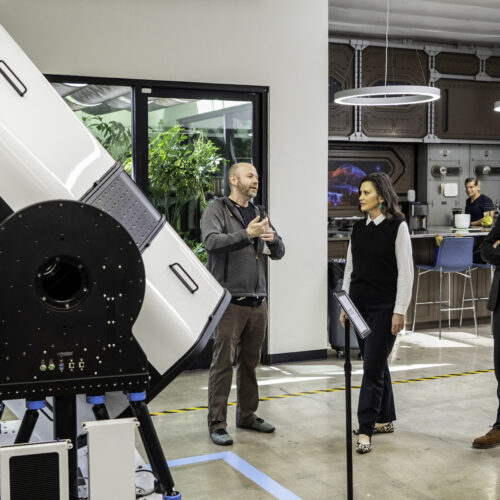
Dan Roelker is a tech expert who started as a hacker and has worked in software development, cyberwarfare, and now builds telescopes and optics. He founded a company that focuses on using light in new ways, believing future space advancements will rely on controlling light both in space and on Earth.
Key Facts
Dan Roelker grew up in a working-class family and studied math and philosophy in college.
He first worked with computers as a hacker and software coder during the dot-com boom.
Roelker helped start Sourcefire, a cybersecurity company later bought by Cisco for $2.7 billion.
He worked in cyberwarfare with major defense contractors and was recruited by the US Defense Advanced Research Projects Agency (DARPA).
At DARPA, Roelker managed cyberwarfare programs, becoming one of the youngest program managers.
In 2025, he co-founded Observable Space, a company focused on advanced telescope and optics technology.
He believes future "space races" will focus on harnessing light for data and navigation, including laser data transmission from orbit.
Roelker’s work ties together space observation, laser technology, and satellite safety.
Read the Original
Want the full story? Tap a source to open the original
article.
Anthropic, an AI company, has warned more often about the risks of advanced AI than its rival OpenAI. This frequent caution may have contributed to a US government decision to ban foreign users from accessing Anthropic’s newest AI models, Mythos and Fable, as part of efforts to control powerful AI technology.
Key Facts
Anthropic uses words related to risk, regulation, and restrictions much more frequently than OpenAI in its public statements.
The US government recently blocked foreign nationals from using Anthropic’s latest AI models, Mythos and Fable.
Critics say Anthropic’s warnings about AI dangers influenced the export ban decision.
Anthropic CEO Dario Amodei has publicly called for stronger government rules on AI safety.
Mythos is designed to find important cybersecurity weaknesses and was initially tested only by selected US groups.
Anthropic’s language about AI risks has become less severe since 2023, although still more cautious than OpenAI’s.
The export ban has caused concern in Europe and Silicon Valley about US restrictions on AI access.
OpenAI’s CEO, Sam Altman, dismissed extreme warnings about Mythos as marketing exaggeration.
Read the Original
Want the full story? Tap a source to open the original
article.
Two separate Tesla cars crashed in the U.S., one in Texas and one in Connecticut. One crash caused a fatality when the car hit a house, and the other required a rescue after a car entered a swimming pool.
Key Facts
In Katy, Texas, a Tesla Model 3 crashed into a house, killing a 76-year-old woman inside.
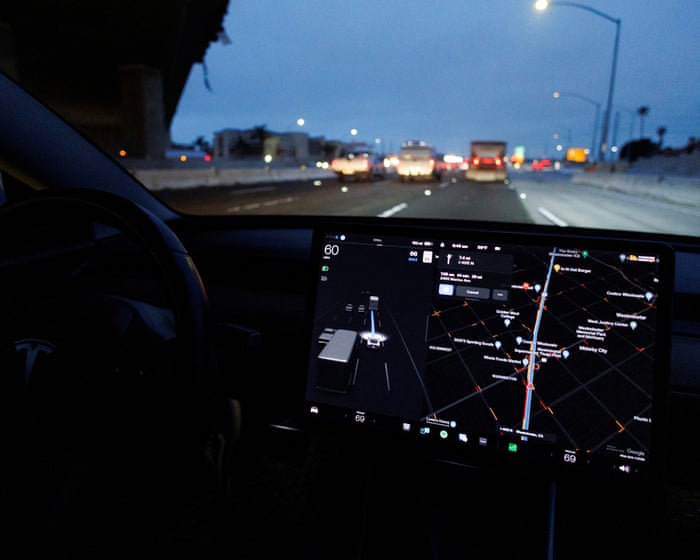
The driver said the car’s automated driving assistance was on during the Texas crash.
Authorities said the driver lost control and hit the house; he was not intoxicated.
In New Canaan, Connecticut, a Tesla car crashed through trees and into a community pool while parking.
A lifeguard and responders helped rescue the driver from the sinking car; he was unharmed.
Tesla recalled over 2 million vehicles in 2023 to improve automated driving alerts and controls.
Tesla’s autopilot and full self-driving systems assist drivers but require full attention at all times.
A previous incident involved a Tesla Cybertruck entering a lake using its “wade mode” feature.
Read the Original
Want the full story? Tap a source to open the original
article.
Agencies from the Five Eyes alliance (Australia, US, UK, New Zealand, Canada) warned that advanced AI systems capable of disrupting governments and businesses could be ready within months. They urged leaders to treat cyber risks from AI as a major business and security issue requiring broad action.
Key Facts
The Five Eyes intelligence agencies issued a rare joint warning about powerful AI models.
These AI systems could greatly increase the speed and complexity of cyber attacks.
The agencies say AI will change cyber offense and defense far sooner than expected—within months, not years.
The US recently blocked foreign nationals from using Anthropic’s AI models, Fable and Mythos, due to security concerns.
Mythos AI detects cybersecurity weaknesses but is tightly controlled to prevent misuse.
Experts believe other advanced AI models from around the world may soon emerge.
Australia included Anthropic in its national AI plan to promote safety and information sharing.
The Australian government prefers light regulation aiming to support innovation and economic benefits.
Read the Original
Want the full story? Tap a source to open the original
article.
New research shows that the drug tirzepatide, which affects GLP-1, might help the body burn more calories by activating brown fat. This could mean tirzepatide works not just by lowering appetite but also by increasing calorie use.
Key Facts
Tirzepatide is a drug related to GLP-1, a natural hormone in the body.
The drug may increase the activity of brown fat, a type of body fat that burns calories.
Brown fat helps generate heat by using calories, unlike regular fat which stores calories.
Activating brown fat could help with weight loss and metabolism.
The research suggests tirzepatide works in two ways: reducing appetite and boosting calorie burning.
Read the Original
Want the full story? Tap a source to open the original
article.
A new study shows that using two drugs together, apitegromab and tirzepatide, might help people with obesity lose fat while keeping their muscle. This combination could improve health outcomes during weight loss.
Key Facts
The study tested a combination of apitegromab and tirzepatide.
Tirzepatide is already known to help people lose weight.
Apitegromab may help protect lean muscle during weight loss.
Preserving muscle is important because it helps keep the body strong and healthy.
The combination could be beneficial for people with obesity.
More research is likely needed to confirm these findings.
This approach aims to improve weight loss without losing muscle mass.
The study focuses on supporting healthier weight loss results.
Read the Original
Want the full story? Tap a source to open the original
article.
New research shows that GLP-1 drugs can help men with obesity improve their fertility. These drugs appear to increase testosterone levels and improve sperm health.
Key Facts
GLP-1 drugs are medicines originally used to treat diabetes and obesity.
The research found a link between these drugs and better male fertility.
Men with obesity often face lower testosterone and reduced sperm quality.
Using GLP-1 drugs may raise testosterone levels in these men.
The drugs also seem to improve sperm count and overall sperm health.
This finding could offer new options for treating fertility problems linked to obesity.
Read the Original
Want the full story? Tap a source to open the original
article.
Rising costs for memory chips, driven by increased demand from artificial intelligence (AI) data centers, are causing smartphone prices to rise. Apple plans to increase its prices, and experts expect price hikes for most smartphone makers, especially affecting lower-end phones the most.
Key Facts
Apple’s CEO Tim Cook said higher memory and storage chip costs make price increases “unavoidable.”
AI data centers are using more memory chips, reducing supply for smartphones and pushing chip prices up.
Analysts predict the average global smartphone selling price could rise by about 20%.
Entry-level Android phones might see price increases as high as 40%.
Premium brands like Apple and Samsung may raise prices by around 10%.
Memory shortages are expected to last at least until 2027 due to ongoing AI demand.
Earlier forecasts predicted smaller price increases, around 3-8%, before these memory cost rises.
Price increases will vary by device type, with lower-cost phones hit hardest because memory costs are a bigger part of their total cost.
Read the Original
Want the full story? Tap a source to open the original
article.
Some Republicans are saying that opposition to building data centers in the U.S. might be encouraged by foreign countries like China. These countries may be running influence campaigns to affect debates about technology and data infrastructure.
Key Facts
Republicans have suggested that foreign actors are behind opposition to new data centers in the U.S.
Reports from companies like OpenAI support claims of influence campaigns by China and others.
These campaigns aim to affect discussions on tech policy and data infrastructure.
The topic is part of a major ongoing debate about technology and data security in the U.S.
Data centers are facilities that store and manage large amounts of digital information.
Concerns involve whether foreign influence is shaping local or national tech decisions.
The issue highlights tensions between national security and technology development.
Read the Original
Want the full story? Tap a source to open the original
article.
A recent poll shows many Americans are worried about the growth of data centers, which support artificial intelligence (AI) technology. While few people live near data centers, almost half support a temporary pause on building new ones as a way to address concerns about costs and environmental impact.
Key Facts
Only 8% of people who oppose data centers actually live near one.
38% of respondents would support a data center being built near their home; 34% would oppose it.
49% support a temporary ban (moratorium) on constructing new data centers; 16% oppose this ban.
The poll suggests people are uneasy about how quickly data centers are being built and want more information on issues like water use and who benefits.
AI critics from different political views warn about job losses caused by AI, increasing public concern.
Most new data centers are planned for rural areas, while most existing ones are in cities.
Tech companies face a labor shortage to staff large data centers and are developing robots to help.
The poll surveyed 6,872 registered voters in key states, with a margin of error of 3 percentage points.
Read the Original
Want the full story? Tap a source to open the original
article.
Nvidia says its new AI system cooling technology can use warm liquid instead of cold water, greatly reducing water use in data centers. This technology may cut or remove the need for water-hungry chilling machines, helping address environmental concerns as AI demand grows.
Key Facts
Nvidia’s new AI cooling system uses a warm liquid mix, including water and propylene glycol, running at 113°F.
Higher cooling temperature means less or no need for energy- and water-heavy chillers in data centers.
The system could save water and energy, especially in hot climates like Arizona.
Adoption will take years since many centers still use old cooling methods.
Nvidia did not share cost details but says the tech will save money on cooling.
Water use for cooling is only one part of AI’s environmental impact; power production also uses water.
Nvidia aims for efficiency improvements to support AI growth, not reduce overall demand.
Other companies like Google, Amazon, and Microsoft are also involved in addressing data center water issues.
Read the Original
Want the full story? Tap a source to open the original
article.
Cory Doctorow’s book explains that many people distrust artificial intelligence (AI) because it is often used to reduce workers' freedom and harm jobs rather than help people. He argues that AI’s problems come more from the way big companies use it to cut costs than from the technology itself.
Key Facts
Eric Schmidt, former Google CEO, was booed when promoting AI to students worried about job losses from AI.
Many Americans believe AI harms jobs, creativity, privacy, and the environment.
AI’s reputation shifted from a futuristic threat to an immediate problem since ChatGPT’s release in late 2022.
Cory Doctorow calls out Big Tech’s business model as a cause of AI’s negative effects.
Doctorow describes two types of AI use: “centaur” (AI helps humans) and “reverse centaur” (AI controls or limits humans).
In healthcare, AI can either improve doctors’ work or reduce skilled workers to simple overseers, saving money but lowering quality.
Doctorow says opposition to AI often reflects frustration with how companies prioritize profits over people.
The book suggests workers need to unionize to protect themselves from unfair AI-driven labor changes.
Read the Original
Want the full story? Tap a source to open the original
article.
A therapist says teenagers today are losing the chance to be bored in a constructive way because smartphones keep them constantly busy. This lack of “aimless time” makes it harder for teens to reflect on their feelings, explore their interests, and form their own opinions.
Key Facts
Teens used to spend free time exploring hobbies and socializing, but now smartphones provide nonstop stimulation.
Constant engagement with digital content reduces teens’ ability to process emotions and reflect inwardly.
In the UK, a social media ban for under-16s is planned by 2027 to protect children from harmful online content and excessive screen time.
Boredom is seen as important for creativity, self-discovery, and emotional insight.
Social media exposes teens to millions of opinions, making it difficult for them to form their own views.
Fear of being judged or permanently recorded online stops teens from freely expressing or changing their opinions.
Parents’ own heavy use of phones models this constant digital engagement to children.
The therapist suggests it is important for families to reduce screen time to improve emotional wellbeing.
Read the Original
Want the full story? Tap a source to open the original
article.
Window-mounted heat pumps are small devices that people can install themselves to heat or cool their homes without major remodeling. They use less electricity than traditional heating or cooling systems and are cheaper than permanent heat pump installations, although they are less effective in very cold weather and for large spaces.
Key Facts
Heating and cooling use 35% of all energy in U.S. buildings each year.
Heat pumps move heat into or out of a building instead of creating it, using less electricity.
Traditional mini-split heat pumps need professional installation and can cost up to $10,000.
Window heat pumps are self-contained, plug into a wall outlet, and cost between $3,000 and $4,000.
These units can provide both heating and cooling but have lower capacity, suitable for smaller spaces.
Window heat pumps work less efficiently and produce less heat in very cold outdoor temperatures.
Some cheaper window models are available but may be noisy, less efficient, and not rated for cold weather.
Federal subsidies for these heat pumps ended in 2025, but some local incentives may still exist.
Read the Original
Want the full story? Tap a source to open the original
article.
At the VivaTech event in Europe, the rise of AI companions like chatbots and robots is raising new questions about human connection and loneliness. While many people use AI for companionship, some experts worry that these AI relationships may replace or harm real human bonds.
Key Facts
One in six people worldwide experience persistent loneliness, according to the World Health Organization.
The AI companion market, including chatbots and companion robots, is expected to be worth over $400 billion by 2034.
Some users prefer talking to AI because it listens without judging and says what they want to hear.
Experts warn that AI companions might encourage self-centered relationships and reduce real human interaction.
Companion robots at VivaTech focus on friendly, non-threatening designs, like animated faces, to make users feel comfortable.
French companies like Enchanted Tools and Maxtronics develop robots aimed at environments like care homes and hospitals, emphasizing that robots should not replace human contact.
There is ongoing debate about whether AI companionship can truly support deep, meaningful relationships.
Read the Original
Want the full story? Tap a source to open the original
article.
The construction of AI data centers across the United States is uneven, with most new projects concentrated in a few states like Texas, Illinois, Pennsylvania, and Ohio. Many states have little or no data center development due to factors like limited power infrastructure and fewer economic incentives.
Key Facts
There are 67 major data centers being built, 33 operational centers, and 39 more proposed across the U.S.
Texas leads in the number of data center projects, with many community-reported sites.
Other top states for development include Illinois, Pennsylvania, and Ohio, which form clusters of AI infrastructure.
Mid-tier states have some projects but fewer than the top states, often with scattered large projects.
Some states, such as Alaska and Vermont, have almost no data center construction underway.
Factors helping some states attract data centers include availability of large land areas, access to electrical power, and fewer regulatory obstacles.
States with little development often have limited power infrastructure, less fiber network connectivity, and fewer financial incentives for large-scale centers.
The current data suggests that the concentration of data center construction in a few states will likely continue as AI demand grows.
Read the Original
Want the full story? Tap a source to open the original
article.
Video game language and culture have become much more common since the 2010s, spreading from small online communities into everyday life and politics. Many gaming terms are now well-known, and governments and politicians sometimes use video game footage or references in public messages.
Key Facts
Twenty years ago, video games were mostly played by small groups of dedicated fans.
In the 2010s, gaming became popular with a much wider audience.
Gaming words like "cheat code" and "cutscene" were added to the Oxford English Dictionary in 2024.
The White House shared videos mixing military actions with scenes from games like Grand Theft Auto and Wii Sports.
Politicians from different parties have used gaming language, including Alexandria Ocasio-Cortez comparing someone to a "World of Warcraft NPC" (non-player character).
The article explains common gaming terms such as Any% (finishing games quickly using tricks), boosting (paying others to improve your game character), and cheesing (using easy tactics that might seem unfair).
Elon Musk has admitted to using boosting in some games.
Gaming strategies like camping, button mashing, and buffing are also defined.
Read the Original
Want the full story? Tap a source to open the original
article.
Scammers are sending fake emails and creating false websites offering early access to the upcoming Grand Theft Auto VI game. These scams try to steal gamers' personal information and bank details by pretending to be official beta test invites for the game that is set to release on November 19.
Key Facts
Criminals are using fake emails and websites to trick gamers into thinking they can play GTA VI early.
The scammers ask players to provide personal data or download software that contains malware.
Malware can let scammers access computers and steal sensitive information like bank details.
The real GTA VI game release has been delayed twice and is now planned for November 19.
There is no official beta test announced by Rockstar Games, the game's creator.
Some fake sites offer "beta keys" for consoles, but often target PC and Android users even though the game hasn't been announced for those platforms.
Gamers are advised to only trust official sources such as Rockstar Games or major console stores.
If you share passwords or bank details on suspicious sites, change your passwords and report the fraud immediately.
Read the Original
Want the full story? Tap a source to open the original
article.
Brands are increasingly using AI-made influencers on social media to promote products without clearly telling consumers these influencers are not real people. Some companies use non-disclosure agreements to keep this practice secret, raising concerns about transparency and trust online.
Key Facts
AI-generated influencers are computer-made characters used to advertise products on social media.
Brands often do not tell viewers that these influencers are not real, which can mislead consumers.
Some content creators making AI influencer ads must sign agreements to stay silent about their work.
The EU will require clear labels on AI-created or changed images and videos starting August under the Artificial Intelligence Act; these rules do not apply in the UK.
Consumer group Which? says people should know when ads use AI-generated influencers rather than real people.
Examples include the Once photo app and Maket housing design app using AI influencers in Instagram ads.
A fashion brand called Ashle removed AI-influenced images after questions about authenticity.
Studies show many people can’t tell real videos from fake ones made with AI, increasing the risk of being misled or scammed.
Read the Original
Want the full story? Tap a source to open the original
article.