Washington and Silicon Valley are preparing for potential job losses caused by artificial intelligence (AI). Officials and tech leaders are discussing ways to help workers adjust, such as job training programs and universal basic income, as many Americans worry about AI's impact on employment.
Key Facts
AI technology could replace many jobs, creating challenges for workers.
Leaders in Washington and Silicon Valley are aware of this risk.
They are considering support measures like transition assistance for displaced workers.
Universal basic income, a regular payment to all citizens, is also being discussed as a possible solution.
Public concern about AI’s effects on jobs is increasing.
Experts vary in their predictions, from major job losses to more manageable impacts.
The discussions focus on how to help the workforce adapt to changes caused by AI.
Read the Original
Want the full story? Tap a source to open the original
article.
Critics say artificial intelligence (AI) systems often rely on data from Western sources, which can spread stereotypes and ignore cultural details about Indigenous peoples and people of color. This data gathering is compared to a new form of colonialism, where companies take information without consent and profit from it, while missing the true diversity of cultures.
Key Facts
Most AI language models use training data from Western, mainly white male, sources.
This leads AI to copy Western views and sometimes spread biased or inaccurate ideas.
Data from Indigenous groups and marginalized people is often collected without their permission or checking accuracy.
Some experts call this "data grab" a modern form of colonialism, replacing land theft with information theft.
AI models tend to simplify or stereotype cultural details, like saying all Indian food is spicy, ignoring its variety.
Much Indigenous knowledge is passed down orally, so it is missing from written data AI learns from.
AI companies focus on speed and profit, which limits meaningful consultation with Indigenous communities.
These biases in AI can influence how people understand culture, history, and identity.
Read the Original
Want the full story? Tap a source to open the original
article.
Scientists have created the largest-ever map of magnetic fields in the universe by measuring light from nearly 4 million galaxies. This new map will help researchers understand how magnetic fields started and changed over time since the Big Bang.
Key Facts
The map, called SPICE_RACS, was made using the Australian Square Kilometre Array Pathfinder (ASKAP) radio telescope in Western Australia.
The project was led by Australia’s national science agency, CSIRO.
Magnetic fields exist on Earth, stars, galaxies, and even in the empty space between galaxies.
Before this map, there were limited magnetic field data, especially in the southern sky.
The new dataset is five times larger and more detailed than previous maps.
Magnetic fields form from moving charged particles or molten metals inside planets or stars.
The data is publicly available for scientists worldwide to conduct further research.
Understanding magnetic fields helps explain key forces in space alongside gravity.
Read the Original
Want the full story? Tap a source to open the original
article.
Joanna Stern spent a year using artificial intelligence (AI) in many parts of her life, from answering messages to driving and medical checks. She wrote a book about her experience, sharing how AI is already changing daily life and raising important questions about its impact.
Key Facts
Joanna Stern used AI for various tasks throughout 2025, including cooking, mowing the lawn, driving, and analyzing medical scans.
She wrote a book called *I Am Not a Robot: My Year Using AI to Do (Almost) Everything* based on her experience.
Stern worked for 12 years as a personal technology columnist at the Wall Street Journal and won an Emmy for a tech documentary.
During her experiment, AI helped her start a new media business and grow a YouTube channel.
The book highlights how AI is becoming a real part of everyday life and asks what happens if AI can do everything humans do.
Stern met a woman who formed a close emotional bond with a chatbot, showing AI’s potential for companionship but also risks like AI “hallucinations” (making up false information).
Throughout her year with AI, Stern experienced mostly mild problems, like a car stopping unexpectedly, but also recognized fears about job loss and environmental effects.
She aims to help people understand AI in a straightforward, human way through her work and media projects.
Read the Original
Want the full story? Tap a source to open the original
article.
Five people told CBS News they thought they had developed real emotional relationships with AI chatbots. These individuals now participate in a digital support group for people who feel confused or upset after interacting closely with AI chatbots.
Key Facts
Five individuals shared that they believed they had emotional connections with AI chatbots.
These people now join a support group online to discuss their experiences and feelings.
The support group focuses on those affected by AI-related emotional confusion or distress.
CBS News interviewed a ChatGPT user named Micky Small about her experience.
The story was featured on "The Daily Report," a CBS News program.
Read the Original
Want the full story? Tap a source to open the original
article.
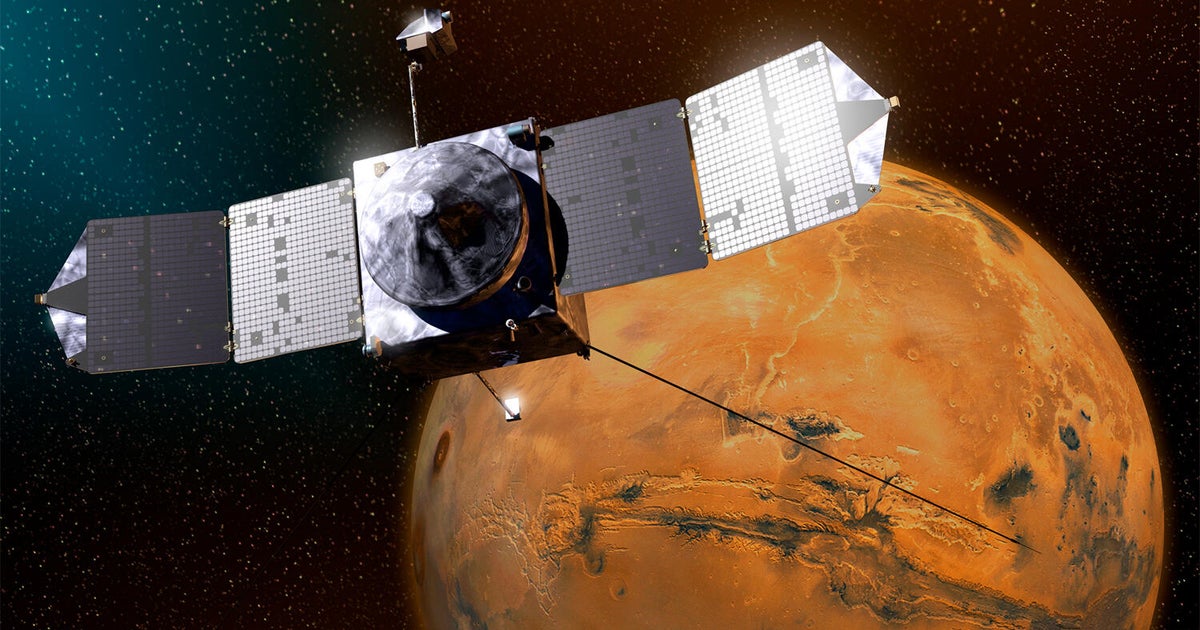
NASA has officially ended the MAVEN mission after losing contact with the Mars orbiter about six months ago. The spacecraft was working fine before it passed behind Mars in December, but attempts to reestablish communication failed.
Key Facts
NASA's MAVEN mission focused on studying Mars' atmosphere.
Scientists last heard from MAVEN about six months ago.
The spacecraft was fully operational before passing behind Mars in December.
NASA used its Deep Space Network to try to contact MAVEN but could not connect.
After repeated communication attempts failed, NASA declared the mission over.
MAVEN helped scientists understand how Mars lost much of its atmosphere over time.
The mission lasted nearly a decade since its launch in 2013.
Read the Original
Want the full story? Tap a source to open the original
article.
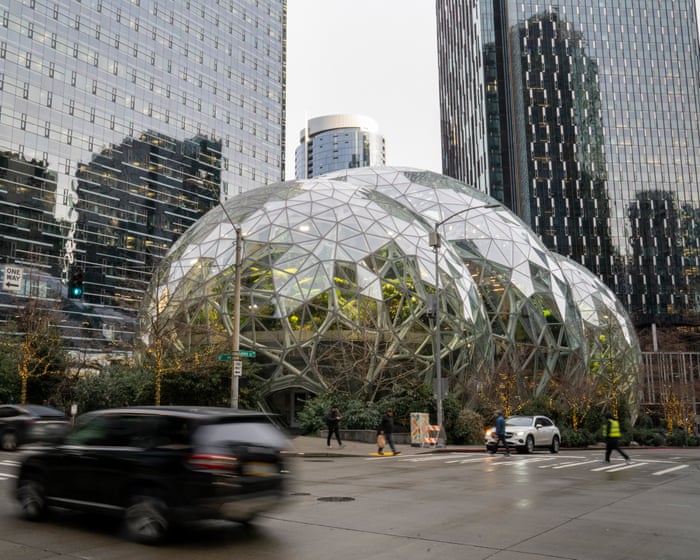
Seattle’s city council is about to approve a one-year pause on building new datacenters, the largest U.S. city to do so. The moratorium aims to address electricity use, environmental concerns, and rising utility costs while officials create new rules for big AI-related datacenters.
Key Facts
Four companies want to build five large datacenters in Seattle, which would use about one-third of the city’s daily electricity demand.
City council committees unanimously passed the moratorium, with a full council vote expected soon.
The pause is meant to protect residents from higher utility bills and environmental problems.
Seattle is home to tech giants Microsoft and Amazon, which have recently cut thousands of local jobs even as they invest heavily in AI.
Local tech workers and activists strongly support the moratorium and have sent over 10,000 emails to city officials.
During the moratorium, Seattle will create rules about pollution, energy use, labor standards, and pricing for large datacenters.
Existing datacenters can apply for limited power expansions during the pause.
The city may require datacenter developers to invest in community benefits like affordable housing if such projects are approved in the future.
Read the Original
Want the full story? Tap a source to open the original
article.
Artificial intelligence (AI) is changing the fashion industry, which has seen fewer jobs in recent years. Students at the Fashion Institute of Technology in New York are learning new skills to adapt to these changes.
Key Facts
New York City is known as a major center for fashion.
Fashion jobs in New York have dropped by 30% in the last ten years.
AI is transforming how fashion businesses operate and create designs.
Students at the Fashion Institute of Technology are preparing for these changes by using AI tools.
The industry is being reinvented to include new technology skills alongside traditional fashion knowledge.
The report was shared by CBS News and involved a visit to the Fashion Institute of Technology.
Read the Original
Want the full story? Tap a source to open the original
article.
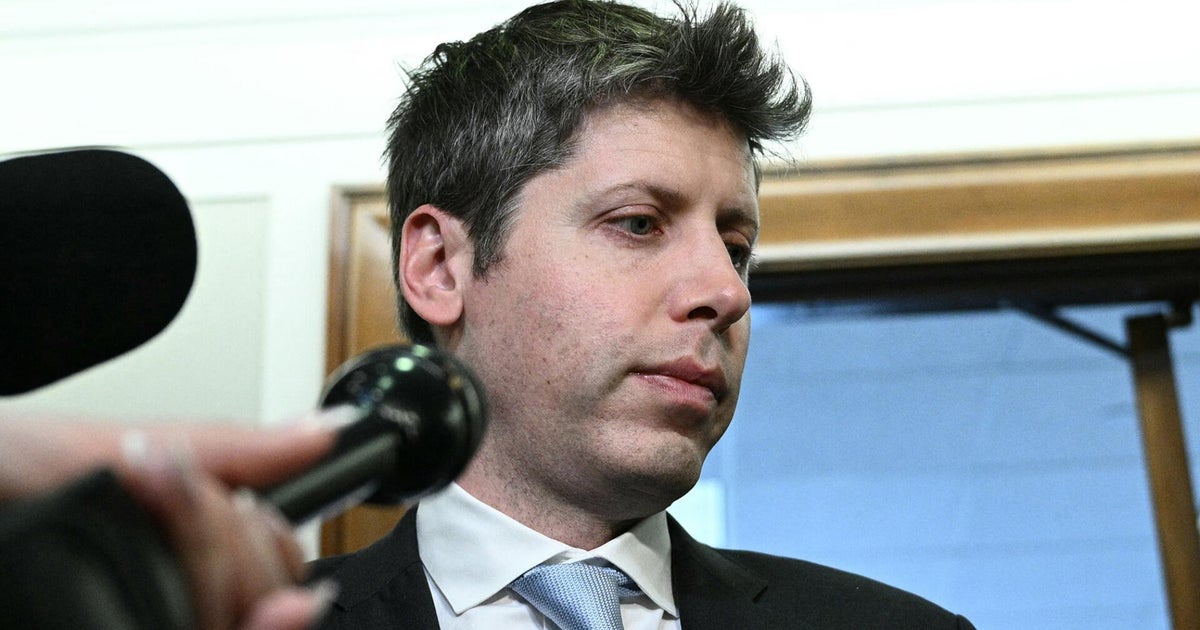
OpenAI CEO Sam Altman met with lawmakers on Capitol Hill and stated that he wanted to separate himself from the large lobbying efforts by the artificial intelligence industry during the election season. This comes as the AI sector is spending millions of dollars on political campaigns ahead of the midterm elections.
Key Facts
Sam Altman is the CEO and co-founder of OpenAI.
The AI industry is spending millions of dollars on lobbying and campaign efforts during the current election cycle.
Altman met with U.S. lawmakers on Capitol Hill.
He tried to distance himself and OpenAI from the broader AI industry’s political spending.
The meeting happened on a Wednesday shortly before midterm elections.
The AI sector’s involvement in politics is increasing scrutiny over its influence.
OpenAI is involved in artificial intelligence development.
Lobbying involves trying to influence lawmakers and government decisions.
Read the Original
Want the full story? Tap a source to open the original
article.
Researchers in Japan have made progress in growing natural hair by successfully recreating the full cycle of hair growth in mice, which means hair can grow, fall out, and regrow naturally. This breakthrough could eventually help millions of people, especially women, who suffer from hair loss due to cancer treatment, ageing, or medical conditions like alopecia.
Key Facts
A research team led by Professor Takashi Tsuji recreated the complete hair growth cycle in mice.
The cycle includes hair growing, falling out, and growing back naturally.
Current hair transplants do not fully replicate the natural hair growth cycle.
Hair loss affects about one-third of women at some point in their lives.
Hair loss can happen due to cancer treatment, medical conditions, or ageing.
Hair is strongly connected to personal identity, dignity, and social meaning.
Historically, hair has symbolized power, status, gender, and more in different cultures.
Hair removal has been used as a form of punishment or humiliation in history.
Read the Original
Want the full story? Tap a source to open the original
article.
SpaceX, led by Elon Musk, plans to raise about $75 billion in an initial public offering (IPO), valuing the company at nearly $1.77 trillion. This would surpass the previous largest IPO by Saudi Aramco and make SpaceX one of the most valuable companies in the world.
Key Facts
SpaceX intends to sell 555.6 million shares at $135 each in its IPO.
The IPO value of $75 billion would break the record set by Saudi Aramco's $25.6 billion IPO in 2019.
The total company valuation at IPO is approximately $1.765 trillion based on 13 billion shares outstanding.
Elon Musk could become the first trillionaire if valuation and stock price hold.
SpaceX owns satellite internet service Starlink, which has 10.3 million customers in 164 countries.
The company is involved in NASA’s Artemis program and aims to support Moon and Mars missions.
SpaceX has acquired Elon Musk’s AI company xAI and merged with the social network X (formerly Twitter).
Although going public, Musk will keep over 80% of voting power, maintaining control of SpaceX.
Read the Original
Want the full story? Tap a source to open the original
article.
Scientists searched for signs of alien technology in the interstellar comet called 3I/Atlas but found none. The SETI Institute used radio telescopes and confirmed the comet is natural, not artificial.
Key Facts
The comet 3I/Atlas comes from outside our solar system, making it interstellar.
It was discovered last summer and seen passing near Mars in October.
3I/Atlas came within 19 million miles of Mars and 167 million miles of Earth in December.
The SETI Institute performed detailed radio scans from a telescope in Northern California.
No signals or signs of alien technology were detected in the comet.
This comet is the third known object from another star to enter our solar system.
All three interstellar objects are considered natural, not made by intelligent beings.
NASA spacecraft observed the comet as it moved through space near Mars and Earth.
Read the Original
Want the full story? Tap a source to open the original
article.
OpenAI CEO Sam Altman met with members of both political parties to discuss new rules for artificial intelligence (AI). He opposed the idea that AI developers should need government permission before launching new AI systems.
Key Facts
Sam Altman is the CEO of OpenAI, a company that creates AI technology.
He met with lawmakers from both the Republican and Democratic parties.
The meeting focused on potential rules for AI development and release.
Some lawmakers proposed that AI models should get government approval before being released.
Altman disagreed with the need for government approval before releasing AI models.
Jordan Rae Kelly, a former National Security Council expert, provided analysis on the issue.
The talks happened soon after President Trump issued an order related to AI regulation.
Read the Original
Want the full story? Tap a source to open the original
article.
Several companies, including Microsoft and Atom Computing, have shared updates on their progress in quantum computing. Microsoft improved its qubit devices by changing the materials used, leading to more stable quantum states, while Atom Computing is developing an architecture using atoms suspended by lasers for quantum calculations.
Key Facts
Microsoft works on topological qubits using thin superconducting wires on semiconductors.
They replaced aluminum with lead and changed the semiconductor composition to improve qubit stability.
The stability of quantum states improved from milliseconds to over 20 seconds with these material changes.
Microsoft still needs to show control over qubits to perform calculations and connect them for error correction.
Atom Computing uses lasers to hold atoms in place and uses their nuclear spins to perform quantum computing.
Atom’s system includes storage, operation zones, and backup atoms to replace lost ones.
Atom Computing’s hardware is accessible through Microsoft’s Azure Quantum Cloud service.
Both companies focus on incremental progress toward making quantum computing practical and reliable.
Read the Original
Want the full story? Tap a source to open the original
article.
Microsoft introduced several new artificial intelligence (AI) products at its annual Build developers conference in San Francisco. Scott Hanselman, a Microsoft vice president, talked with CBS News about one of these products called Scout, an AI assistant.
Key Facts
Microsoft held its Build developers conference in San Francisco.
The company announced many new AI products at the event.
One featured product is called Scout, an AI assistant.
Scott Hanselman is a Microsoft vice president.
Hanselman explained details about Scout in an interview with CBS News.
The description of Scout suggests it helps users by assisting with tasks using AI technology.
The news was shared through CBS News and the CBS News app.
Read the Original
Want the full story? Tap a source to open the original
article.
Meta has introduced a new artificial intelligence (AI) tool designed to help businesses improve their customer service. This AI business agent can assist companies in handling customer interactions more efficiently.
Key Facts
Meta is launching a new AI business agent.
The tool is meant to help businesses with customer service tasks.
AI business agents are computer programs that can talk to customers and answer questions.
The goal is to make customer service faster and more effective.
Meta is a major technology company known for social media and AI developments.
This announcement was covered by CBS News and their technology reporter.
The AI agent is part of a larger trend of using AI in business operations.
Read the Original
Want the full story? Tap a source to open the original
article.
NASA has stopped trying to contact its MAVEN spacecraft, which stopped responding after passing behind Mars in December 2025. The $582 million Mars orbiter, launched in 2013, studied the planet’s atmosphere and helped relay communications for Mars rovers.
Key Facts
MAVEN lost contact with Earth during a 20-30 minute pass behind Mars on December 6, 2025.
NASA attempted to reset MAVEN’s computer remotely but received no response.
Launched in November 2013, MAVEN entered Mars orbit in September 2014.
The mission, originally planned for one year, lasted over 11 years.
MAVEN studied how solar wind strips away Mars’s atmosphere, helping explain why Mars is now dry and cold.
The spacecraft discovered a process called “sputtering,” where charged particles knock atmospheric gases into space.
MAVEN also relayed signals from Mars rovers Curiosity and Perseverance back to Earth.
NASA has formed an investigation team to determine why MAVEN stopped communicating.
Read the Original
Want the full story? Tap a source to open the original
article.
The Hadron Collider is a documentary film that shows the Large Hadron Collider, a powerful science project. It combines scientific research with elements of poetry, music, and historic footage to explore how science, politics, and culture interact.
Key Facts
The film focuses on the Large Hadron Collider, a major scientific instrument used to study particle physics.
It includes rare archival footage about the collider and related events.
The documentary blends science with poetry and music to create a unique viewing experience.
It explores the connections between scientific work, political decisions, and cultural impact.
The film lasts 59 minutes and was first shown on June 3, 2026.
It is available to watch for over a year after the first broadcast.
The program is part of a larger BBC series with other science and history documentaries.
Read the Original
Want the full story? Tap a source to open the original
article.
Many big losses in the crypto industry come from human mistakes, not just technical bugs. The current focus on checking software code is helpful but not enough, so companies should also work harder to protect against attacks that trick or exploit people.
Key Facts
Since 2022, the crypto industry lost about $2.2 billion to hackers and scammers.
Most security attacks now target human errors, like giving away passwords or trusting wrong people.
Crypto companies have increased software checks, but these only catch problems in the code.
Attacks using fake emails and impersonation have become easier with AI tools.
Data shows attacks exploiting human weaknesses steal more money than those attacking code.
Security audits show a software's safety at one time but don’t protect against future changes.
Some firms wrongly display audit badges as proof they are always secure.
The crypto sector needs to balance code reviews with stronger protection against human-related risks.
Read the Original
Want the full story? Tap a source to open the original
article.
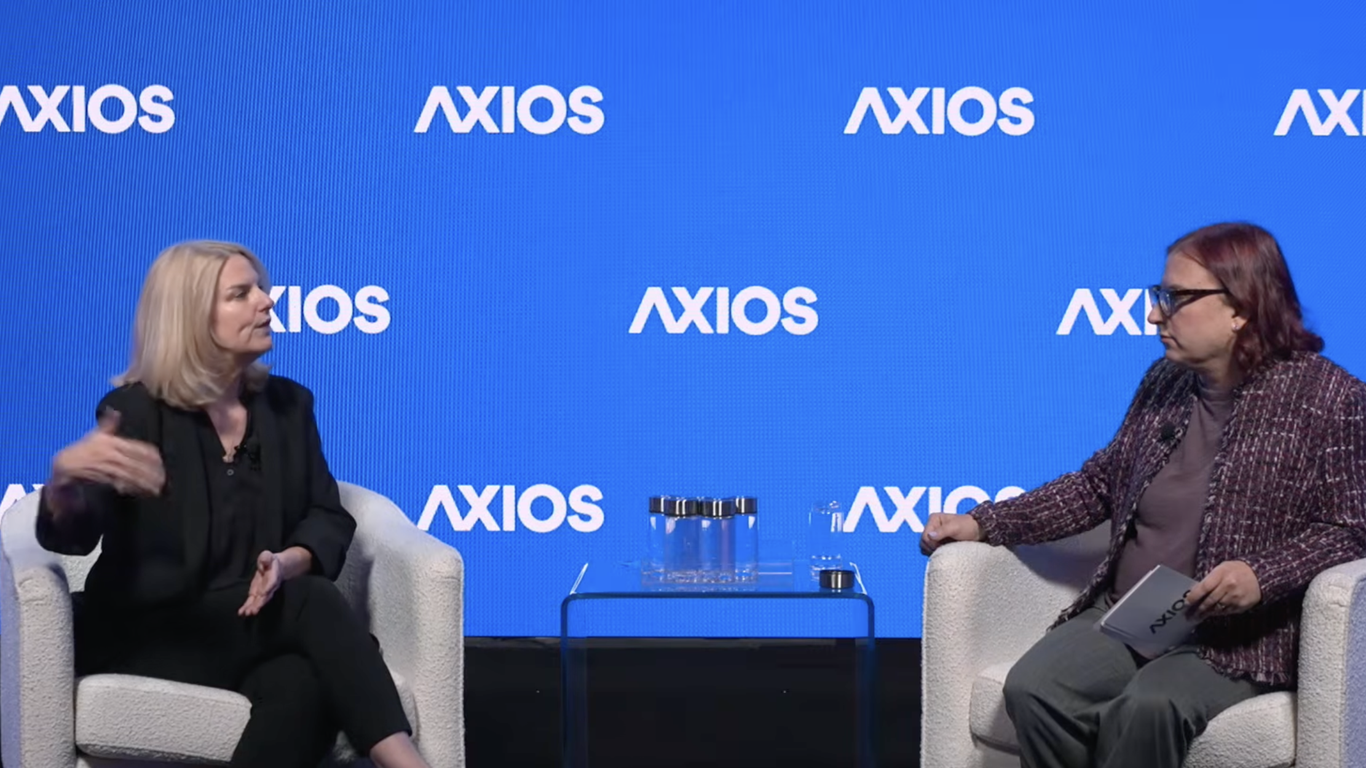
GLAAD President Sarah Kate Ellis said that artificial intelligence (AI) is often trained using biased information. This can cause AI to spread harmful stereotypes and misinformation about LGBTQ+ people, especially affecting transgender and non-binary individuals.
Key Facts
AI systems learn from large amounts of data, which can include biased or incorrect information.
Biased AI can reinforce negative stereotypes about LGBTQ+ communities.
Sarah Kate Ellis spoke about this issue at the Axios AI+ NY summit.
The bias in AI affects mainly transgender and non-binary people but impacts the entire LGBTQ+ community.
Ellis warned that companies need to train AI responsibly to prevent harm beyond just online spaces.
The spread of harmful AI content can lead to real-world violence against LGBTQ+ individuals.
GLAAD has called out social media companies for allowing harmful content that targets LGBTQ+ people.
Read the Original
Want the full story? Tap a source to open the original
article.