A report from Space Daily says the moon is moving away from Earth at a rate of 3.8 centimeters each year. This means the distance between the Earth and the moon increases slowly over time.
Key Facts
The moon is getting farther from Earth by about 3.8 centimeters every year.
This movement is slow but steady.
Scientists measure this change using precise tools and observations.
The increasing distance affects Earth's tides and could influence future space missions.
The moon’s slow drift is a natural process caused by gravitational forces between Earth and the moon.
Read the Original
Want the full story? Tap a source to open the original
article.
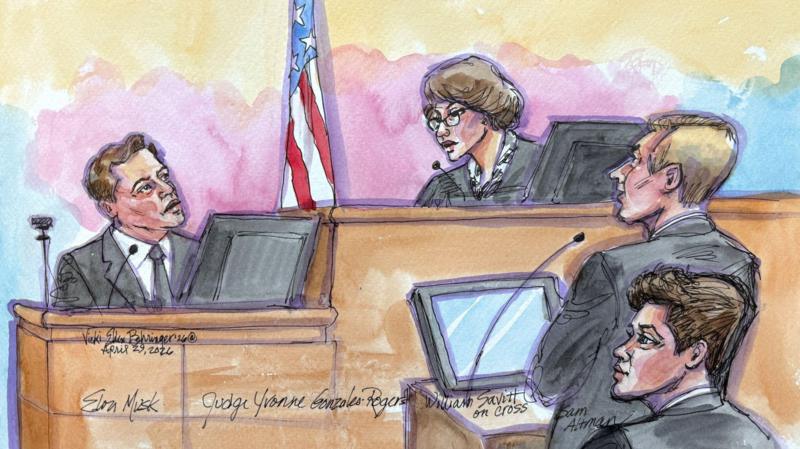
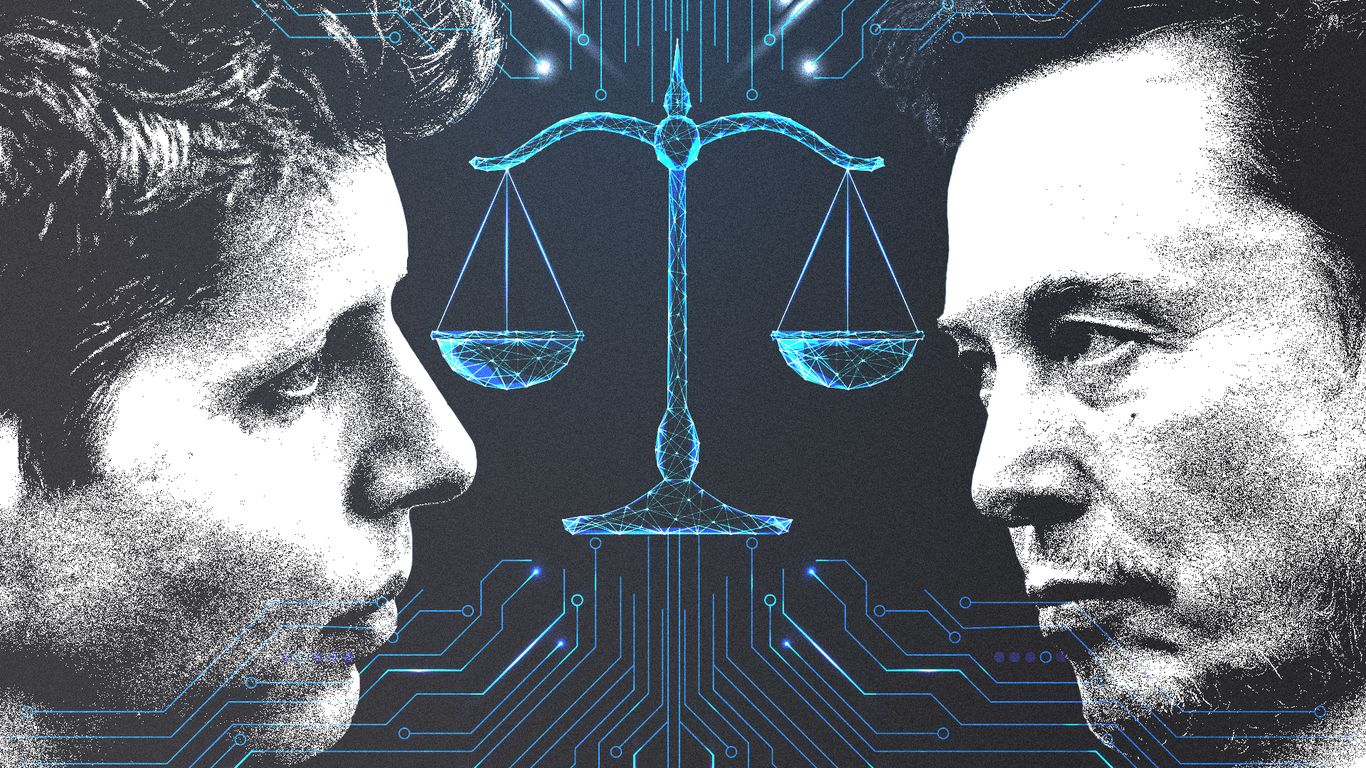
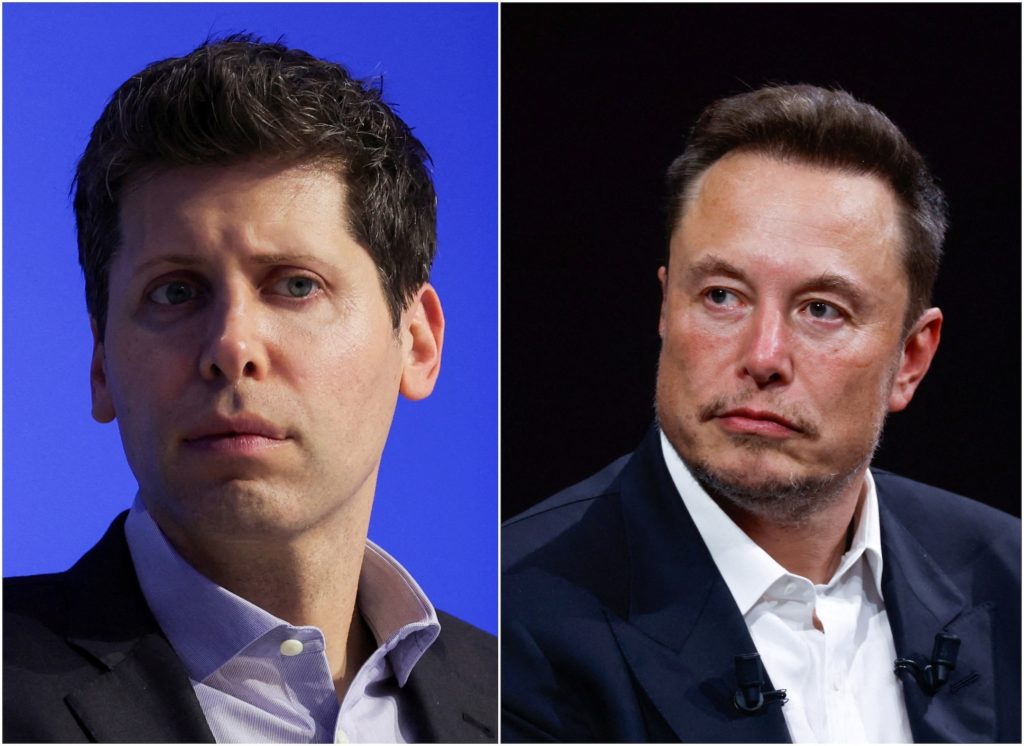
A recent trial in California between Elon Musk and Sam Altman highlighted the intense competition and personal conflicts among AI industry leaders. The case showed that AI companies are driven by profit and rivalry, not just collaboration or shared goals. Despite Elon Musk losing on a technical point, the trial helped confirm the strong business value of AI.
Key Facts
The trial took place in Oakland, California, involving Elon Musk and Sam Altman, leaders in the AI field.
AI companies like OpenAI are focused on competing and making money, rather than acting as charities.
Rivalries between AI leaders have grown, contrasting with past public displays of unity.
OpenAI plans to earn half its money from consumers and half from businesses.
The trial outcome could help OpenAI avoid paying billions in damages and aid its financial future.
Elon Musk is unlikely to be seriously harmed by the verdict and may continue to criticize OpenAI.
Other AI companies, like Anthropic and Google, are advancing their technologies and products quickly.
The case revealed how a few powerful individuals hold much influence over the future of AI.
Read the Original
Want the full story? Tap a source to open the original
article.
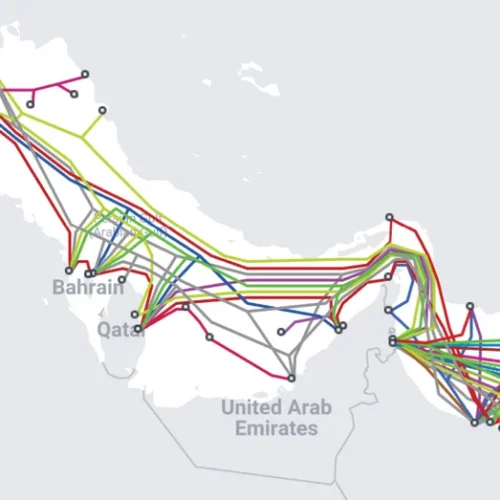
Iran has announced plans to charge US tech companies fees for using and maintaining undersea Internet cables that run under the Strait of Hormuz. The Strait is a vital digital passage for Gulf countries, but tensions and conflicts in the region have raised concerns about cable security and possible disruptions.
Key Facts
Iran said it will impose fees on undersea Internet cables passing through the Strait of Hormuz.
These cables connect Gulf countries and carry much regional Internet traffic.
Iran claims the right to repair and maintain these cables exclusively.
The Strait of Hormuz is a narrow passage between the Persian Gulf and the Gulf of Oman.
Many cables pass through waters controlled by Oman, complicating Iran’s demands.
Damage to undersea cables can severely affect Internet connectivity.
Most damage to cables is caused by ships accidentally dragging anchors or fishing nets.
There have been threats and concerns about sabotage amid regional conflicts, especially involving Iran, the US, and allied groups.
Read the Original
Want the full story? Tap a source to open the original
article.
A jury in Oakland ruled against Elon Musk in his lawsuit accusing OpenAI leaders of turning the nonprofit into a for-profit company. The jury said Musk waited too long to file the case, so it was dismissed on timing grounds without deciding if the company broke its nonprofit mission.
Key Facts
Elon Musk sued OpenAI CEO Sam Altman and president Greg Brockman for $150 billion.
Musk claimed they turned OpenAI from a nonprofit into a for-profit company for personal gain.
The jury found Musk’s lawsuit was filed after the legal deadline (statute of limitations) expired.
The court dismissed the case without ruling on the main issue of OpenAI’s mission change.
Musk co-founded OpenAI in 2015 but left the board in 2018 due to conflicts with Tesla’s AI work.
Microsoft has heavily invested in OpenAI, helping develop ChatGPT and expanding commercial deals.
Musk started a rival AI company, xAI, in 2023 before filing the lawsuit in 2024.
Musk plans to appeal the decision, continuing the legal dispute with OpenAI leadership.
Read the Original
Want the full story? Tap a source to open the original
article.
Many Facebook pages in the UK post hateful and far-right content that seems British but are often created by young men from South Asia. These creators use AI tools to make videos and posts that spread anti-Muslim messages and far-right ideas, earning money from ads and online courses.
Key Facts
Hundreds or thousands of Facebook accounts with British patriotic appearances share far-right and anti-Muslim content.
These pages often promote ideas like the "great replacement theory" and criticize Muslim practices.
The creators behind many accounts are young men from South Asia, especially Pakistan and Sri Lanka.
They use generative AI tools to write captions and create videos, making content creation faster and easier.
These creators earn significant money through Facebook ad revenue and by selling courses teaching others how to create similar content.
The AI-generated content helps spread far-right views quickly and widely on social media.
This activity contributes to a more hostile environment for immigrants and British Muslims.
The financial success appeals to people seeking "passive income" from online content creation.
Read the Original
Want the full story? Tap a source to open the original
article.
Elon Musk lost his lawsuit against OpenAI because the jury said he waited too long to file the case. The lawsuit involved important leaders in Silicon Valley competing over fast-changing artificial intelligence technology.
Key Facts
Elon Musk sued OpenAI, a company focused on artificial intelligence.
A federal jury ruled Musk filed the lawsuit too late.
The case involved major tech figures and their competing goals in AI.
The lawsuit was described as a high-profile or "blockbuster" case.
The decision was made on May 19, 2026.
The legal dispute highlights the fast pace and importance of AI technology development.
OpenAI is considered a leading company in artificial intelligence.
Elon Musk is known as the world's richest man and a key player in technology.
Read the Original
Want the full story? Tap a source to open the original
article.
Prediction markets, where users bet on the outcome of future events, are gaining popularity. Lawmakers and child safety experts are concerned about minors accessing these platforms and are asking companies how they prevent underage use.
Key Facts
Prediction markets allow people to bet on future events.
These platforms are becoming more popular.
Child safety groups and some members of Congress are worried minors might use these sites.
Minors and those under 21 are the main focus of safety concerns.
Lawmakers are pressuring the prediction market industry to show how they stop underage users.
The industry is under increased scrutiny because of these safety issues.
Gambling experts are also involved in the discussion about risks to young people.
Read the Original
Want the full story? Tap a source to open the original
article.
A legal case between Elon Musk and OpenAI ended without a decision on the main issues because the court said the lawsuit was too late. The trial showed internal fights and money goals among AI leaders, which worried people about who controls powerful AI technology.
Key Facts
Elon Musk sued OpenAI, Sam Altman, Greg Brockman, and Microsoft over changes in OpenAI's mission and funding.
Musk claimed OpenAI moved away from its original nonprofit purpose by accepting big investments from Microsoft and creating a profit-seeking branch.
The court dismissed the lawsuit because the claim was filed too late.
Internal emails revealed tension and power struggles among OpenAI’s founders, including Musk’s concern about control.
Sam Altman was briefly removed from OpenAI’s leadership in 2023 and tried to regain access to board meetings.
OpenAI and Anthropic discussed a potential merger during this period.
Experts expressed concern that money and power, not only public good, are driving AI development.
Public trust in AI is decreasing, and people worry AI might be controlled by a few large companies.
Read the Original
Want the full story? Tap a source to open the original
article.
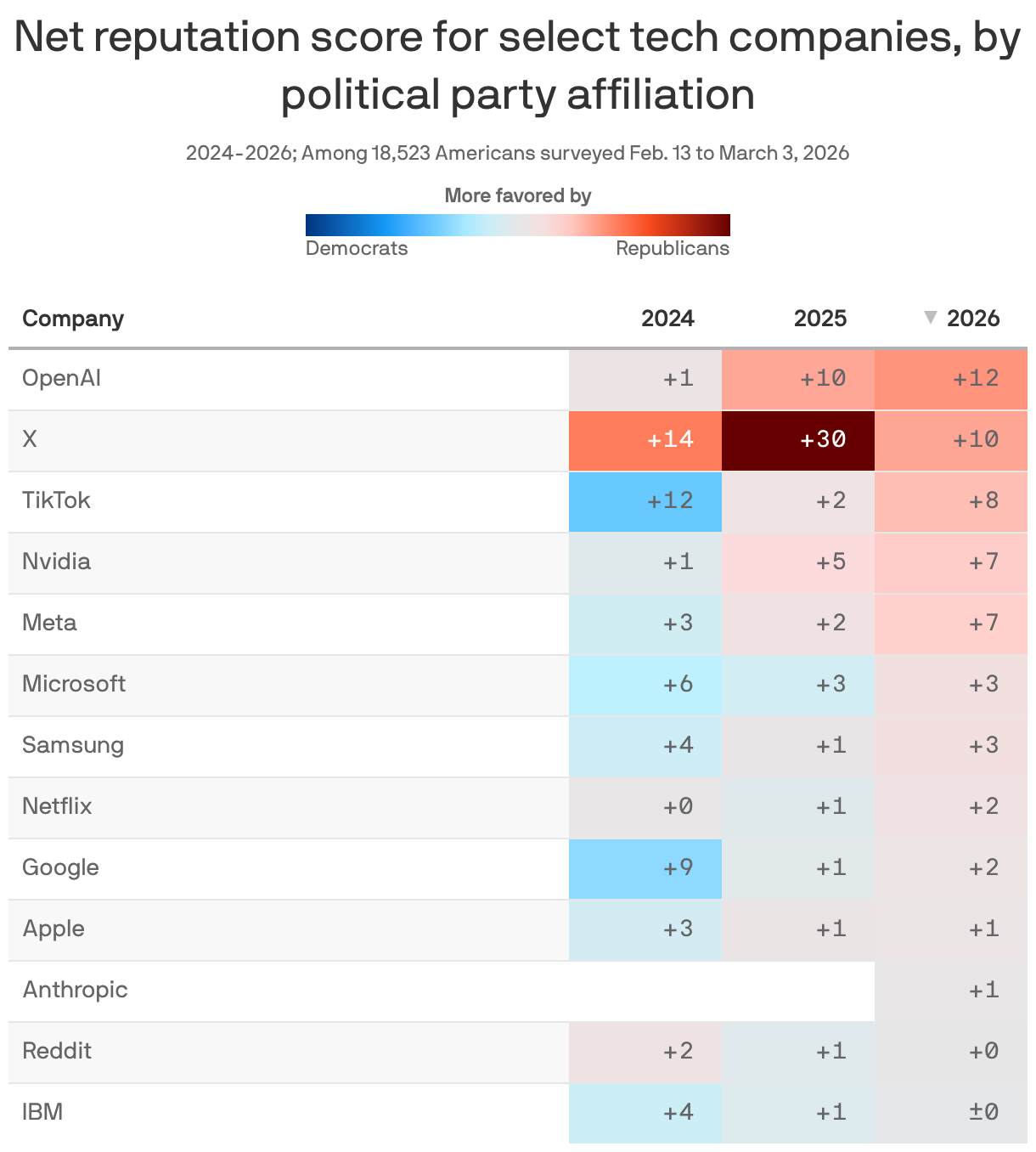
A recent Axios Harris Poll shows that Republicans trust artificial intelligence (AI) companies more than Democrats do. This change has happened since President Donald Trump took office and AI technology progressed rapidly.
Key Facts
Republicans’ trust in AI companies has increased, while Democrats have become more doubtful.
OpenAI, led by Sam Altman, shows a growing trust gap: 12 points higher favorability among Republicans than Democrats.
Other AI-related companies like TikTok, Nvidia, Meta, and X also show wider differences between parties.
Anthropic, an AI company ranked 15th overall, has a small trust gap between parties but clashed with the Trump administration on use limits.
44% of Republicans say their view of AI improved over the past year, compared to 35% of Democrats.
More Democrats (40%) than Republicans (32%) worry AI will hurt job opportunities and wages.
Younger people, especially Gen Z, are more concerned about AI affecting jobs than older generations.
The poll highlights a shift in political divides over AI, with many seeing it as a key issue alongside jobs and the economy.
Read the Original
Want the full story? Tap a source to open the original
article.
Forza Horizon 6 is a racing video game set in a virtual Japan that features an open world filled with races and challenges. Players start as rookies and progress by winning races and completing tasks, collecting cars, and customizing garages. The game offers realistic driving experiences and includes both solo and online multiplayer modes.
Key Facts
The game is set in a detailed, virtual version of Japan with famous landmarks like Mount Fuji visible.
Players begin as beginners and unlock higher-level competitions over time.
Progress is made by winning races and completing challenges such as speed traps and stylish driving moves.
There are special modes such as Discover Japan tours and a delivery side job inspired by Crazy Taxi.
Players can buy, customize, and decorate cars and houses across the map.
The car handling is realistic and reflects different driving surfaces and conditions.
The game supports both solo play and online multiplayer racing events.
Custom car designs can be shared or obtained from other users in an online market.
Read the Original
Want the full story? Tap a source to open the original
article.
A California jury dismissed Elon Musk's lawsuit against OpenAI and its top executives. The case was dropped because the lawsuit was filed after the allowed time limit, known as the statute of limitations, had expired.
Key Facts
Elon Musk filed a lawsuit against OpenAI and its leaders.
The lawsuit was reviewed by a California jury.
The jury dismissed the case unanimously.
The dismissal was based on the statute of limitations, meaning the lawsuit was not filed within the legal time frame.
The legal analysis was provided by Jessica Levinson on CBS News.
The case involves important legal rules about when people can start lawsuits.
Read the Original
Want the full story? Tap a source to open the original
article.
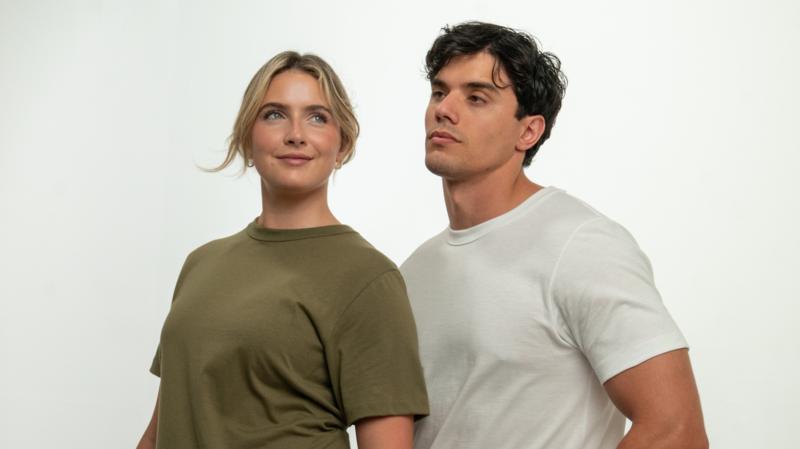
Robots have difficulty sewing clothes, so a company called CreateMe uses machines that glue fabric pieces together to make garments like underwear and soon t-shirts. This new method could bring some clothing production back to the US and reduce the environmental impact of making clothes, but challenges remain with variety and design choices.
Key Facts
Most clothes today are still made by hand, mainly by low-paid workers in Asia.
Sewing by robots is difficult because fabric pieces must be kept aligned while moving.
CreateMe’s machines glue fabric instead of sewing, then press it to join the pieces.
The glue used is strong enough to hold through washing and ironing.
CreateMe is already making women’s underwear and plans to start making t-shirts soon.
Automating garment making could bring some jobs and production back to countries like the US.
There are challenges making different styles, colors, and designs with robots.
Another company, Softwear Automation, is developing sewing robots to compete in this market.
Read the Original
Want the full story? Tap a source to open the original
article.
Researchers at the University of Cambridge are using satellite images and artificial intelligence (AI) to find and protect hedgehog habitats in the UK. The AI tool, called Tessera, analyzes detailed space photos to map where hedgehogs live and how changes like new buildings affect them.
Key Facts
The University of Cambridge uses Tessera, an AI system, to analyze satellite images of the UK.
Tessera can detect hedgehog habitats with high detail, including features like hedgerows.
The AI predicts areas where hedgehogs might live even under cloud cover.
Researchers track hedgehogs using tiny GPS devices called "digi-hogs" to monitor their movements live.
Hedgehog numbers in the UK have dropped by up to 75% in rural areas since 2000.
The common western European hedgehog is classified as "Near Threatened" by conservation groups.
Tessera was trained on about 20 petabytes of data, equal to 10 billion digital photos.
More than 100 research groups worldwide use Tessera for various projects, including farming and environmental monitoring.
Read the Original
Want the full story? Tap a source to open the original
article.
A judge in California dismissed Elon Musk’s lawsuit against OpenAI because the case was filed too late. Musk had accused OpenAI of changing its original goal of developing AI to help humanity by adding a for-profit business part.
Key Facts
Elon Musk sued OpenAI, the maker of ChatGPT.
He claimed OpenAI broke its original mission to develop AI for humanity’s benefit.
Musk said this happened when OpenAI started a for-profit branch.
A jury decided Musk’s lawsuit was filed after the legal time limit ended.
The judge dismissed the case based on the jury’s finding.
The case was heard in a federal court in California.
Geoff Bennett and Gerrit De Vynck discussed details of the case publicly.
Read the Original
Want the full story? Tap a source to open the original
article.
A federal jury in California has rejected Elon Musk’s lawsuit against OpenAI and its co-founder Sam Altman. The case, part of a long-standing dispute, ended with the jury deciding Musk’s claims were filed too late.
Key Facts
The jury was unanimous in rejecting Elon Musk’s claims.
The lawsuit was against OpenAI and co-founder Sam Altman.
The case was heard in a federal court in California.
The dispute has lasted almost ten years.
The jury found that Musk’s claim was filed after the deadline (too late).
The decision brings this chapter of the legal battle to an end.
The case involved issues related to technology and AI development.
Read the Original
Want the full story? Tap a source to open the original
article.
A man named Nikko D’Ambrosio sued Meta because a Facebook group post criticized him and showed a menacing text he sent. His lawyers used artificial intelligence (AI) to write the complaint, but judges found the case weak, filled with fake quotes likely generated by AI, and called the appeal frivolous. The court is considering punishing the lawyers for misusing AI to support false claims.
Key Facts
Nikko D’Ambrosio sued Meta over a critical Facebook post in a Chicago dating group.
The post included a screenshot of a menacing text D’Ambrosio sent to a woman he dated.
D’Ambrosio’s lawyers used AI technology from MarcTrent.AI to draft the complaint.
The original case was dismissed with prejudice, meaning it cannot be refiled.
Judges found the appeal to be frivolous and filled with mistakes and fake quotations.
The court noted these errors appeared to result from misuse of generative AI.
The lawyers face potential sanctions and have until June 16 to respond.
Meta did not remove the post, which D’Ambrosio blamed for harming his reputation.
Read the Original
Want the full story? Tap a source to open the original
article.
A federal court ruled that Elon Musk filed his lawsuit against OpenAI too late. This ends the legal case where Musk claimed OpenAI broke its nonprofit promise by becoming a profit-driven company.
Key Facts
A federal jury found that Elon Musk’s lawsuit against OpenAI was filed after the legal deadline.
The trial lasted three weeks and included testimony from several tech industry leaders.
Musk argued that OpenAI changed from a nonprofit to a profit-focused company, which he opposed.
The court’s decision was a clear win for OpenAI and its founders.
The case was widely watched as an important legal fight in Silicon Valley.
OpenAI is known for creating ChatGPT, a popular artificial intelligence program.
The lawsuit focused on corporate and business strategy issues in the tech world.
The ruling means Musk’s claims will not move forward in court.
Read the Original
Want the full story? Tap a source to open the original
article.
NASA has started the process to choose a company to build a new spacecraft that will orbit Mars and relay communications between Mars and Earth. Congress has approved $700 million for this project, which may also be linked to restarting a canceled mission to bring samples back from Mars.
Key Facts
NASA released a contract request for a Mars orbiting spacecraft called the Mars Telecommunications Network.
Congress allocated $700 million for this project in 2025.
The new spacecraft will help relay communications from Mars to Earth, replacing the 20-year-old Mars Reconnaissance Orbiter.
Only companies that received funding in 2024 or 2025 for commercial Mars Sample Return mission studies can bid.
Eligible companies include Rocket Lab, Blue Origin, L3Harris, Lockheed Martin, Northrop Grumman, SpaceX, Quantum Space, and Whittinghill Aerospace.
The contract proposals are due by June 15, with a decision expected by October 1, 2025.
There is some debate over whether the bidding rules favor certain companies because of their prior Mars Sample Return proposals.
NASA delayed releasing the contract invitation by two weeks beyond the planned May 1 date.
Read the Original
Want the full story? Tap a source to open the original
article.
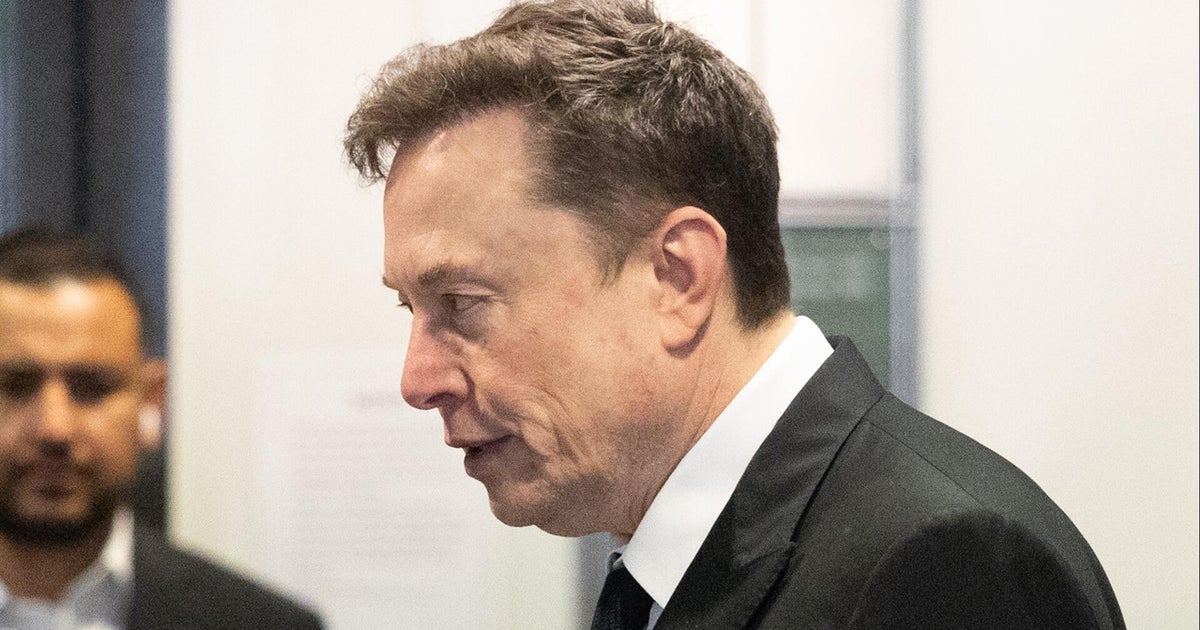
Elon Musk recently lost a lawsuit against OpenAI and its co-founder Sam Altman. This is one of several legal defeats Musk has faced recently, but experts think he will likely continue fighting in court due to his wealth and business style.
Key Facts
Elon Musk lost a lawsuit against OpenAI and Sam Altman.
Musk settled with former Twitter executives and employees after years of legal battles.
He lost a case brought by Twitter investors claiming they were misled during his takeover.
A judge dismissed Musk’s lawsuit against advertisers who left Twitter.
Another judge reversed government cost-cutting actions led by Musk’s department for unconstitutional discrimination.
Musk is expected to become the world’s first trillionaire thanks to his stake in SpaceX, which may go public soon.
A $1.5 million fine from the US Securities and Exchange Commission (SEC) was minor compared to Musk’s wealth.
Musk often ignores court losses and continues aggressive legal and business actions, showing little fear of consequences.
Read the Original
Want the full story? Tap a source to open the original
article.