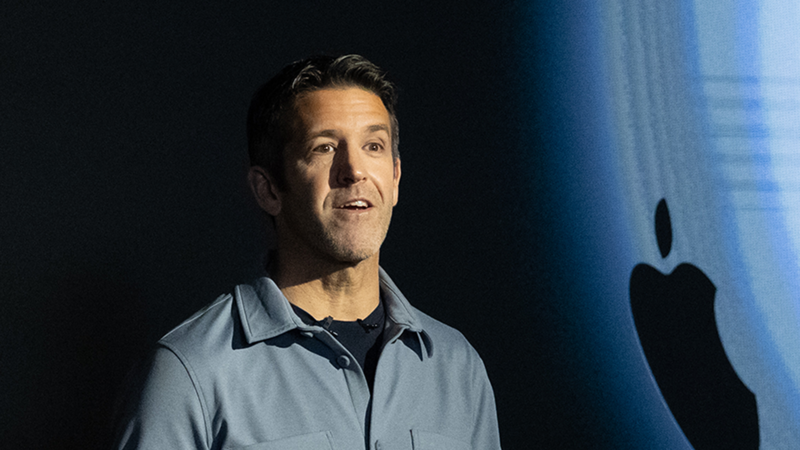
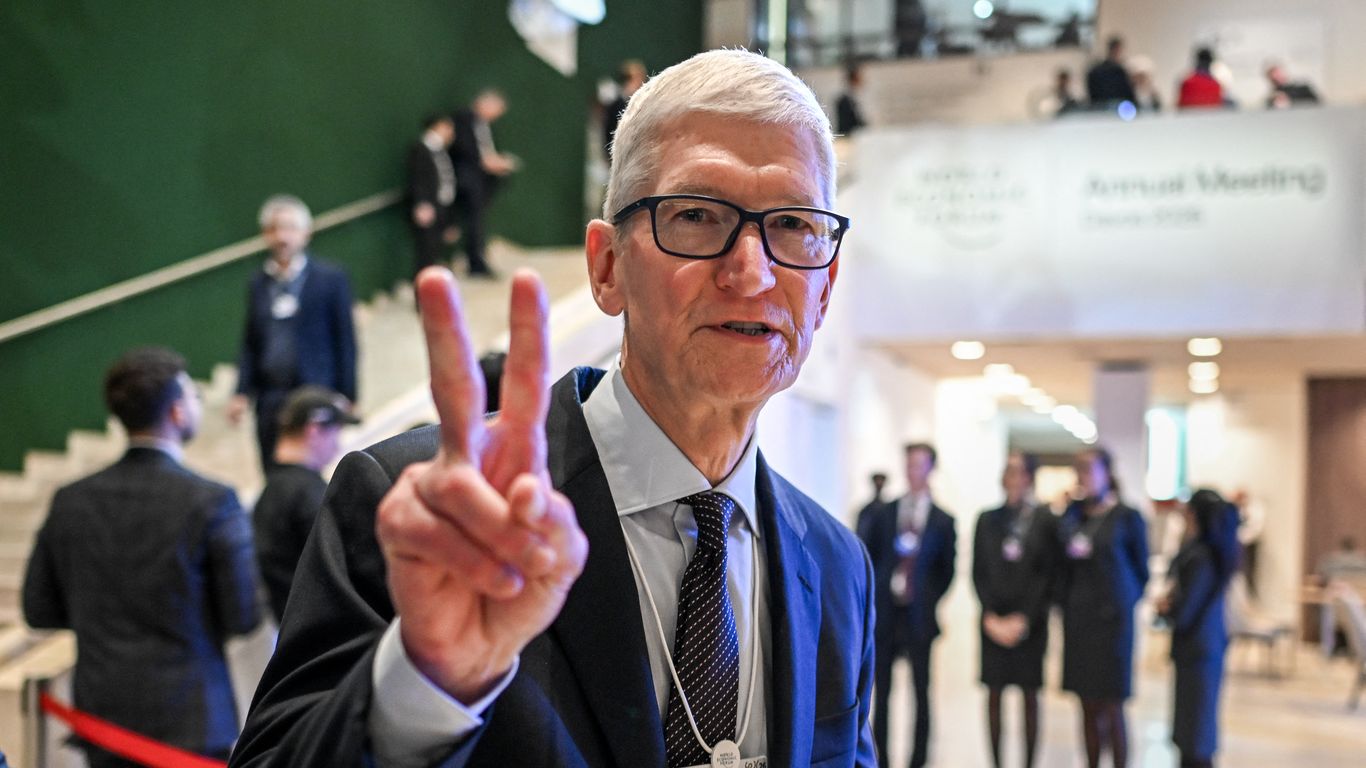
President Donald Trump praised Tim Cook for his work as CEO of Apple after the company said Cook would step down. Trump also mentioned his respect for Steve Jobs, Apple's co-founder.
Key Facts
Tim Cook served as Apple’s CEO.
Apple announced that Tim Cook will step down from his role.
President Trump expressed admiration for Tim Cook’s leadership.
Trump also spoke about Steve Jobs, the late co-founder of Apple.
The comments came soon after Apple made the leadership change public.
Read the Original
Want the full story? Tap a source to open the original
article.
Jean-Michel Jarre, a pioneer of electronic music, encourages the music and film industries to adopt artificial intelligence (AI) rather than resist it. He believes AI can help create new forms of music and cinema and should be seen as a tool to enhance creativity, not replace talent.
Key Facts
Jarre criticized the music and film industries for being too worried and conservative about AI.
He said AI can help create future forms of music like hip-hop and techno, and new types of movies.
Other musicians like Elton John and Dua Lipa have expressed concerns about AI using copyrighted work without permission.
Jarre has used AI in his music since 2018 and views it as a “wild west” that needs new rules.
He compared AI to past technological changes, like the introduction of sound in film and electronic music.
Jarre said AI should be viewed as “augmented imagination” to expand artistic possibilities.
He believes AI will not harm top artists but help produce new styles and forms of art.
Jarre spoke at the launch of the second AI film festival in Cannes and is an ambassador for the event.
Read the Original
Want the full story? Tap a source to open the original
article.
Tim Cook will step down as Apple’s CEO on 1 September but will remain with the company as executive chair, focusing on working with global policymakers. His successor, John Ternus, a longtime Apple hardware engineer, will take over as CEO. Cook is known for managing Apple’s global supply chain and diplomatic relations amid trade tensions between the U.S. and China.
Key Facts
Tim Cook has been Apple’s CEO since 2011 and will step down on 1 September.
John Ternus, head of hardware engineering, will become Apple’s next CEO.
Cook will stay at Apple as an executive chair, handling relations with global policymakers.
Cook has negotiated with both President Donald Trump and Chinese leader Xi Jinping during trade conflicts.
Apple secured an exemption from Trump’s tariffs on the iPhone under Cook’s leadership.
Cook has helped move some Apple manufacturing from China to Vietnam and India.
Despite tensions, Apple’s business in China has grown, with record revenue reported there in January.
Ternus is recognized for his internal company skills but less experience with Apple’s external diplomacy.
Read the Original
Want the full story? Tap a source to open the original
article.
Apple CEO Tim Cook will step down on September 1, 2026, after leading the company for nearly 15 years. John Ternus, who is currently in charge of hardware at Apple, will take over as the new CEO, while Cook will become executive chairman.
Key Facts
Tim Cook has been Apple's CEO for almost 15 years.
Cook’s leadership helped Apple’s market value grow by over $3.6 trillion.
John Ternus is Apple's hardware chief before becoming CEO.
The leadership change will happen on September 1, 2026.
Tim Cook will become the executive chairman after stepping down as CEO.
The announcement was reported by France24 from Los Angeles.
John Ternus is a long-time Apple executive.
The change marks a major leadership shift at Apple.
Read the Original
Want the full story? Tap a source to open the original
article.
OpenAI and Anthropic are competing strongly to win business customers as both get ready for possible stock market launches (IPOs) later this year. OpenAI is using consulting partners and its computing power to regain customers, while Anthropic has gained more business users recently and focuses on managing costs.
Key Facts
OpenAI is working with consulting partners to help companies use its coding tool called Codex.
Anthropic’s AI tool Claude Code has been adopted by many businesses, leading to higher spending on Anthropic than on OpenAI.
Both companies are racing to go public with IPOs that might happen as soon as fall 2024.
OpenAI claims it has more computing power, giving it an edge in developing better AI models.
Anthropic is cautious about spending too much on computing because of costs and uncertain demand.
Anthropic recently expanded its partnership with Amazon to secure more computing resources.
Some investors think Anthropic has more demand in secondary markets, which trade shares before an official IPO.
Expert opinions suggest if OpenAI does not increase revenue soon, Anthropic might take a long-term lead.
Read the Original
Want the full story? Tap a source to open the original
article.
Apple is preparing for a leadership change with John Ternus, its vice president of hardware, expected to succeed Tim Cook as the head of the company. Ternus is known as a practical "product guy" who works closely with development teams, and he will face new challenges like incorporating artificial intelligence (AI) into Apple’s products.
Key Facts
Tim Cook, Apple’s CEO, is rumored to be planning to step down.
John Ternus, 51, Apple’s vice president of hardware, is considered the likely successor.
Ternus has worked at Apple for about 25 years and is described as calm and steady.
Both Cook and Ternus focus on hardware and a hands-on approach rather than flashy leadership styles.
Apple recently launched the Vision Pro VR headset, which was costly and did not meet high success expectations.
AI is a major challenge for Apple, which has been slow to adopt it compared to other tech companies.
Apple has partnered with OpenAI’s ChatGPT and Google’s Gemini instead of fully developing its own AI technology.
The company is expected to continue its cautious and strategic approach under Ternus’s leadership.
Read the Original
Want the full story? Tap a source to open the original
article.
The UK media regulator Ofcom is investigating the messaging app Telegram over concerns that child sexual abuse material (CSAM) is being shared on its platform. Telegram denies the accusations, saying it has worked to eliminate such content since 2018 using advanced technology and cooperation with organizations.
Key Facts
Ofcom is probing Telegram after evidence suggested CSAM was present on the app.
UK law requires online services to prevent and tackle illegal content like CSAM or face large fines.
Telegram claims it has nearly eliminated public sharing of CSAM since 2018 using detection algorithms.
Ofcom's investigation follows contact from the Canadian Centre for Child Protection.
Ofcom is also investigating other chat services over risks like child grooming.
The Online Safety Act, effective from March 2025, forces platforms to address illegal content.
Ofcom can fine companies up to £18 million or 10% of global revenue for breaking rules.
Child protection groups like NSPCC support Ofcom’s actions against online abuse.
Read the Original
Want the full story? Tap a source to open the original
article.
Tim Cook will step down as Apple CEO in September after leading the company for 15 years. John Ternus has been named as the new CEO to take over the role.
Key Facts
Tim Cook has been Apple’s CEO for 15 years.
Cook will leave the CEO position in September 2026.
John Ternus is the new CEO appointed to replace Tim Cook.
Apple is a leading global technology company.
The leadership change was officially announced in April 2026.
John Ternus held senior roles at Apple before becoming CEO.
The article also mentions recent reports about renewable energy and U.S. Federal Reserve topics, but the main focus is Apple’s CEO change.
Read the Original
Want the full story? Tap a source to open the original
article.
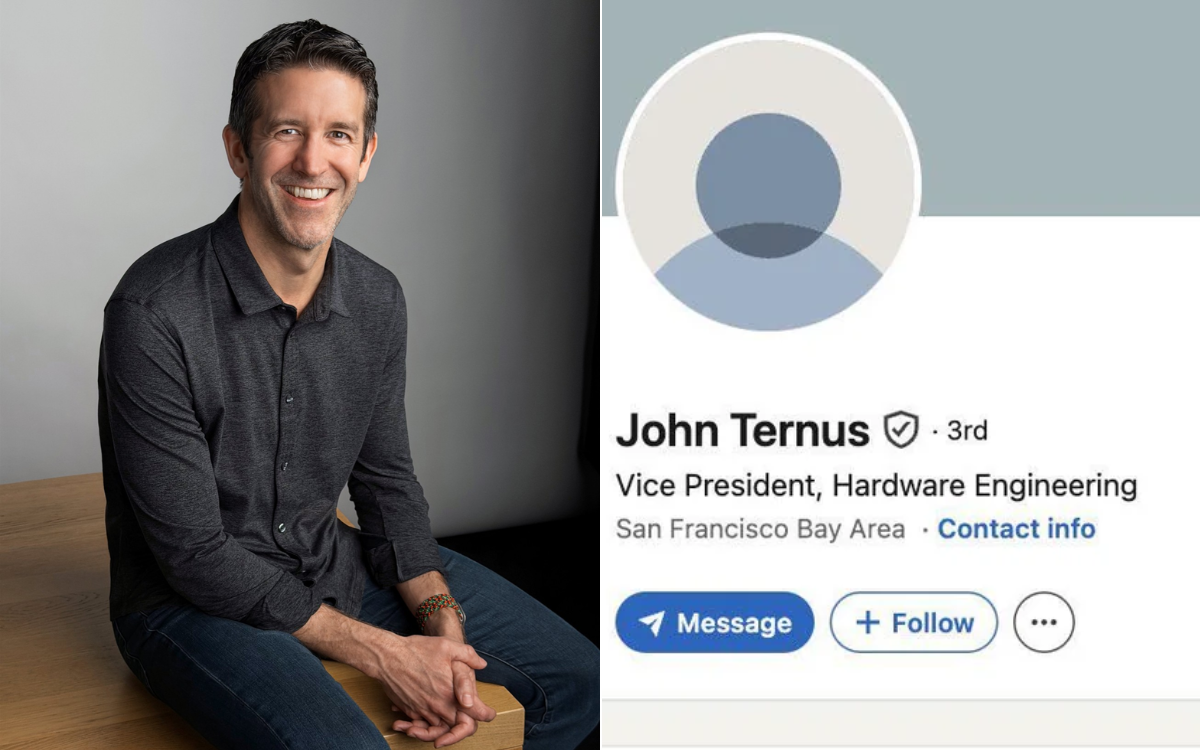
John Ternus will become Apple’s CEO on September 1, replacing Tim Cook after 15 years. Ternus’s LinkedIn profile has drawn attention because it is very simple and has no recent posts, unlike many executives who use it actively.
Key Facts
John Ternus is currently Apple’s senior vice president of hardware engineering.
He will take over as Apple CEO on September 1, 2024.
Tim Cook will become Apple’s executive chairman.
Ternus’s LinkedIn profile has no recent posts and is very minimal.
Social media users found his lack of activity on LinkedIn unusual and refreshing.
Some users said that many top executives keep brief LinkedIn profiles because they are not looking for new jobs.
The discussion suggests Ternus may focus on long-term company growth instead of social media presence.
Apple has not yet commented on the online reaction to Ternus’s LinkedIn profile.
Read the Original
Want the full story? Tap a source to open the original
article.
Tim Cook has announced he will step down as Apple's CEO on September 1st. John Ternus, the company's head of hardware engineering, will take over as the new CEO.
Key Facts
Tim Cook will leave his role as Apple's CEO on September 1st, 2026.
John Ternus, currently in charge of hardware engineering at Apple, will become the new CEO.
The change in leadership is expected to bring fresh innovation to Apple.
Tim Cook led Apple through a period of significant profit and market growth.
Some investors hope the new CEO will focus more on launching new major products.
Apple is known for landmark products like the Macintosh, iPod, and iPhone.
Tim Cook's time as CEO did not have many blockbuster product launches but was still successful financially.
Read the Original
Want the full story? Tap a source to open the original
article.
Chuckie Egg is a platform video game first released in 1983 for home computers like the ZX Spectrum and BBC Micro. Created by 15-year-old Nigel Alderton, it became very popular in the UK and was later adapted for many other home computer systems.
Key Facts
Chuckie Egg involves collecting eggs and avoiding hens in a chicken shed setting.
The game introduced a “boss battle” with a large duck starting at level eight.
It was originally developed by A&F Software, a small company run by two friends in Greater Manchester.
Nigel Alderton, a teenager working part-time at the shop, created the game.
Alderton was inspired by arcade games he played after his Saturday job, especially Space Panic.
The game was first released in autumn 1983 and topped sales charts quickly.
It was ported to about 11 different home computer systems, including Commodore 64 and Amstrad.
Chuckie Egg became a well-known part of British 8-bit gaming culture in the 1980s.
Read the Original
Want the full story? Tap a source to open the original
article.
Famous filmmakers like Steven Soderbergh are starting to use artificial intelligence (AI) in their movies. They see AI as a tool to create visual effects and explore new ideas, even though some artists are cautious or critical of this technology.
Key Facts
Steven Soderbergh used AI to create surreal images for a documentary about John Lennon and Yoko Ono.
He plans to use AI in a movie about the Spanish-American War, but details on how are unclear.
Other filmmakers like James Cameron, Sandra Bullock, and Reese Witherspoon have also expressed interest or support for AI in film.
Some big movie projects use AI for creating sets, lighting, or other parts of production.
Ben Affleck has invested in an AI startup related to the film industry.
There is concern that AI can be used to copy other artists’ work or create low-quality content.
Filmmakers are divided between fully embracing AI and being cautious about its impact on creativity.
The technology is still new, and its future role in movies is uncertain.
Read the Original
Want the full story? Tap a source to open the original
article.
Apple is changing its CEO from Tim Cook to John Ternus as it faces the challenge of finding its next big product after the iPhone. While Apple has succeeded with products like the Apple Watch and services, it has struggled to break into new areas like autonomous cars and mixed reality.
Key Facts
Tim Cook will step down as Apple’s CEO and become executive chairman.
John Ternus, Apple's hardware chief, will become the new CEO.
Johny Srouji, known for Apple’s chip development, was promoted to chief hardware officer.
Apple has had limited success entering new markets beyond the iPhone, including stopping its autonomous car efforts.
The Apple Vision Pro mixed reality headset is available but has had few buyers due to its high price.
Apple is working on AI features called Apple Intelligence but has delayed major updates and partnered with Google for AI models.
Apple has spent less on AI computing power than other tech giants, focusing more on its hardware strengths.
Competitors like OpenAI, Meta, and Google are investing heavily in new hardware like smart glasses and VR headsets.
Read the Original
Want the full story? Tap a source to open the original
article.
Silicon Valley is investing heavily in new online news formats that stream 24/7, offering real-time reactions to current events. These projects treat news as a product to be shared, traded, and monetized, with venture firms backing startups that combine live commentary, prediction markets, and AI tools.
Key Facts
Marc Andreessen’s venture firm Andreessen Horowitz helped start a 24/7 livestream news show called MTS on the X platform.
MTS features real-time reactions from prominent users to breaking news, like major business updates and political events.
The format mixes livestreaming, prediction markets (where users bet on future events), and quick research tools like Wikipedia.
This trend emerged from changes on Elon Musk’s X platform, now popular among independent creators and amateur intelligence analysts.
The news cycle includes major topics such as President Trump’s second term, the Iran war, and advances in AI technology.
Companies like Kalshi and Polymarket, which allow betting on news outcomes, are valued in the tens of billions of dollars.
OpenAI recently acquired a livestreamed tech talk show (TBPN) to enhance its political and news discussions.
A startup backed by Peter Thiel, Objection.AI, plans to let users pay to challenge news stories and have these disputes reviewed by humans and AI.
Read the Original
Want the full story? Tap a source to open the original
article.
Palantir Technologies, a U.S. tech company, shared key ideas from a new book by its CEO and head of corporate affairs. The book calls for tech companies to help with national defense, supports strong government actions, and promotes certain cultural and political views, sparking concern and criticism.
Key Facts
Palantir posted a summary of a book called The Technological Republic by CEO Alex Karp and Nicholas Zamiska.
The book supports national service and says tech companies have a moral duty to help defend the nation.
It argues that free and democratic societies need “hard power” rather than just speeches or ideals.
It criticizes strong emotional political attachments and promotes a less emotional view of politics.
The book defends tech billionaires like Elon Musk and stresses the importance of AI weapons development.
Palantir faces criticism due to its support for President Trump’s immigration policies and the Israeli military actions.
Some experts label Palantir’s ideas as “technofascism,” fearing it promotes authoritarian views.
The book dismisses modern diversity and inclusivity efforts, suggesting some cultures are better than others.
Read the Original
Want the full story? Tap a source to open the original
article.
Anthropic, an artificial intelligence company, is working to manage how people see its new AI model. They want to balance concerns about the AI being too powerful with the need to share its capabilities responsibly.
Key Facts
Anthropic is a company that develops advanced AI models.
The company believes its AI might be seen as too powerful for public use.
Anthropic is trying to control the story about its AI to avoid panic.
They aim to explain the benefits and risks of their AI openly.
The discussion about Anthropic’s AI reflects wider public concerns about AI safety.
Managing public opinion is important for AI companies to build trust.
The article is based on a podcast discussing these issues.
AI safety means making sure AI does not cause harm and works as intended.
Read the Original
Want the full story? Tap a source to open the original
article.
Tim Cook is stepping down as Apple's CEO after 15 years in charge. Under his leadership, Apple grew into a highly valuable company, expanding its product lines and services while reaching a $4 trillion market value. John Ternus will take over as the new CEO, while Cook will remain as executive chair of Apple’s board.
Key Facts
Tim Cook joined Apple in 1998 and became CEO in 2011, shortly before Steve Jobs passed away.
Cook led Apple through major growth, including the success of iPhone, iPad, Mac, Apple Watch, and AirPods.
Apple expanded into services like Apple Pay, Apple TV, and Apple Music under Cook’s leadership.
Apple’s market value increased from $350 billion in 2011 to $4 trillion in 2024, becoming the first company to reach $1 trillion in value during Cook’s tenure.
Cook was known for his skills in managing operations and creating a connected ecosystem of devices and software.
John Ternus, Apple’s senior vice president of hardware engineering, will succeed Cook as CEO.
Cook will continue to serve as executive chair on Apple’s board of directors.
Steve Jobs was the previous CEO and co-founder, known for his visionary product launches and leadership style.
Read the Original
Want the full story? Tap a source to open the original
article.
Anthropic has agreed to spend over $100 billion with Amazon in the next ten years to get large amounts of computing power for its AI models. Amazon is investing $5 billion now and may add up to $20 billion more, strengthening their partnership in AI development.
Key Facts
Anthropic will spend more than $100 billion over ten years to secure up to 5 gigawatts of computing power from Amazon.
Amazon is investing $5 billion immediately with an option to invest up to $20 billion more in Anthropic.
The computing power is used to train and run Anthropic’s AI models called Claude.
Anthropic’s biggest competitor, OpenAI, also emphasizes compute capacity as its main advantage.
Compute power is limited and must be shared between serving users and training new AI models.
High demand for Anthropic’s Claude model has caused some users to experience slower performance.
Anthropic raised prices for heavy users to manage limited computing resources.
Amazon is both a partner and a competitor in the AI field, which may affect Anthropic’s future access to computing power.
Read the Original
Want the full story? Tap a source to open the original
article.
Proxima Fusion, a German company, is developing a stellarator fusion reactor called Alpha, which aims to produce more energy than it consumes. Stellarators use twisted magnetic fields to control hot plasma, potentially making fusion reactors easier to operate compared to the more common tokamak design, though they are harder to build.
Key Facts
Nuclear fusion is a process where hydrogen atoms combine, releasing huge amounts of energy like the Sun.
Fusion reactors need to heat fuel to extremely high temperatures and control the hot plasma with magnets.
Common fusion reactors use a tokamak shape, which is doughnut-like and easier to build.
Proxima Fusion is using a stellarator design, which is more complex but might control plasma more simply.
Proxima’s Alpha stellarator builds on research from Germany’s Max Planck Institute’s W7-X stellarator.
The company recently received €400 million from Bavaria and seeks over $1 billion from the German federal government.
The goal is a fusion reactor that generates more energy than it uses, paving the way for future fusion power plants.
There are over 50 fusion projects worldwide, with some, like the UK’s STEP, using the tokamak design.
Read the Original
Want the full story? Tap a source to open the original
article.
A new book titled "Screen People" discusses how internet culture changes the way people see themselves. It shows that many now define their identity by what they share and how they act on screens like phones and computers.
Key Facts
The book is called "Screen People."
It explores how internet culture affects personal identity.
The author is Megan Garber.
People increasingly show who they are through screens.
This changes how society thinks about identity.
The book was featured on CBS News.
Megan Garber spoke on a show called "The Takeout."
Read the Original
Want the full story? Tap a source to open the original
article.